Supplier Qualification Workflow: Questionnaire, Document Review, Audit and Approval
Supplier qualification is not one single check.
It is a sequence of controls used to answer a more practical procurement question:
How much evidence do we need before we are comfortable buying from this supplier?
Qualification rule: apply evidence in proportion to procurement risk. A low-risk purchase may stop after basic verification; a high-value or project-critical purchase may justify certificate checks, samples, audits, inspections or trial orders before commercial commitment.
For a low-risk standard product, basic company verification and document review may be enough.
For a high-value, customized or project-critical material, procurement may need:
- a supplier questionnaire;
- company verification;
- certificate verification;
- technical document review;
- samples;
- factory audit;
- production inspection;
- trial order.
The mistake is applying the same qualification depth to every supplier and every purchase.
A better approach is:
Qualification depth should increase with procurement risk.
The overall workflow is:
Define Procurement Risk
↓
Collect Supplier Information
↓
Verify Critical Evidence
↓
Apply Qualification Criteria
↓
Decide Whether Deeper Verification Is Required
↓
Sample / Audit / Inspection if Needed
↓
Resolve Qualification Gaps
↓
Approve Supplier for a Defined Scope
↓
Monitor and Requalify When Risk Changes
Supplier Qualification Is Not One Single Check
A supplier is not automatically qualified because procurement has:
- received a company profile;
- visited the website;
- seen a factory video;
- received an ISO certificate;
- obtained one sample.
Each of those answers only part of the supplier-risk question.
Possible qualification controls include:
- Prequalification Questionnaire
- Company Registration Check
- Certificate Verification
- Product Document Review
- Reference Check
- Sample Evaluation
- Factory Audit
- Trial Order
- Production Inspection
- Pre-Shipment Inspection
Not every supplier needs every control.
The correct question is:
What evidence is proportionate to the commercial, technical and project risk of this purchase?
Step 1: Define Procurement Risk Before Checking the Supplier
Qualification should start with the purchase requirement, not with the supplier.
Consider five risk areas.
Product Risk
Ask:
- Is the product standard or customized?
- Is it safety-critical?
- Does it require mandatory certification?
- Are tolerances difficult to control?
- Would replacement be difficult?
A standard commodity product is usually easier to qualify than a custom engineered system.
Commercial Risk
Consider:
- Order Value
- Advance Payment
- MOQ
- Tooling Investment
- Contract Exposure
A $2,000 trial order and a $300,000 project package should not have identical supplier-qualification requirements.
Schedule Risk
Ask:
- Is the product long-lead?
- Is the delivery date project-critical?
- Is there time to replace the supplier if something fails?
- Is phased delivery required?
If a supplier failure could stop installation, stronger qualification may be justified.
Supplier Risk
Consider:
- New Supplier?
- New Factory?
- New Country?
- Limited Track Record?
- Unclear Ownership or Manufacturing Role?
Existing experience may reduce some uncertainty, but it should not automatically remove all controls.
Quality Risk
Ask:
- What happens if the product fails?
- Is rework expensive?
- Is quality visible only after installation?
- Is finish consistency important?
- Are tight dimensions required?
The higher the consequence of failure, the stronger the qualification evidence should be.
Procurement Risk Classification
A practical process can use three levels.
Low Risk
Typical characteristics:
- standard product;
- low order value;
- easy replacement;
- non-critical application;
- simple specifications.
Typical controls:
Basic questionnaire + company verification + product review
Medium Risk
Typical characteristics:
- project material;
- meaningful order value;
- technical requirements;
- international supplier;
- moderate lead-time or quality risk.
Typical controls:
Questionnaire + document verification + sample or inspection where useful
High Risk
Typical characteristics:
- custom product;
- large project package;
- long lead time;
- safety or compliance exposure;
- difficult replacement;
- high financial exposure.
Typical controls:
Full document review + certificate verification + sample + deeper capability verification + audit / inspection where justified
The exact controls should be adapted to the purchase.
Risk-Based Supplier Qualification Matrix
A simple matrix can help procurement select the right level of control.
| Qualification Control | Low Risk | Medium Risk | High Risk |
|---|---|---|---|
| Supplier Questionnaire | Basic | ✓ | Full |
| Company Verification | ✓ | ✓ | ✓ |
| Product Capability Review | ✓ | ✓ | Full |
| Certificate Verification | If required | ✓ where required | Full |
| Reference Check | Optional | Recommended | Recommended |
| Sample | If useful | Often | ✓ |
| Factory Audit | Usually No | Risk-Based | Consider / Required |
| Production Inspection | If useful | Recommended | ✓ |
| Trial Order | Optional | Useful | Often Useful |
This is not a mandatory universal rule.
Its purpose is to help procurement avoid two opposite mistakes:
- too little qualification for a high-risk purchase;
- excessive qualification for a simple low-risk purchase.
Step 2: Collect Supplier Information
Once the qualification level is defined, collect supplier information in a consistent format.
Once the basic information package is complete, use the Supplier Qualification Checklist Before RFQ to test whether the supplier meets the minimum gate for deeper sourcing work.
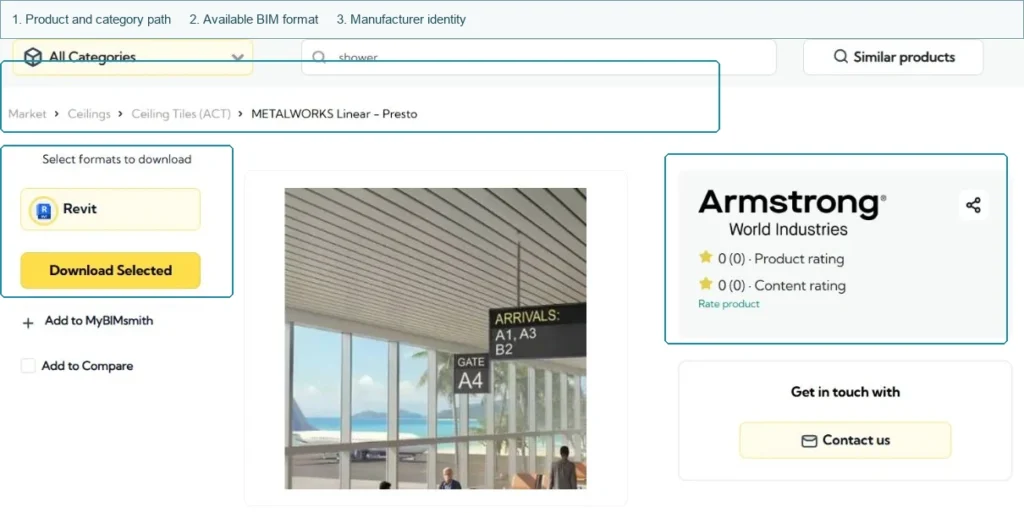
A supplier prequalification questionnaire can request:
- Legal Company Details
- Supplier Type
- Factory Location
- Product Capability
- Production Capacity
- Quality System
- Certificates
- Project Experience
- Export Experience
- Logistics Capability
The output is a:
Supplier Information Package
At this stage, the information is largely supplier-declared.
It should not yet be treated as fully verified.
For example:
Supplier says:
“We manufacture this product.”
That is a claim.
Supplier provides:
factory address, company registration and product documents.
That is evidence.
Procurement independently confirms the important parts.
That is verification.
Step 3: Separate Claims From Evidence
A useful supplier qualification process separates three stages:
Claim
The supplier states something.
Example:
“We are ISO 9001 certified.”
Evidence
The supplier provides:
- certificate;
- registration;
- test report;
- project reference;
- factory information.
Verification
Procurement checks whether the evidence is:
- authentic;
- relevant;
- current where required;
- linked to the correct supplier;
- linked to the correct product.
The workflow is:
Claim → Evidence → Verification
This prevents procurement from treating every supplier statement as fact.
Step 4: Verify Company Identity
Company verification should confirm that procurement understands who it may contract with.
Where company identity, ownership or contracting details need deeper review, move into the Supplier Due Diligence Checklist rather than treating supplier-declared information as verified.
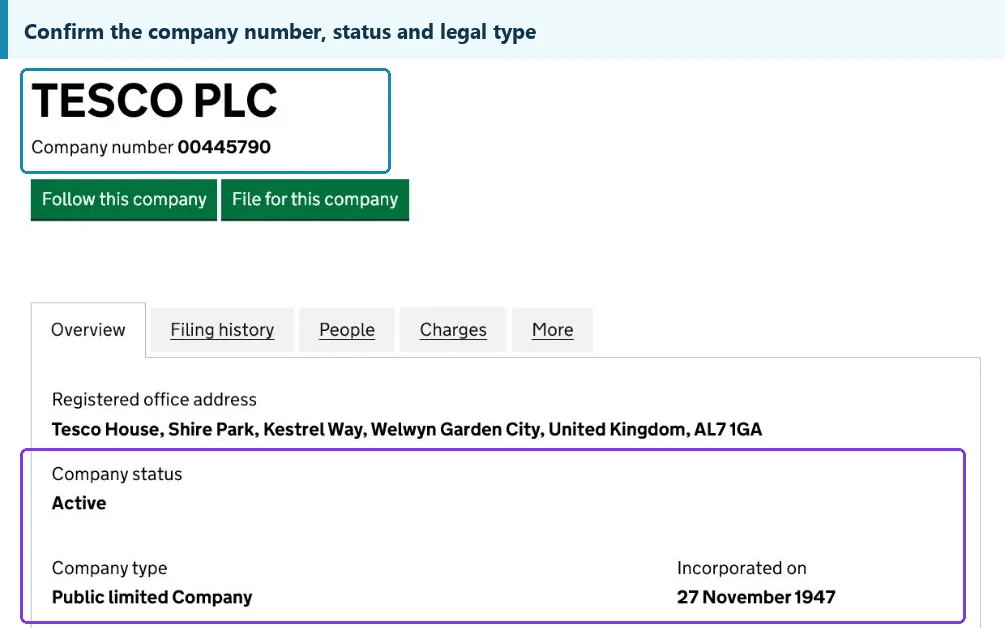
Typical checks include:
- Legal Company Name
- Registration Status
- Registered Address
- Factory Address
- Business Entity
- Website and Contact Consistency
- Manufacturing / Trading Role
The objective is not to investigate every detail of the company.
It is to answer:
Does this supplier appear to be the entity it claims to be, and is the contracting entity clear?
Possible outcomes:
Identity Confirmed
Proceed.
Clarification Required
Some information does not match.
Material Red Flag
Do not continue until resolved.
Step 5: Verify Critical Certificates and Technical Evidence
Not every supplier document deserves the same verification effort.
For ISO claims and management-system certificates, use ISO Certificate Verification for Suppliers as a deeper verification task for decision-critical evidence.
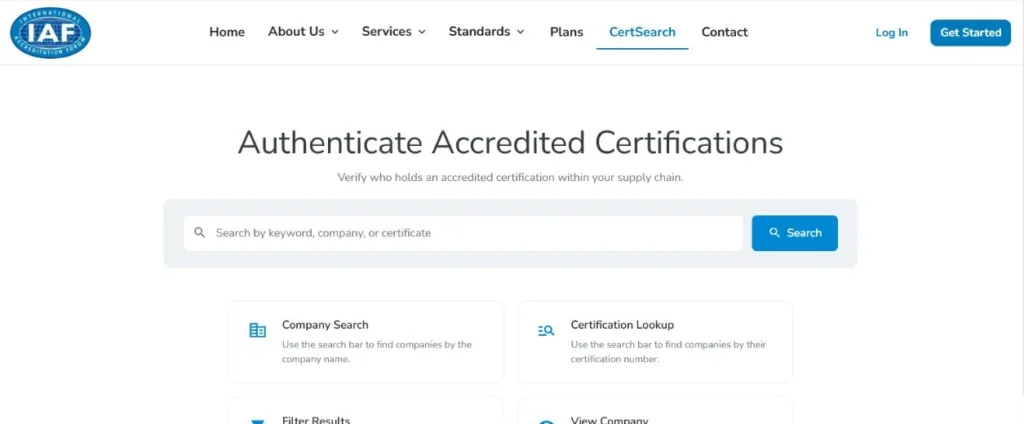
Focus first on evidence that can change the procurement decision.
Examples:
- Mandatory Certification
- Safety Evidence
- Project-Required Test Reports
- Quality Management Certificates
- Product Compliance Documentation
For critical documents, ask:
- Is the document genuine?
- Does it belong to the correct company?
- Does it cover the proposed product?
- Is the issuing body relevant?
- Is it current where validity matters?
- Does the model or product scope match?
The principle is:
Verification effort should focus on decision-critical evidence.
Procurement does not need to spend equal time checking every marketing brochure and every technical attachment.
Step 6: Apply the Qualification Criteria
Once the important information has been collected and critical evidence reviewed, apply the internal supplier qualification criteria.
Typical categories include:
- Company Identity
- Product Fit
- Technical Capability
- Mandatory Compliance
- Production Capacity
- Lead Time
- MOQ
- Quality Capability
- Project Experience
- Commercial Fit
- Logistics Capability
The result can be:
PASS
Supplier meets the minimum qualification requirements.
HOLD
Supplier may be suitable, but important clarification or evidence is still required.
FAIL
A mandatory requirement cannot be met.
The important point is:
Passing document review does not always mean qualification is finished.
For higher-risk purchases, deeper verification may still be needed.
Step 7: Decide Whether Deeper Verification Is Necessary
After the document review, ask:
- Is the purchase high-value?
- Is the product customized?
- Is manufacturing capability difficult to confirm remotely?
- Would product failure materially affect the project?
- Is this the first major order?
- Is critical production subcontracted?
- Are supplier claims difficult to verify from documents alone?
If the answer is mostly:
NO
document-based qualification may be sufficient.
If several answers are:
YES
procurement should consider deeper controls.
When Is a Factory Audit Necessary?
A factory audit should not be treated as mandatory for every new supplier.
If document review cannot adequately confirm factory capability, use the Supplier Audit Checklist for Building Material Buyers to investigate production, QA/QC, traceability, subcontracting and process control.
It is most useful when procurement needs stronger evidence of:
- Production Capability
- Equipment
- Capacity
- QA/QC
- Traceability
- Subcontracting
- Warehouse Control
- Process Control
- Document Control
Typical audit triggers include:
- high-value project package;
- customized manufacturing;
- critical production process;
- quality failure would be expensive;
- large advance payment;
- unclear subcontracting;
- first major order with a new supplier.
For low-risk standard purchases, an audit may add little value relative to its cost and time.
Audit vs Inspection vs Sample
These controls are different.
| Control | Main Question |
|---|---|
| Sample | Can the supplier make an acceptable product? |
| Factory Audit | Does the supplier have the systems and capability it claims? |
| Production Inspection | Is the actual order being produced correctly? |
| Pre-Shipment Inspection | Does the finished shipment meet the agreed requirements? |
A good sample does not prove factory capacity.
A good factory audit does not prove that the final shipment is defect-free.
A pre-shipment inspection does not replace company and compliance verification.
Each control answers a different question.
Step 8: Use Samples or Trial Orders Where Appropriate
For some materials, a sample may provide more useful evidence than a factory audit.
Samples are especially useful for checking:
- Finish
- Color
- Dimensions
- Packaging
- Assembly
- Workmanship
- Functional Performance
Possible outcomes:
Sample Passed
Continue qualification.
Correction Required
Hold and request revised sample.
Critical Failure
Reject or reassess supplier suitability.
For higher-risk suppliers, a small trial order can also provide useful evidence about:
- communication;
- production consistency;
- packing;
- documentation;
- delivery performance.
Step 9: Resolve Qualification Gaps
Qualification findings should be controlled rather than discussed informally across emails.
Use a simple gap register.
| Gap | Severity | Required Action | Owner | Status |
|---|---|---|---|---|
| Certificate not verified | Critical | Verify source | Buyer | Open |
| Sample finish mismatch | Major | Resubmit sample | Supplier | Open |
| Capacity unclear | Medium | Provide production evidence | Supplier | Open |
Classify gaps.
Critical
Blocks qualification.
Examples:
- mandatory certification missing;
- legal identity unresolved;
- critical product capability unavailable.
Major
Must be corrected or formally accepted under conditions.
Minor
Can be recorded and monitored.
The key rule is:
Do not approve a supplier while critical qualification gaps remain open.
Supplier Qualification Decision Tree
A simple decision tree can guide the process.
New Supplier?
↓
NO
Check whether the existing approval still covers:
- this factory;
- this product;
- this project;
- this risk level.
YES
↓
Low-Risk Purchase?
YES
→ Basic Questionnaire → Company Verification → Product Review → Qualification Decision
NO
↓
Medium or High Risk?
→ Full Questionnaire → Company Verification → Critical Document Verification → Qualification Checklist
↓
Deeper Capability Verification Needed?
NO
→ Approve / Hold / Reject
YES
→ Sample / Trial Order / Factory Audit / Inspection
↓
Critical Gaps Closed?
NO
→ HOLD / REJECT
YES
→ APPROVE FOR DEFINED SCOPE
Step 10: Approve the Supplier for a Defined Scope
One of the biggest supplier-management mistakes is recording only:
Supplier Approved = Yes
Approval should define what was actually evaluated.
Record:
- Supplier Legal Entity
- Factory Location
- Product Category
- Product Scope
- Project, if relevant
- Qualification Method
- Conditions
- Restrictions
- Approval Date
- Review Date or Trigger
Example:
Approved for standard stainless-steel door hardware manufactured at Factory A.
That does not automatically mean:
Approved for structural glass assemblies from Factory B.
The principle is:
Supplier approval should follow the entity, factory and product scope that were actually qualified.
Supplier Qualification Record Template
A practical record may look like this:
| Field | Result |
|---|---|
| Supplier | ABC Manufacturing |
| Legal Entity Verified | Yes |
| Factory | Foshan Plant |
| Product Scope | Door Hardware |
| Questionnaire | Complete |
| Product Capability | Passed |
| ISO Verification | Passed |
| Sample | Passed |
| Factory Audit | Not Required |
| Inspection Requirement | Pre-Shipment |
| Open Critical Gaps | None |
| Qualification Status | Approved |
| Conditions | Project-specific finish sample |
| Approval Date | — |
| Review Date | — |
This creates an auditable qualification record rather than a vague approved-vendor label.
Approved, Conditionally Approved, Hold or Rejected
Supplier qualification does not need to be binary.
After qualification is complete, compare the surviving qualified suppliers with the Construction Supplier Evaluation Scorecard rather than using qualification status itself as the final commercial ranking.
Approved
Qualification complete for the defined scope.
Conditionally Approved
Supplier may proceed under specific controls.
Examples:
- mandatory pre-shipment inspection;
- order-value limit;
- final sample approval;
- first-order production inspection.
Hold
Important verification remains open.
Rejected
Mandatory criteria cannot be met or risk is unacceptable.
This gives procurement more flexibility without lowering control.
Qualification Before RFQ vs Before PO
Supplier qualification can happen in stages.
Suppliers that pass the appropriate qualification gate can then move into How to Prepare an RFQ for Construction Materials with the required evidence depth matched to the purchase risk.
Before RFQ
The question is:
Is this supplier credible enough to spend detailed sourcing effort on?
The qualification gate can be relatively light.
Possible controls:
- questionnaire;
- basic company check;
- product fit;
- major compliance availability.
Before PO
The question becomes:
Do we have enough evidence to commit money and project risk?
For higher-risk purchases, this may require:
- deeper document review;
- certificate verification;
- sample approval;
- factory audit;
- final technical clarification.
The principle is:
Qualification depth can increase as commercial commitment increases.
This prevents procurement from performing expensive verification too early while still protecting the project before award.
Requalification: Supplier Approval Is Not Permanent
Supplier risk can change.
Possible requalification triggers include:
- Major Quality Failure
- Repeated Delivery Problems
- Ownership Change
- Factory Relocation
- Certificate Expiry
- Product Change
- Long Period Without Orders
- New Product Category
- Significantly Larger Order Value
- New Critical Project Requirement
Possible actions include:
- refresh questionnaire;
- reverify certificates;
- request new sample;
- review production capability;
- repeat audit where justified.
Requalification should be triggered by meaningful risk change rather than performed mechanically for every supplier at the same frequency.
Common Supplier Qualification Mistakes
Using the Same Qualification Depth for Every Purchase
A standard product and a critical custom project package should not receive identical controls.
Use risk-based qualification.
Treating Questionnaire Responses as Verified
Supplier responses are claims until important evidence is checked.
Verifying Every Document Equally
Focus first on evidence that can change the sourcing decision.
Requiring Factory Audits for Every Supplier
Use audit triggers.
An audit is one tool, not the definition of qualification.
Treating a Sample as Proof of Factory Capability
A sample demonstrates one product outcome.
It does not automatically prove capacity, process control or consistent production.
Approving a Company Without Defining Product Scope
Record exactly what was evaluated.
Proceeding With Critical Gaps Still Open
Close or formally resolve them before commercial commitment.
Never Requalifying Existing Suppliers
Reassess when supplier or procurement risk changes materially.
Supplier Qualification Workflow Checklist
Risk Definition
- Product criticality assessed
- Order value assessed
- Compliance risk assessed
- Schedule risk assessed
- Supplier risk assessed
- Qualification level selected
Information Collection
- Questionnaire completed
- Company information received
- Product capability received
- Capacity information received
- Quality information received
- Certificates listed
- Project references received
Verification
- Company identity checked
- Mandatory certificates checked
- Critical technical evidence reviewed
- Major inconsistencies resolved
Qualification
- Product fit assessed
- Capacity assessed
- Lead time assessed
- Compliance assessed
- Commercial fit assessed
- Logistics capability assessed
Deeper Verification
- Sample required?
- Factory audit required?
- Production inspection required?
- Pre-shipment inspection required?
- Trial order required?
Final Approval
- Critical gaps closed
- Product scope defined
- Factory defined
- Conditions recorded
- Qualification status recorded
- Review date or trigger recorded
Tools and Resources for Supplier Qualification
Supplier qualification usually requires several different resource types:
- Supplier Questionnaire Templates
- Company Registration Databases
- Supplier Verification Tools
- Certification Databases
- Product Compliance Databases
- Factory Audit Providers
- Inspection Providers
- Vendor Evaluation Templates
- Document Tools
Different tools serve different qualification gates.
A questionnaire collects supplier claims.
A company registry helps confirm legal identity.
A certification database helps validate critical evidence.
An audit provider can investigate factory capability.
An inspection provider can check the actual production or shipment.
Build Procurement Hub organizes these resources around the real supplier qualification workflow so procurement teams can choose the right control at the right stage rather than treating qualification as one generic checklist.
Where Each Supplier Qualification Article Fits
The supplier qualification cluster can be organized as:
Supplier Qualification Workflow
Which control should procurement use and when?
↓
Prequalification Questionnaire
What information should we collect?
↓
Certificate Verification
Is critical evidence valid?
↓
Qualification Checklist
Does the supplier meet minimum criteria?
↓
Supplier Audit Checklist
What should deeper factory verification examine?
↓
Supplier Evaluation Scorecard
How should qualified suppliers be compared?
This creates a complete workflow:
Find
→ Collect
→ Verify
→ Qualify
→ Audit Where Needed
→ Compare
→ Approve
Match Qualification Depth to Procurement Risk
Start with the purchase risk, collect supplier claims in a consistent format, independently verify decision-critical evidence, add sample / audit / inspection only where justified, close critical gaps, and approve the supplier only for the entity, factory and product scope actually qualified.
FAQ
What is the supplier qualification process?
The supplier qualification process is a risk-based workflow used to collect supplier information, verify critical evidence, assess capability and decide whether a supplier can be approved for a defined purchasing scope.
Does every supplier need a factory audit?
No. Factory audits should depend on procurement risk, product criticality, order value, customization, quality exposure and how much capability can be verified remotely.
What is the difference between supplier qualification and supplier audit?
Supplier qualification is the overall decision process. A supplier audit is one possible deeper verification method used within that process.
When should a supplier be requalified?
Requalification may be appropriate after major quality or delivery problems, factory or ownership changes, certificate expiry, major product changes, long periods without business or significantly higher procurement risk.
The core principle is:
Supplier qualification is not about performing every possible check on every supplier. It is about applying enough independent evidence and verification to reduce procurement risk to an acceptable level before commercial commitment.
