Supplier Qualification Checklist Before RFQ
Sending an RFQ to every supplier you find may seem like a fast way to compare the market. In practice, it often creates more work.
Some suppliers cannot manufacture the required product. Others cannot meet mandatory standards, project lead times, minimum order quantities, or documentation requirements. If those problems are discovered only after quotations arrive, procurement teams spend time comparing options that were never truly viable.
A supplier qualification checklist helps buyers screen suppliers before the RFQ stage.
Procurement rule: qualification is a gate before detailed RFQ work. Send RFQs only to suppliers that are sufficiently capable, compliant, commercially compatible and evidence-backed to justify deeper evaluation.
The goal is not to fully audit every supplier. It is to answer a simpler question:
Is this supplier qualified enough to justify the time and effort of requesting and evaluating a detailed quotation?
A practical pre-RFQ qualification process should produce one of three outcomes:
Qualified → Send RFQ
Conditional → Request Missing Evidence
Not Qualified → Remove From Shortlist
Why Qualify Suppliers Before Sending an RFQ?
An RFQ is more than an email asking for a price.
This stage normally follows Find and Shortlist Construction Material Suppliers: the longlist has already been created, and qualification decides which companies deserve a detailed RFQ.
For building material procurement, a proper RFQ may require suppliers to review:
- specifications;
- drawings;
- quantities;
- materials;
- finishes;
- testing requirements;
- packaging;
- delivery schedules;
- Incoterms;
- commercial conditions.
If ten suppliers receive the RFQ but only four are genuinely capable of meeting the requirements, both buyers and suppliers waste time.
Poor prequalification can lead to:
- excessive quotation comparison;
- repeated technical clarification;
- incomplete or non-comparable quotes;
- unrealistic low-price offers;
- late discovery of compliance problems;
- suppliers withdrawing after detailed discussions;
- slower final supplier selection.
For most sourcing tasks, it is more efficient to reduce the longlist first.
The workflow becomes:
Supplier Longlist → Qualification Gate → Qualified Shortlist → RFQ
Define the Minimum Qualification Requirements First
Do not start by asking whether a supplier is generally “good.”
Start by defining what the supplier must be able to do for the actual purchase.
Minimum requirements may include:
- product category;
- material specification;
- required dimensions;
- required standards;
- mandatory certifications;
- expected order quantity;
- acceptable MOQ;
- project location;
- required production lead time;
- delivery window;
- required production capacity;
- Incoterm;
- packaging requirements;
- technical documentation.
Some requirements should be treated as mandatory gates.
For example, if a product must have a specific market approval, a supplier without that approval should not proceed simply because its factory, price, and service look strong.
The supplier should be qualified against the procurement requirement, not against a generic company checklist.
Supplier Qualification Checklist Before RFQ
1. Confirm Product and Manufacturing Fit
The first question is whether the supplier actually fits the product.
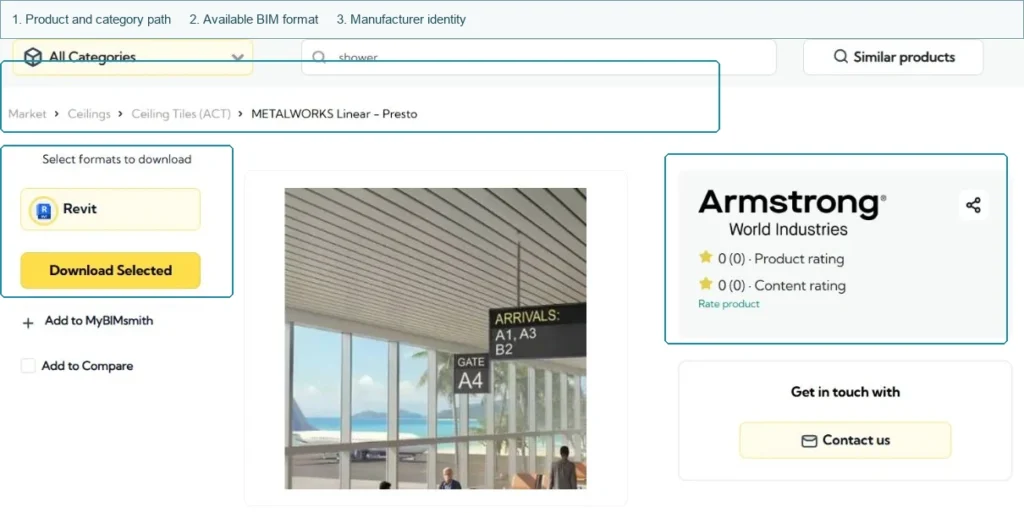
Check:
- Does the supplier regularly supply this product category?
- Is your required material within its normal range?
- Can it manufacture the required dimensions or configuration?
- Is it a manufacturer, trading company, distributor, or mixed operation?
- Which important processes are performed in-house?
- Which processes are outsourced?
- Has it produced similar specifications before?
- Can it handle project drawings or customization if required?
A supplier may appear highly professional but still be a poor fit for your particular purchase.
For example, a factory specializing in standard retail products may not be suitable for project-specific dimensions, finishes, documentation, or phased delivery.
Qualification Decision
Pass: Existing product and process capability clearly matches the requirement.
Conditional: The supplier appears capable but some technical details need confirmation.
Fail: The required product is outside the supplier's actual capability.
If product fit fails, there is usually little reason to continue toward RFQ.
2. Check Relevant Project and Market Experience
Relevant experience does not guarantee future performance, but it can reduce uncertainty.
For building material procurement, check whether the supplier has experience with:
- similar products;
- similar specifications;
- construction projects;
- export orders;
- your target market;
- contractors or distributors;
- technical submittals;
- bulk deliveries;
- phased shipments.
Do not require an identical previous project.
Instead, ask whether the supplier has already worked under similar operating conditions.
For example, a supplier that only handles domestic retail orders may require additional verification before being shortlisted for a large hotel project requiring technical documents, project labeling, scheduled production, and multiple shipments.
3. Verify Minimum Compliance Requirements
At the qualification stage, the objective is not to conduct a full compliance investigation.
If the supplier appears viable but important company, document or compliance questions remain, move the serious candidate into the Supplier Due Diligence Checklist before increasing procurement exposure.
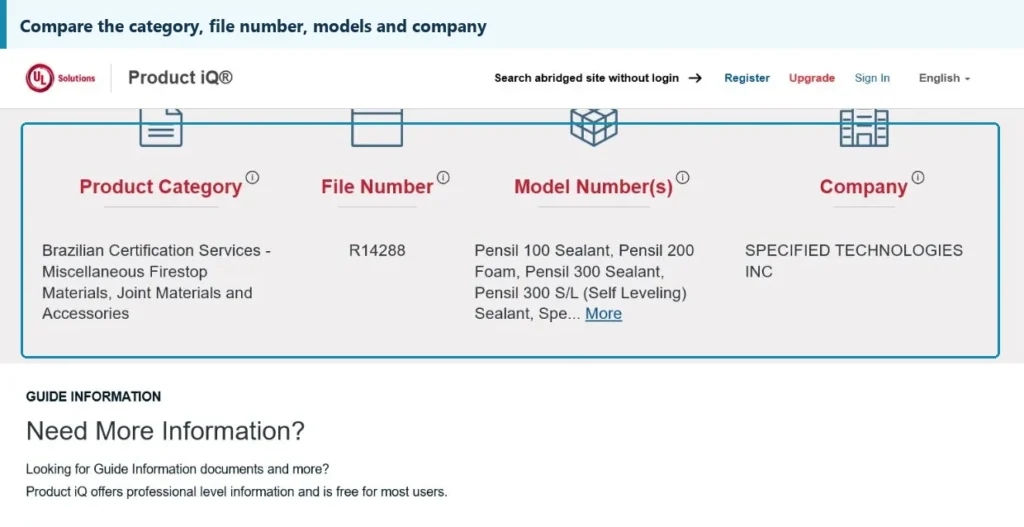
The buyer only needs to determine whether the supplier appears capable of meeting the mandatory requirements for the purchase.
Check whether the supplier can provide, where relevant:
- required product certifications;
- test reports;
- declarations of conformity;
- material certificates;
- technical data sheets;
- market-specific approvals;
- environmental documentation;
- project-specific technical documentation.
If a document is mandatory before the product can legally or contractually be used, treat it as a qualification gate.
For example:
Mandatory certificate unavailable → Do not RFQ yet
If the documentation exists but must be verified later:
Conditional qualification
Detailed verification can then be handled during supplier due diligence or technical evaluation.
Check Basic Production Capability
Pre-RFQ qualification does not require a complete factory audit.
For high-value, customized or capability-sensitive orders, basic qualification can be followed by a deeper Supplier Audit Checklist to verify actual factory processes, QC, capacity and traceability.
The purpose is only to check whether the supplier's claimed capability is broadly plausible.
Useful questions include:
- Does the supplier control the main production process?
- What is its normal monthly capacity?
- What capacity is currently available?
- Which critical processes are subcontracted?
- Can it handle the expected order quantity?
- Does it have basic quality control?
- Does it regularly manufacture comparable products?
For a large project, also ask whether the supplier has handled similar production volumes before.
A supplier claiming monthly capacity of 100,000 units may still be unsuitable if almost all capacity is already committed to existing customers.
The key question is not:
How large is your factory?
It is:
Can your current production system realistically handle this order during the required period?
Detailed verification of production, QC, traceability, and actual factory conditions belongs to the supplier audit stage.
Check Delivery and Project Schedule Fit
A supplier can be technically capable and still be unsuitable for the project.
Before sending an RFQ, check basic delivery compatibility.
Useful information includes:
- sample lead time;
- normal production lead time;
- current production backlog;
- peak-season impact;
- required material procurement time;
- packaging time;
- shipping preparation time;
- phased delivery capability;
- ability to reserve production capacity.
Do not confuse quoted lead time with the project's required delivery window.
If a supplier normally needs 60 days to manufacture the order but the project requires shipment in 35 days, that supplier should not proceed simply because other qualification criteria are strong.
For construction procurement, late delivery can create costs far beyond the value of the material itself.
Check Commercial Fit Before Spending Time on RFQ
Some commercial mismatches are obvious enough to identify before detailed quotation.
Check:
- MOQ;
- minimum order value;
- payment terms;
- tooling charges;
- mold charges;
- sample charges;
- Incoterms;
- export capability;
- packaging expectations;
- warranty expectations.
Consider a supplier with strong technical capability but an MOQ of 10,000 units when your project requires only 1,000.
Unless the MOQ is negotiable, a detailed RFQ may have little value.
Similarly, a supplier may not fit if:
- required payment terms are impossible;
- it cannot export directly when direct export is necessary;
- tooling cost makes the project uneconomic;
- required packaging is outside its normal capability.
Commercial fit does not mean selecting the cheapest supplier before RFQ.
It means confirming that the basic business model is compatible enough to continue.
Check Whether the Supplier Can Provide the Required Evidence
Qualification decisions should not rely entirely on sales claims.
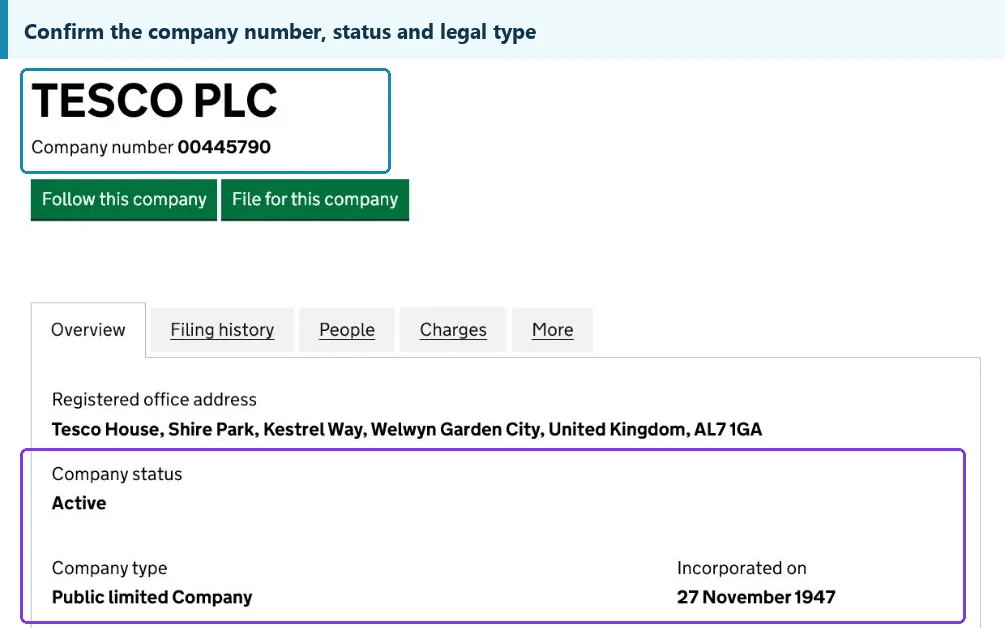
Ask whether the supplier can provide reasonable evidence such as:
- company profile;
- product catalogue;
- technical data sheet;
- certificates;
- test reports;
- product samples;
- factory photos or video;
- production information;
- project references;
- basic quality documents.
You do not need a full audit package at this stage.
The purpose is to see whether important claims can be supported.
A supplier repeatedly avoiding basic evidence requests may deserve a lower qualification status even if its sales presentation appears strong.
Use a Go / Hold / No-Go Qualification Decision
After reviewing the supplier, convert the information into a clear procurement action.
GO — Qualified for RFQ
Use this when:
- product fit is confirmed;
- mandatory compliance appears achievable;
- basic production capability is plausible;
- required lead time can be met;
- commercial requirements are broadly compatible;
- critical evidence is available.
Next action: Send RFQ.
HOLD — Conditional Qualification
Use this when the supplier looks promising but an important gap remains.
Examples include:
- a test report needs confirmation;
- current production capacity is unclear;
- an important project reference is missing;
- an outsourced process needs clarification;
- MOQ may need negotiation;
- a certification document has not yet been provided.
Next action: Request the missing evidence first.
Do not automatically send a detailed RFQ while a critical qualification question remains unresolved.
NO-GO — Do Not RFQ
Typical reasons include:
- wrong product capability;
- mandatory certification unavailable;
- unacceptable MOQ;
- impossible project lead time;
- no credible production capability;
- required technical documentation cannot be provided;
- essential commercial conditions are incompatible.
Next action: Remove the supplier from the RFQ shortlist.
A clear No-Go decision is useful. It prevents procurement teams from repeatedly reconsidering suppliers that already fail a mandatory requirement.
Supplier Qualification Scorecard
A simple qualification table can make supplier comparison easier.
| Qualification Area | Requirement | Supplier Result | Decision |
|---|---|---|---|
| Product fit | Required product and process | Pass | Go |
| Compliance | Required certificate | Pass | Go |
| Capacity | 10,000 units/month | Unclear | Hold |
| Lead time | Maximum 45 days | 40 days | Go |
| MOQ | Maximum 2,000 units | 5,000 units | No-Go |
| Documentation | Test report + TDS | Available | Go |
The table should not be treated as a simple average score.
Some requirements are mandatory.
For example, a supplier should not qualify because it scored highly on nine criteria while failing the one certification legally required for the project.
A useful approach is to separate criteria into:
Mandatory Gates
and
Preferred Criteria
Mandatory gates determine whether the supplier can continue.
Preferred criteria help rank qualified suppliers later.
Pre-RFQ Supplier Qualification Checklist
Before adding a supplier to the RFQ shortlist, confirm the following:
Product Fit
- Supplier regularly supplies the required product.
- Required material or specification is within its capability.
- Critical production processes are understood.
- Customization requirements can be handled if necessary.
Compliance
- Mandatory certificates appear available.
- Required testing can be supported.
- Necessary technical documentation can be provided.
Production
- Order volume appears realistic for the supplier.
- Critical outsourced processes are disclosed.
- Basic quality control capability exists.
Delivery
- Production lead time matches the project.
- Current capacity appears available.
- Phased delivery can be supported if required.
Commercial
- MOQ is acceptable.
- Basic payment terms are workable.
- Incoterm and export arrangements are compatible.
- Major tooling or setup costs are understood.
Evidence
- Product documents are available.
- Relevant certificates or reports can be provided.
- Basic factory and production evidence is available.
If a supplier fails a mandatory requirement, stop and resolve the issue before proceeding to RFQ.
Common Supplier Qualification Mistakes
Sending RFQs to Too Many Suppliers
More quotations do not automatically improve the final procurement decision.
A shortlist of five genuinely qualified suppliers can be more useful than 20 quotations from mixed-quality candidates.
Selecting Suppliers Mainly by Website Appearance
A polished website can support credibility, but it does not prove manufacturing capability, compliance, capacity, or delivery performance.
Treat it as an information source, not a qualification result.
Asking for Full Audit-Level Evidence Too Early
Supplier qualification should remain efficient.
If every potential supplier must provide extensive QC records, factory audit documentation, employee lists, process charts, and complete compliance packages before an RFQ, the process can become unnecessarily slow.
Collect enough information to make the next decision.
Deeper verification can follow for serious candidates.
Using Price as the Main Qualification Requirement
Price should usually be compared after suppliers have passed minimum qualification.
A very low quotation from a supplier that cannot meet the technical, compliance, or delivery requirements does not create a useful sourcing option.
Treating Every Requirement as Equally Important
Mandatory project requirements should have more weight than preferences.
A supplier failing required certification should not outperform another supplier simply because it has a better website, faster response time, or lower MOQ.
What Tools and Resources Can Help With Supplier Qualification?
Supplier qualification often requires information from several different sources.
Depending on the purchase, buyers may need:
- company verification databases;
- certification databases;
- product compliance resources;
- supplier directories;
- factory audit providers;
- inspection companies;
- technical standards;
- RFQ templates;
- quotation comparison tools.
The challenge is often not finding information somewhere online. It is knowing which resource to use at the correct stage of the procurement task.
Build Procurement Hub organizes supplier verification, compliance, inspection, sourcing, and RFQ resources around actual procurement workflows so buyers can move from supplier discovery to qualification and evaluation more efficiently.
What Comes After Supplier Qualification?
Supplier qualification is a filtering stage, not the final supplier decision.
Qualified suppliers can move into a structured Construction Material RFQ, followed by Construction Material Quotation Comparison and, where useful, a broader Construction Supplier Evaluation Scorecard.
If the supplier qualifies:
Qualified Supplier → RFQ → Quotation Comparison → Technical & Commercial Evaluation
If important information is missing:
Conditional Supplier → Request Evidence → Recheck → Qualified or Rejected
If the supplier fails a mandatory gate:
Reject Supplier → Return to Supplier Search
Depending on project value and risk, the broader process may include:
Find Suppliers → Qualification → Due Diligence → Factory Audit Where Needed → RFQ → Technical & Commercial Evaluation → Final Supplier Approval
The exact sequence can vary.
The principle remains the same:
Do not spend detailed RFQ and evaluation effort on suppliers that already fail the minimum requirements of the purchase.
Reduce the Longlist Before You Spend Time on Detailed RFQs
Use Supplier Verification, Product Certification and Standards resources to resolve mandatory qualification questions first. Then move only genuinely viable suppliers into RFQ and quotation evaluation.
FAQ
What is a supplier qualification checklist?
A supplier qualification checklist is a set of minimum criteria used to decide whether a supplier should continue in the sourcing process. It commonly covers product fit, compliance, basic production capability, delivery, commercial compatibility, and supporting evidence.
Should supplier qualification happen before or after RFQ?
Basic supplier qualification should normally happen before a detailed RFQ. This helps buyers avoid spending time collecting and comparing quotations from suppliers that clearly cannot meet mandatory requirements.
What is the difference between supplier qualification and a supplier audit?
Supplier qualification is an initial screening process used to decide whether a supplier should proceed. A supplier audit examines the actual factory, production processes, quality controls, capacity, traceability, and other manufacturing conditions in greater depth.
How many suppliers should be qualified before sending an RFQ?
There is no universal number. The goal is to create a manageable shortlist of genuinely viable suppliers rather than maximize the number of quotations. The appropriate number depends on the product, market, project value, and sourcing risk.
