Supplier Due Diligence Checklist for Construction Material Procurement
A professional website, competitive price, fast replies, and convincing product photos do not prove that a construction material supplier is safe to do business with.
Before a procurement team commits significant project time, issues a purchase order, or pays a deposit, it should have enough reliable evidence to answer several basic questions:
This is the purpose of supplier due diligence .
The goal is not to prove that a supplier is perfect.
Procurement rule: verification depth should increase with the cost of supplier failure. The goal is to reduce uncertainty enough to make a responsible decision before money or significant project time is committed.
- Is this company legally identifiable?
- Is it really the manufacturer, distributor, or trader it claims to be?
- Can it actually supply the required product?
- Do its certificates and test reports relate to the product being offered?
- Does the company receiving payment match the company in the commercial documents?
- Is its production capability realistic for the project?
The goal is to reduce uncertainty enough to make a responsible procurement decision before committing money or project time.
A practical process may look like:
Supplier discovered → Identity check → Business role → Product capability → Documents → Production capability → Commercial identity → Risk review → Proceed / Clarify / High Risk / Stop
What Is Supplier Due Diligence in Construction Procurement?
Supplier due diligence is the structured process of checking whether a proposed supplier is sufficiently credible, capable, and commercially identifiable for the level of procurement risk involved.
It may include reviewing:
- legal company identity;
- company registration;
- manufacturer or trading status;
- product capability;
- technical documentation;
- certificates and test reports;
- factory capability;
- project or export evidence;
- payment information;
- major commercial and trade risks.
Supplier sourcing and supplier due diligence are different tasks.
Supplier sourcing asks:
Who might be able to supply this product?
Supplier due diligence asks:
Is this supplier credible enough for us to continue?
A company may pass the first question and still fail the second.
Use a Risk-Based Approach
Not every potential supplier needs the same level of investigation.
The depth of due diligence should generally increase with the potential cost of being wrong.
Consider factors such as:
- order value;
- deposit amount;
- technical complexity;
- customization;
- tooling requirements;
- production lead time;
- project criticality;
- difficulty of replacing the supplier;
- certification requirements;
- international transaction risk.
Lower-Risk Example
A small sample order for a standard, easily replaceable product may justify basic checks of:
- company identity;
- product relevance;
- payment details.
Higher-Risk Example
A custom project material requiring:
- a large deposit;
- project-specific drawings;
- special finish;
- long production time;
- certification;
- difficult replacement;
justifies much deeper verification.
Verification effort should be proportional to the cost of a supplier failure.
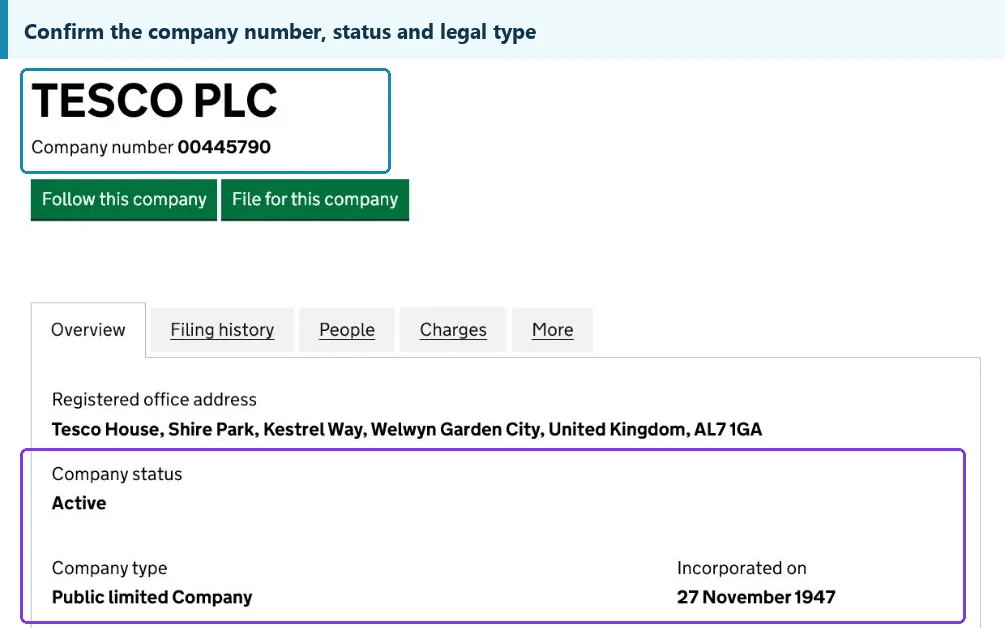
Step 1: Verify the Supplier's Legal Identity
Start with the legal company.
Collect where available:
- full legal company name;
- company registration number;
- registered address;
- incorporation details;
- legal status.
Use the appropriate official company registry, government database, or other authoritative corporate-information source available in that jurisdiction.
Then compare the result with:
- supplier quotation;
- contract;
- invoice;
- website;
- email signature;
- payment information.
The key question is:
Does the legal entity you found match the company you are actually negotiating with?
Possible Red Flags
Pay attention when:
- company names change between documents;
- the supplier avoids giving its legal entity name;
- the company cannot be located in expected official records;
- the quotation comes from one entity but the contract uses another without explanation;
- addresses or registration details repeatedly conflict.
A discrepancy does not automatically mean fraud.
It means procurement should understand the relationship before moving forward.
Step 2: Understand Whether It Is a Manufacturer, Trader, Distributor, or Agent
A supplier does not need to be a factory to be legitimate.
A trader, distributor, or agent can sometimes be the better purchasing channel.
The risk comes from not knowing which business model you are dealing with.
Possible structures include:
Direct Manufacturer
Controls production directly.
Trading Company
Sources products from one or more factories.
Distributor
Resells products from another manufacturer.
Agent or Representative
Acts on behalf of a manufacturer or supplier.
Check information such as:
- factory address;
- company description;
- manufacturer name on technical documents;
- certificate holder;
- catalogue information;
- production photos;
- authorization letters where relevant.
For construction procurement, one question matters especially:
Who will actually manufacture the product supplied to the project?
This affects:
- quality control;
- technical clarification;
- production scheduling;
- certificate traceability;
- replacement parts;
- warranty responsibility.
Step 3: Verify Product Capability
A legally registered company is not automatically capable of supplying the product you need.
Verify whether the supplier has reasonable evidence of:
- the relevant product category;
- suitable manufacturing or sourcing capability;
- technical knowledge;
- required material or process experience;
- realistic project quantities;
- supporting technical documentation.
Useful evidence may include:
- technical catalogues;
- datasheets;
- drawings;
- samples;
- product photos;
- factory photos;
- technical answers;
- previous similar products.
Ask practical questions.
For example:
- What material grades are available?
- What tolerances can be maintained?
- Which parts are manufactured in-house?
- Which processes are subcontracted?
- What is the realistic production lead time?
- Which documents can be provided for approval?
A supplier that genuinely handles the product should normally be able to discuss its limitations as well as its capabilities.
Verify the exact product you intend to buy, not the supplier's general marketing claims.
Step 4: Check Consistency Across Supplier Documents
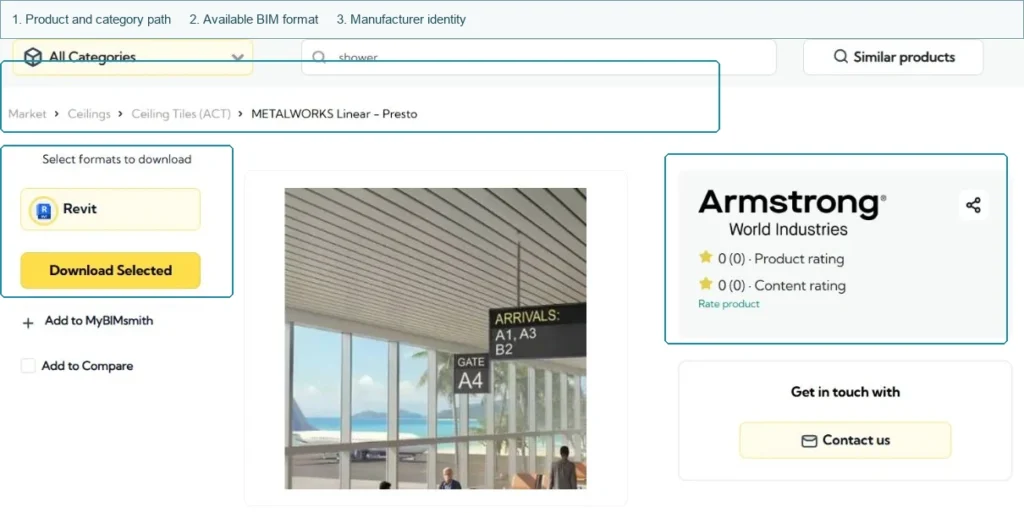
Construction procurement often involves many documents from the same supplier:
- quotation;
- catalogue;
- datasheet;
- technical drawing;
- certificate;
- test report;
- sample;
- material submittal;
- invoice.
Compare them.
Look for consistency in:
- company name;
- manufacturer;
- brand;
- model;
- product code;
- factory;
- technical specification.
For example:
The quotation may come from Company A.
The certificate may name Factory B.
The datasheet may carry Brand C.
That structure may be completely legitimate.
Perhaps Company A is an exporter, Factory B manufactures the product, and Brand C is the commercial brand.
But procurement should understand that relationship rather than assume all three names refer to the same entity.
Different names are not automatically a problem. Unexplained relationships are.
Step 5: Review Certificates and Test Reports
Certificates should not be accepted simply because a PDF looks professional.
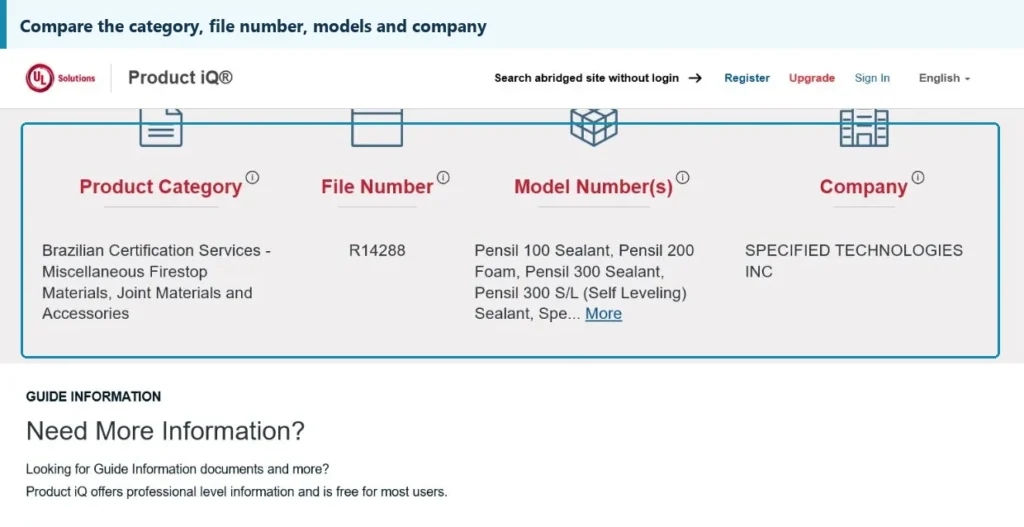
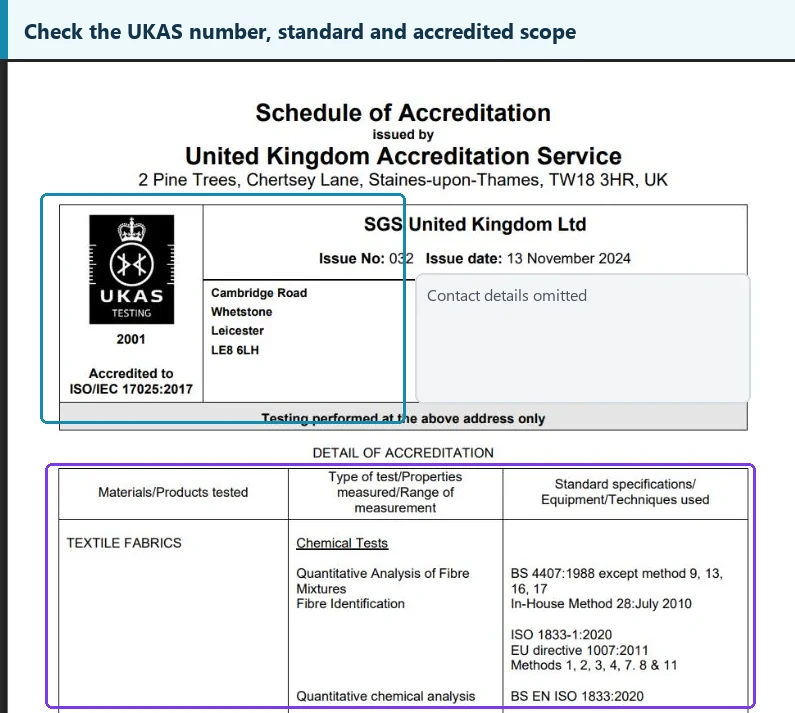
At procurement level, check questions such as:
- Who is the certificate issued to?
- Which product or product family does it cover?
- Is the proposed model included?
- Which certification body issued it?
- Can the document be checked through an official or authoritative source?
- Is the current status or validity relevant?
- Is this certificate actually required by the project?
For test reports, review:
- applicant;
- manufacturer;
- tested product;
- model;
- standard;
- test laboratory;
- date;
- test result;
- report scope.
A supplier may hold a genuine certificate that is unrelated to the product being offered.
Therefore:
Having a certificate is not the same as having the correct certificate for the material being purchased.
Detailed certificate verification should be handled separately where necessary through Product Certification, Standards & Codes, and Supplier Verification resources.
Step 6: Check Factory and Production Capability When the Risk Justifies It
For higher-value or more critical orders, procurement may need greater confidence that the supplier can actually execute the project.
Possible areas to review include:
- factory location;
- production equipment;
- production lines;
- QC procedures;
- monthly capacity;
- packaging capability;
- testing capability;
- warehouse;
- subcontracted processes.
Ask:
Can this supplier realistically manufacture the required quantity, specification, and schedule?
A supplier claiming very large capacity should be able to provide reasonable evidence supporting that claim.
However, remote evidence is not equivalent to a formal factory audit.
Where project risk justifies it, additional measures may include:
- video verification;
- factory visit;
- third-party audit;
- production inspection;
- pre-shipment inspection.
The level of verification should still match the procurement risk.
Step 7: Review Project, Customer, or Export Evidence
Past performance can provide useful supporting evidence, but it should be treated carefully.
Possible evidence includes:
- relevant project photos;
- anonymized project records;
- shipment evidence;
- export-market experience;
- similar product references;
- repeat-order experience.
Do not rely only on logos shown on a supplier website.
A list of famous customers is easy to display and difficult to verify.
Instead ask:
Can the supplier show credible evidence that it has handled similar products, quantities, or market requirements before?
The evidence does not always need to reveal confidential customer details.
The objective is reasonable credibility, not perfect historical proof.
Step 8: Verify Commercial and Payment Identity
This is one of the most important checks before money moves.
Compare:
Quotation entity → Contract entity → Invoice entity → Bank beneficiary
These should make commercial sense together.
Potential warning signs include:
- a last-minute bank-account change;
- payment requested to a personal account;
- beneficiary name unrelated to the supplier;
- unexplained payment through another company;
- unexpected bank-account jurisdiction;
- supplier representatives unable to explain the payment structure.
Third-party payment arrangements can sometimes be legitimate.
For example, group companies, export entities, or authorized payment companies may be involved.
The appropriate response is not automatic rejection.
It is:
Clarify the relationship and document it before payment.
A verified supplier with an unverified payment instruction is still a payment risk.
Step 9: Review Major Commercial Risk Factors
Supplier due diligence should also consider how the transaction would work if something goes wrong.
Review where relevant:
- deposit percentage;
- payment milestones;
- lead time;
- warranty;
- replacement obligations;
- defect handling;
- cancellation terms;
- spare parts;
- quotation validity.
Construction procurement should ask:
If the product is late, rejected, damaged, or non-compliant, what practical remedy do we have?
A supplier may be technically capable but still propose commercial terms that transfer too much risk to the buyer.
This does not require a full legal contract review at the early due-diligence stage.
The goal is to identify major issues before the procurement commitment becomes difficult to reverse.
Step 10: Check Trade or Restricted-Party Risk Where Relevant
International procurement may require additional screening depending on:
- supplier jurisdiction;
- buyer jurisdiction;
- transaction structure;
- product;
- destination;
- applicable trade rules.
Where required, procurement may need to use official or appropriate restricted-party and sanctions-screening resources.
The required checks vary by jurisdiction and transaction.
This is therefore a separate compliance task rather than a universal checklist item for every purchase.
Common Supplier Due Diligence Red Flags
One unusual detail does not automatically make a supplier unsafe.
Multiple unresolved inconsistencies are more significant.
Identity Red Flags
- legal company cannot be reasonably verified;
- different company names appear without explanation;
- supplier avoids providing basic registration information.
Product Red Flags
- supplier refuses to identify the actual manufacturer;
- technical answers remain vague;
- proposed product changes repeatedly during discussions.
Documentation Red Flags
- certificates do not match the proposed product;
- company names differ across documents without explanation;
- important documents appear edited or inconsistent;
- required evidence is repeatedly avoided.
Factory Red Flags
- claimed manufacturing capability does not match available evidence;
- production location remains unclear;
- stated capacity seems unrealistic for the facility shown.
Commercial Red Flags
- unusually high deposit with weak protection;
- last-minute payment changes;
- bank beneficiary does not match the transaction;
- contract and invoice entities change without explanation.
Behavioural Red Flags
- strong pressure to pay before basic verification;
- important explanations change repeatedly;
- clear procurement questions are repeatedly avoided.
The real concern is not one unusual detail. It is an important inconsistency that remains unresolved after reasonable clarification.
Build a Simple Supplier Due Diligence Decision Matrix
A practical procurement team does not need a complicated scoring system for every early-stage supplier.
A simple status system can work well:
| Check Area | Status | Meaning |
|---|---|---|
| Legal Identity | Green | Verified |
| Manufacturer Role | Clarify | Relationship unclear |
| Product Capability | Green | Evidence sufficient |
| Certificates | Clarify | Product scope needs confirmation |
| Factory Capability | Green | Evidence appears reasonable |
| Payment Entity | High Risk | Does not currently match |
| Trade Screening | Green | Required check completed |
Green — Proceed
No major unresolved risk has been identified.
Clarify
Information is incomplete or inconsistent but may have a reasonable explanation.
High Risk
A significant issue affects:
- legal identity;
- payment;
- compliance;
- product capability;
- production;
- contractual reliability.
Do not commit until the issue has been escalated and resolved.
Stop
Available evidence suggests the transaction should not proceed under the current structure.
This framework should support judgment.
It should not create the illusion that a supplier with ten green boxes can never fail.
Match Due Diligence to the Procurement Stage
Verification should become deeper as commitment increases.
Before RFQ
Basic checks may be enough:
- legal existence;
- product relevance;
- obvious legitimacy.
There is little value in spending hours auditing every company in an early sourcing list.
Before Shortlisting
Increase verification of:
- business role;
- product capability;
- technical documents;
- similar experience.
Before Sample or Technical Approval
Confirm:
- exact manufacturer;
- exact product;
- supporting technical documents;
- required compliance evidence.
Before PO or Deposit
Critical checks should normally be resolved:
- legal entity;
- commercial entity;
- payment beneficiary;
- required documentation;
- major production risks;
- significant commercial risks.
This risk-based approach avoids two common mistakes:
checking too little before committing
and
performing a full investigation on every early-stage lead.
What Supplier Due Diligence Cannot Guarantee
Even strong due diligence cannot guarantee:
- perfect quality;
- on-time production;
- zero defects;
- no future financial problems;
- no contract disputes;
- no shipping delays.
Supplier verification reduces uncertainty.
It does not eliminate procurement risk.
Higher-risk construction purchases may still require:
- samples;
- material approval;
- factory audit;
- production inspection;
- pre-shipment inspection;
- staged payments;
- contract controls.
The correct objective is:
Reduce preventable risk before commitment, then control the remaining risk throughout procurement.
Tools and Resources for Supplier Due Diligence
Construction procurement teams may need different verification resources depending on the issue being investigated.
Supplier Verification
Useful for:
- official company registries;
- business verification;
- factory-audit resources;
- accredited laboratory searches;
- certificate verification;
- inspection providers.
Product Certification
Useful for:
- certification databases;
- conformity information;
- product certification schemes.
Standards & Codes
Useful for checking:
- applicable material standards;
- test requirements;
- technical compliance references.
Contracts & Trade Risk
Useful when reviewing:
- restricted-party screening;
- international trade risks;
- payment and contract resources.
Find Suppliers
Useful earlier in the workflow for discovering potential suppliers before detailed verification begins.
The objective is not to search every possible database.
Use the verification resource that addresses the specific risk you need to resolve.
Construction Material Supplier Due Diligence Checklist
Before placing a significant order or paying a large deposit to a new supplier, confirm where relevant:
- Legal company identity has been checked.
- Registration information is reasonably consistent.
- Manufacturer, trader, distributor, or agent role is understood.
- The actual manufacturing source is identified where important.
- The supplier can reasonably demonstrate product capability.
- Product and manufacturer information are consistent across documents.
- Required certificates and test reports are available.
- Critical compliance documents can be verified where required.
- Production capability appears suitable for the order.
- Similar product, project, or export evidence is credible.
- Quotation, contract, and invoice entities make commercial sense.
- Bank beneficiary has been checked before payment.
- Payment terms and deposit exposure are acceptable.
- Warranty and defect responsibilities are understood.
- Required trade or restricted-party checks have been completed.
- Significant inconsistencies have been clarified before commitment.
Then classify the supplier:
Proceed / Clarify / High Risk / Stop
Verify the Risk Before Procurement Commitment
Use the Supplier Verification collection as the primary next step for company registries, business verification, factory-audit resources, accredited laboratory searches, certificate verification and inspection providers. Use the supporting categories when the unresolved issue is product compliance, standards, trade risk or early supplier discovery.
FAQ
What should be checked when verifying a construction material supplier?
Procurement should normally review legal identity, company role, product capability, technical documents, certificates, production capability, commercial identity, payment details, and major project or transaction risks.
How can I check whether a supplier is a real company?
Use the appropriate official company registry or authoritative business database where available, then compare the legal company details with the supplier's quotation, contract, invoice, website, and payment information.
Does a valid company registration mean the supplier is reliable?
No. Registration helps confirm legal existence, but it does not prove product capability, quality, delivery performance, manufacturing capacity, or commercial reliability.
Should every new supplier receive a factory audit?
No. Verification depth should reflect procurement risk. Large, customized, technically critical, or difficult-to-replace orders may justify a factory audit, while smaller standard purchases may require less intensive checks.
What should be verified before paying a supplier deposit?
Critical checks normally include the legal and commercial entity, contract and invoice information, bank beneficiary, exact product and manufacturer, required technical documentation, and any major unresolved commercial or compliance risks.
