Supplier Databases for Building Material Procurement: Which Ones to Use and When
There is no single supplier database that works best for every building material sourcing task.
A buyer looking for standard sanitary ware from Asia may start with a large B2B marketplace. A contractor looking for a local fire-door supplier in Europe may get better results from a regional directory. A procurement manager sourcing a specialist façade system may find more relevant companies through an industry association or trade-show exhibitor list.
The practical question is not:
Sourcing rule: choose the database type that matches the current sourcing task. Use discovery sources to build the longlist, then switch to qualification and verification once a supplier looks relevant.
Which supplier database has the most companies?
It is:
Which type of database is most useful for the sourcing task I am trying to complete right now?
A good supplier search process should therefore follow this sequence:
Define the sourcing requirement
↓
Choose the right database type
↓
Build a supplier longlist
↓
Cross-check supplier information
↓
Move to verification
↓
Create a qualified shortlist
For construction procurement, this distinction can save a significant amount of time compared with repeatedly searching the same large marketplace.
Supplier Database vs Supplier Verification Database
Before choosing where to search, separate two different procurement tasks.
Supplier Discovery Database
A supplier database or directory is mainly used to discover potential companies.
It can help buyers:
- find manufacturers;
- identify exporters;
- find distributors;
- build a longlist;
- discover suppliers in a specific country;
- identify companies in a specialist material category.
Typical sources include:
- B2B marketplaces;
- manufacturer directories;
- regional business directories;
- trade associations;
- trade-show exhibitor directories;
- export directories.
These are discovery tools.
They tell you:
Here are companies that may be relevant.
They do not automatically tell you:
This supplier is qualified for your project.
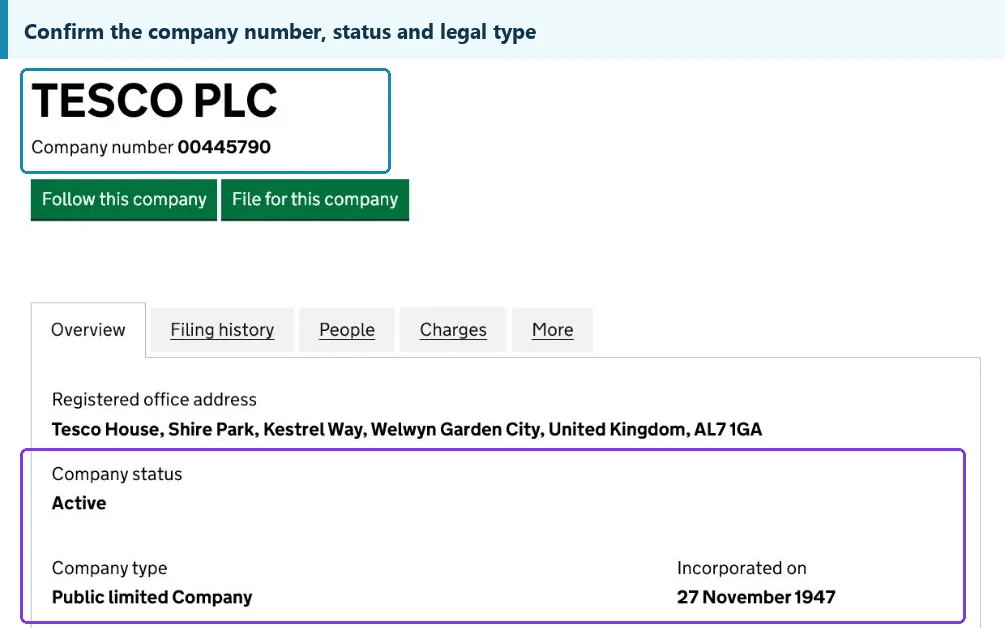
Supplier Verification Database
Verification comes later.
These resources may be used to check:
- legal company status;
- business registration;
- certifications;
- accreditation;
- product approvals;
- supplier identity;
- other supporting evidence.
The correct workflow is:
Supplier Database
↓
Longlist
↓
Basic Screening
↓
Supplier Verification
↓
Qualified Shortlist
A common procurement mistake is treating a supplier's appearance on a sourcing platform as proof that the company is suitable.
It is not.
Finding a supplier and verifying a supplier are two different tasks.
What Should You Define Before Searching?
Before opening a database, define what kind of supplier you actually need.
Once the sourcing requirement is clear, use the broader workflow in How to Find and Shortlist Construction Material Suppliers to turn search results into a manageable supplier longlist.
At minimum, clarify:
- Product category
- Technical specification
- Target sourcing country or region
- Manufacturer vs distributor requirement
- Expected order quantity
- Project type
- Certification requirements
- Customization requirements
- Export experience requirements
- Local vs overseas supplier preference
For example, these are three very different sourcing requests:
Find a tile supplier.
Find a porcelain tile manufacturer in Spain.
Find a porcelain tile manufacturer in Spain with hotel-project export experience and specific technical certification.
The more clearly the requirement is defined, the easier it becomes to choose the right supplier source.
Do not start with “Where can I find suppliers?” Start with “What type of supplier am I trying to find?”
1. Global B2B Marketplaces
Large B2B marketplaces are usually the fastest way to build a broad supplier longlist.
They are especially useful for:
- common building materials;
- China and Asia sourcing;
- OEM or ODM products;
- export-oriented suppliers;
- initial market exploration.
Common categories may include:
- sanitary ware;
- shower enclosures;
- tiles;
- lighting;
- hardware;
- doors;
- windows;
- decorative materials;
- plumbing products.
Their main strength is volume.
A buyer can quickly search a category and identify dozens of potential companies.
Best Use
Use a B2B marketplace when your immediate task is:
Build a broad supplier longlist quickly.
They are especially useful early in the sourcing process.
Limitations
Large supplier volume also creates noise.
Potential problems include:
- manufacturer and trader profiles mixed together;
- duplicated or similar product listings;
- weak technical information;
- platform-focused sellers rather than project-focused suppliers;
- supplier claims that still require independent checking.
Therefore:
Use B2B marketplaces for discovery, not as final proof of supplier capability.
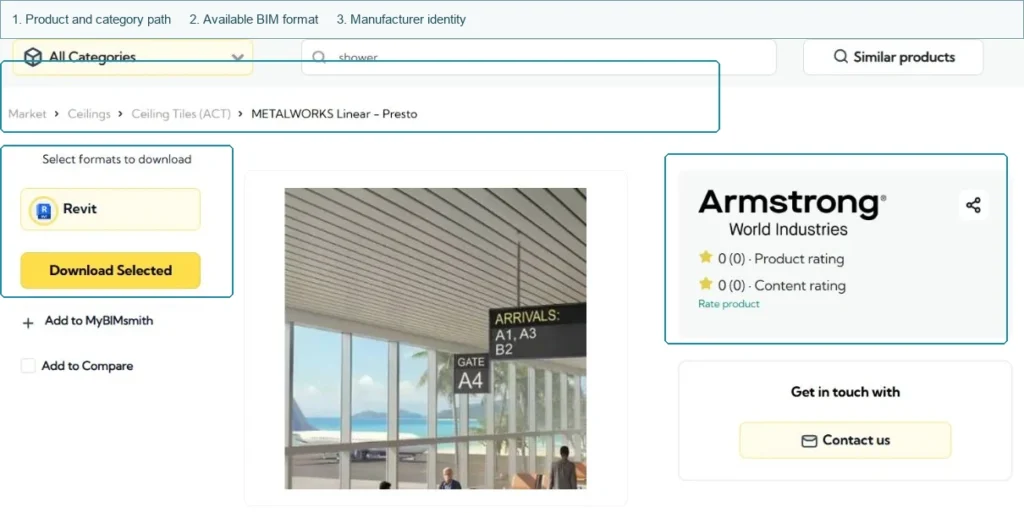
2. Manufacturer and Company Directories
Manufacturer directories are often more useful when you already know the product category and want to identify actual producers.
They can be especially helpful for:
- industrial materials;
- specialist construction products;
- regional manufacturers;
- companies with limited marketplace activity;
- broader manufacturer discovery.
Compared with a marketplace, a directory may focus more on the company itself rather than individual product listings.
Useful information may include:
- company profile;
- manufacturing sector;
- product categories;
- location;
- contact details;
- company website.
Best Use
Use a manufacturer directory when:
You want to expand beyond suppliers visible on major marketplaces and identify more potential producers.
This is especially useful after the first sourcing round.
For example:
Marketplace search
→ 20 suppliers
Then:
Manufacturer directory
→ additional manufacturers not found in the first search
This can improve supplier coverage before the shortlist is created.
3. Regional Supplier Databases
Sometimes geography is not simply a filter.
It is part of the sourcing requirement.
A project may require:
- a European supplier;
- a North American manufacturer;
- a Middle East distributor;
- an ASEAN supplier;
- a local installer or stockist.
In these cases, regional supplier databases can be more useful than a global marketplace.
They may provide better access to:
- local companies;
- local distributors;
- regional manufacturers;
- suppliers with domestic project support;
- companies with local inventory.
Best Use
Use regional databases when:
Supplier location is part of the procurement strategy.
For example, a project may prefer a local supplier because of:
- shorter lead time;
- local warranty;
- installation support;
- replacement parts;
- easier logistics;
- local compliance familiarity.
A global supplier platform may return more companies, but a regional directory may return more relevant ones.
4. Trade Association and Industry Directories
Industry directories are particularly valuable for specialist construction materials.
Examples may include sectors such as:
- windows and doors;
- glass;
- natural stone;
- steel;
- timber;
- roofing;
- flooring;
- HVAC;
- electrical products;
- façade systems.
These directories usually contain fewer companies than a global B2B platform.
But the companies may be much more relevant to the material category.
Best Use
Use an industry association or specialist directory when:
Product specialization matters more than supplier volume.
For example, if a general marketplace returns hundreds of companies under “architectural glass,” an industry-specific directory may help narrow the search toward firms that actually operate in the glass and façade sector.
Important Limitation
Association membership should not be treated as automatic supplier approval.
It is a sourcing signal.
You should still verify:
- production capability;
- certifications;
- project experience;
- commercial suitability.
5. Trade Show and Exhibitor Directories
Trade-show exhibitor lists are another useful supplier-discovery source.
They can help buyers identify:
- active manufacturers;
- exporters;
- specialist suppliers;
- companies launching new products;
- suppliers targeting a specific region or sector.
This can be especially valuable when searching for niche materials.
Some manufacturers have:
- weak websites;
- limited SEO visibility;
- little activity on major B2B platforms;
but still exhibit regularly at major industry events.
Best Use
Use trade-show directories when:
- the material is specialist;
- you want additional manufacturers beyond marketplace results;
- you want suppliers active in a particular market;
- you are researching a specific construction sector.
However:
Exhibitor status is a discovery signal, not a verification result.
6. Government, Chamber and Export Directories
Government-supported trade portals, chambers of commerce, and export directories can also be useful during country-specific sourcing.
They may help identify:
- exporters;
- domestic manufacturers;
- local businesses;
- suppliers outside major commercial platforms.
These sources can be useful when the sourcing strategy begins with a country rather than a global product search.
For example:
Find building material manufacturers in Turkey.
or:
Find bathroom-product exporters in Vietnam.
Best Use
Use these sources for:
- country-level supplier discovery;
- regional supplier expansion;
- finding exporters outside large marketplaces.
But an official listing does not automatically prove:
- production capability;
- technical compliance;
- financial strength;
- project suitability.
After discovery, the supplier should still move into normal qualification and verification.
Supplier Database Comparison Matrix
The table below helps compare the major source types.
| Database Type | Best For | Manufacturer Focus | Geographic Reach | Supplier Volume | Verification Value |
|---|---|---|---|---|---|
| B2B Marketplace | Fast broad longlist | Medium | Global | High | Low–Medium |
| Manufacturer Directory | Producer discovery | High | Varies | Medium | Medium |
| Regional Directory | Local / regional sourcing | Medium–High | Regional | Medium | Medium |
| Trade Association | Specialist materials | High | Industry-specific | Low–Medium | Medium |
| Trade Show Directory | Active industry suppliers | High | Global / Regional | Medium | Medium |
| Official Export Directory | Country-specific discovery | Medium | National | Medium | Medium |
“Verification Value” here means usefulness as a supporting sourcing signal.
It does not mean the supplier is automatically qualified.
Which Supplier Database Should You Use?
A simple decision framework is often more useful than a long list of websites.
Need a Large Supplier Longlist Quickly?
Start with:
Global B2B Marketplace
Use it to identify a broad group of potential suppliers.
Then screen the results.
Need Actual Manufacturers?
Use:
Manufacturer Directory
plus:
Industry Directory
This can reduce dependence on marketplace sellers and help identify more producers.
Need Suppliers in a Specific Country?
Use:
Regional Directory
or:
Government / Export Directory
This is especially useful when local availability matters.
Need a Specialist Material?
Use:
Trade Association Directory
plus:
Trade Show Exhibitor List
These sources may produce a smaller but more technically relevant supplier group.
Already Found the Supplier and Need to Check Whether It Is Reliable?
Stop using discovery databases.
At this point, stop searching discovery databases and move into the Supplier Qualification Checklist Before RFQ and Supplier Due Diligence Checklist rather than treating platform presence as proof of suitability.
Move to:
- company verification;
- certification verification;
- supplier qualification;
- factory audit;
- product compliance checks.
That is a different procurement task.
Do Not Search Only One Database
One supplier database should rarely be the entire sourcing strategy.
A simple multi-source approach works better.
Source 1 — Discovery
Use a marketplace or directory to identify a supplier.
Source 2 — Cross-Check
Search the company somewhere else.
Check:
- company website;
- product range;
- other directories;
- market presence;
- industry listings.
Source 3 — Verification
Move to stronger evidence.
This may include:
- official company records;
- certification databases;
- supplier documents;
- audits.
The workflow becomes:
Database A
→ Discover Supplier
Database B / Search Engine
→ Cross-Check Presence
Verification Resource
→ Check Evidence
This does not prove supplier quality by itself.
But it gives the procurement team more information before spending time on deeper qualification.
How to Search Supplier Databases More Effectively
Generic searches produce generic suppliers.
Instead of searching:
building materials
use more specific combinations.
Product + Manufacturer
shower enclosure manufacturer
Product + Country
porcelain tile manufacturer Spain
Product + Standard
EN fire door manufacturer
Product + Application
hotel sanitary ware supplier
Product + Material
stainless steel architectural hardware manufacturer
Specific search terms reduce irrelevant suppliers before they enter your longlist.
The objective is not to create the largest possible list.
It is to create a manageable list of companies that are reasonably relevant to the project.
Manufacturer vs Trader vs Distributor
One important issue with supplier databases is that the word supplier does not tell you what type of company you are dealing with.
If a higher-risk supplier passes desktop screening but factory capability still matters, move into the Supplier Audit Checklist for Building Material Buyers before final supplier approval.
A listing may represent a:
- manufacturer;
- trading company;
- distributor;
- importer;
- manufacturer-exporter;
- local stockist.
The correct supplier type depends on the procurement strategy.
Manufacturer
Often better for:
- customization;
- OEM;
- large-volume orders;
- direct production control.
Distributor
May be better for:
- local stock;
- short delivery;
- after-sales support;
- local project service.
Trader
May be useful when:
- several products must be consolidated;
- the buyer needs sourcing coordination;
- direct factory access is difficult.
Do not assume a factory is always better.
Supplier type should match the task.
The important point is to identify what kind of company you are evaluating.
Common Supplier Database Mistakes
Choosing the Database With the Most Suppliers
More companies do not automatically mean better sourcing results.
Relevance matters more than volume.
Treating Marketplace Badges as Full Verification
Platform checks can be useful, but they do not replace procurement due diligence.
Searching Only by Product Name
Add:
- geography;
- material;
- standard;
- application;
- manufacturer intent.
This improves result quality.
Ignoring Industry-Specific Sources
For specialist materials, a small industry directory may outperform a huge marketplace.
Using Discovery Databases for Final Verification
Supplier search and supplier verification are different steps.
Do not mix them.
Building an Oversized Longlist
The goal is not to collect 100 supplier names.
The goal is to find enough credible candidates to create a qualified shortlist.
Supplier Database Search Checklist
Before moving from supplier discovery to qualification, confirm:
- Product requirement defined
- Target geography defined
- Manufacturer / distributor requirement defined
- Certification requirements identified
- First database type selected
- Search terms refined
- Supplier longlist created
- Supplier type checked
- Company website checked
- Second source cross-check completed
- Product capability screened
- Verification source selected
- Unqualified suppliers removed
- Qualified shortlist created
Tools and Resources for Supplier Discovery
Building material buyers may need several different resource categories:
- global B2B marketplaces;
- manufacturer directories;
- regional supplier directories;
- trade association directories;
- trade-show exhibitor lists;
- export directories;
- company verification databases.
The problem is rarely a lack of websites.
The problem is knowing:
Which website should I use for this sourcing task, and what should I do after I find a company?
Build Procurement Hub organizes supplier-discovery and verification resources around the actual procurement workflow so buyers can move from broad supplier search to qualification without repeatedly starting from zero.
What Comes After You Find Suppliers?
A supplier name is only the beginning.
Once the qualified shortlist is complete, hand the selected suppliers into How to Prepare an RFQ for Construction Materials so discovery turns into a controlled quotation process.
The next workflow should be:
Supplier Found
Add to Longlist
Product Appears Relevant
Basic Screening
Supplier Looks Promising
Qualification
Company Claims Need Checking
Verification
Higher-Risk Supplier
Factory Audit
Supplier Passes Screening
Qualified Shortlist
Shortlist Complete
RFQ
The full workflow becomes:
Supplier Database
↓
Longlist
↓
Basic Screening
↓
Supplier Qualification
↓
Verification
↓
Shortlist
↓
RFQ
This is why the “best” supplier database depends on where you are in the procurement process.
The best supplier database is not the one with the largest number of companies. It is the one that matches the sourcing task you are trying to complete at that stage of procurement.
Choose the Supplier Source That Matches the Sourcing Task
Use Find Suppliers resources to build the longlist, then switch to Supplier Verification once a company looks relevant. The goal is not the largest supplier database — it is the shortest path from discovery to a qualified shortlist.
FAQ
What is a supplier database?
A supplier database is a searchable source used to discover companies that manufacture, export, distribute, or supply specific products.
What is the best supplier database for manufacturers?
There is no universal best option. Large B2B marketplaces are useful for broad discovery, while manufacturer and industry-specific directories can be better when the objective is to identify actual producers.
Can a supplier database verify whether a supplier is reliable?
Usually not by itself. Supplier databases are mainly discovery tools. Buyers should use separate qualification, verification, certification, or audit processes before approving a supplier.
Should buyers use more than one supplier database?
Yes. Multiple independent sources can broaden supplier discovery and make it easier to cross-check company information before deeper verification.
