Restricted Party Screening for International Suppliers: A Procurement Workflow
An international supplier can pass a product review, provide credible certificates and offer competitive pricing — and still require a separate trade-compliance check.
One of those checks is restricted-party screening .
For procurement, the task is not simply:
Trade-risk rule: screen the actual legal transaction parties, not just the supplier's marketing name. A possible name match should trigger identity review and escalation — not automatic rejection or automatic clearance.
Search the supplier name in a sanctions database.
A practical screening workflow is:
Identify the Correct Legal Entity
↓
Identify Relevant Transaction Parties
↓
Determine Relevant Official Sources
↓
Search Legal Names and Aliases
↓
Investigate Potential Matches
↓
Record the Result
↓
No Relevant Match
Continue supplier qualification.
Possible Match
Hold and investigate.
Material Restriction May Apply
Escalate before proceeding.
The most important principle is:
Restricted-party screening is not just a name search.
When Should Procurement Run Restricted-Party Screening?
Screening is particularly relevant when procurement is dealing with:
- a new international supplier;
- a new manufacturer;
- a new distributor or agent;
- a different payment beneficiary;
- a new contracting entity;
- a supplier that changes ownership or factory entity;
- a new country or trade route;
- a major commercial commitment.
Company policy or applicable legal requirements may also require re-screening later in the transaction.
The important point is to screen the actual parties involved, not merely the name shown on a supplier's website.
Step 1: Identify the Correct Legal Entity
This is the first control.
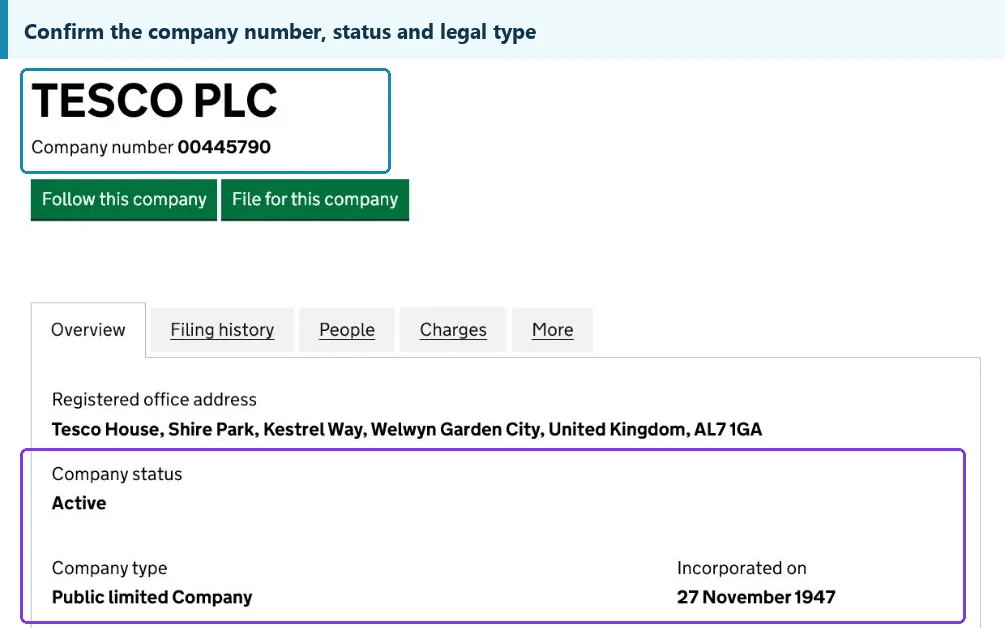
If the supplier's contracting, invoicing, factory or payment entities do not line up, use the Supplier Due Diligence Checklist to resolve the legal-identity question before treating the screening result as meaningful.
Suppose a supplier website uses:
ABC Building Materials
But the quotation shows:
ABC Building Materials Manufacturing Co., Ltd.
The invoice is issued by:
ABC International Trading Ltd.
And payment is requested to:
ABC Holdings Ltd.
Procurement should not automatically assume these are all the same entity.
Before screening, collect:
- Full Legal Company Name
- Trading Name
- Known Aliases
- Registered Country
- Registered Address
- Registration Number where available
- Factory Entity
- Contracting Entity
- Commercial Invoice Entity
- Payment Beneficiary
A supplier questionnaire can help collect this information before the screening starts.
Screen the legal transaction parties, not only the marketing name.
Step 2: Identify Which Parties Matter to the Transaction
The supplier may not be the only relevant counterparty.
Depending on the transaction and applicable requirements, procurement may need to consider parties such as:
- Supplier
- Manufacturer
- Distributor
- Agent
- Payment Beneficiary
- Consignee
- Parent or related company where relevant
- Other material transaction counterparties
This does not mean every minor logistics participant must always receive the same screening treatment.
The objective is:
Identify which entities are materially involved in the transaction and screen them according to the applicable compliance process.
Step 3: Determine Which Official Screening Sources Are Relevant
There is no single universal restricted-party database that automatically resolves every transaction.
For U.S.-related export screening, the International Trade Administration's Consolidated Screening List combines multiple restricted-party screening lists from the Departments of Commerce, State and Treasury into one search resource.
OFAC also provides its own Sanctions List Search tool, which searches its SDN and non-SDN sanctions lists and uses fuzzy logic to identify potential name matches.
For UK sanctions screening, the UK government maintains the UK Sanctions List.
The European Commission provides the EU sanctions map and consolidated financial sanctions resources, while the UN Security Council maintains its own Consolidated Sanctions List.
A useful starting-resource map is:
| Compliance Context | Starting Official Resource |
|---|---|
| U.S. restricted-party screening | Consolidated Screening List |
| U.S. sanctions-specific screening | OFAC sanctions resources |
| UK sanctions relevance | UK Sanctions List |
| EU sanctions relevance | EU sanctions resources |
| UN sanctions check | UN Security Council Consolidated List |
This is a resource map, not a determination that a particular law applies.
The applicable sources depend on the transaction.
Step 4: Search More Than One Name Variant
An exact-name-only search can miss relevant results.
Consider searching:
- Full Legal Name
- Trading Name
- Known Alias
- Former Name
- Common Abbreviation
- Reasonable Transliterations where relevant
For example:
ABC International Trading Co., Ltd.
may also appear as:
ABC Intl Trading
or under another registered spelling.
Do not overcomplicate the process by inventing dozens of possible names.
Start with known legal and trading identities and investigate meaningful variations.
Step 5: Do Not Treat a Name Match as a Confirmed Match
This is one of the most important controls.
Suppose the search returns:
ABC Trading Ltd.
Your supplier is also called:
ABC Trading Ltd.
That does not automatically prove they are the same entity.
Compare available identifiers:
- Full Legal Name
- Aliases
- Country
- Address
- Entity Type
- Registration or identifying details
- Other identifiers provided in the listing
- Source List
The U.S. Consolidated Screening List itself directs users who identify a potential match to review the relevant official source and determine the actual restrictions rather than relying on the consolidated search result alone.
Use three practical outcomes.
No Relevant Match
No meaningful matching result identified.
→ Record the screening.
→ Continue according to procurement policy.
Possible Match
Some identifying information overlaps, but the result is unclear.
→ HOLD
→ Collect more identity information.
Strong / Confirmed Match Concern
Multiple identifiers correspond to an official listing.
→ Review the originating official source.
→ Escalate before proceeding.
Possible Match ≠ Confirmed Match.
Potential Match Decision Gate
Use this workflow:
Search Result Found?
NO
→ Record search → Continue
YES
↓
Do the identifying details match?
Clearly No
→ Document false-positive reasoning → Continue
Unclear
→ HOLD → Gather more company information
Strong Match
→ Review original official listing
↓
Could a restriction apply to the transaction?
YES / UNCERTAIN
→ Escalate
Cleared After Review
→ Document result → Continue
This keeps procurement from making two opposite mistakes:
- rejecting a supplier simply because of a similar name;
- ignoring a genuine concern because the first result is inconvenient.
Step 6: Review the Original Source
A search interface helps locate potential records.
It should not replace the underlying official entry.
If a possible match appears, review available details such as:
- Which list contains the party?
- Which entity or individual is identified?
- Which aliases are listed?
- Which addresses or other identifiers appear?
- What restriction or program is referenced?
- When was the entry or relevant update made?
Different official lists can carry different restrictions.
Procurement should therefore avoid reducing every match to:
Sanctioned = Yes / No
The correct next step depends on the originating restriction.
Step 7: Consider Ownership and Control Where Relevant
Exact-name screening may not always be the end of the analysis.
For example, UK sanctions guidance states that sanctions can also apply in circumstances involving entities owned or controlled by designated persons, even where the entity itself is not individually listed.
For higher-risk transactions, procurement may therefore need additional information such as:
- Parent Company
- Major Owners
- Controlling Entity
- Related Companies
Do not apply one ownership rule globally.
Where ownership or control could materially affect the transaction, use the applicable official guidance or escalate to the appropriate trade-compliance or legal function.
Step 8: Create a Restricted Party Screening Record
Do not finish with:
“Checked — looks fine.”
Create a dated record.
| Field | Record |
|---|---|
| Supplier Legal Name | ABC Manufacturing Ltd. |
| Trading Name | ABC Building Materials |
| Country | — |
| Address | — |
| Registration Number | — |
| Transaction Role | Supplier |
| Official Source Checked | — |
| Search Name / Alias | — |
| Search Date | — |
| Result | No Match / Possible Match |
| Match Details | — |
| Reviewer | — |
| Next Action | Proceed / Hold / Escalate |
This gives procurement an audit trail showing:
Who was checked, where, when and with what result?
Why the Search Date Matters
Restricted-party and sanctions data can change.
The U.S. government maintains actively updated screening and sanctions-list services, and the UN Security Council also publishes updates to its consolidated sanctions list.
For that reason, record:
- Search Date
- Official Source
- Search Name
- Supplier Identity
- Reviewer
- Result
Re-screening may be appropriate where:
- substantial time passes before PO or payment;
- the supplier entity changes;
- ownership changes;
- transaction risk changes;
- company policy requires a fresh check.
There is no single universal screening frequency for every procurement situation.
What Should Procurement Do With a Possible Match?
Do not immediately reject the supplier from a similar-name result.
Use a controlled HOLD process.
1. Pause the Relevant Decision
Depending on the stage, this may mean holding:
- Supplier Approval
- PO Release
- Contract Signing
- Shipment
- Payment
2. Collect Better Identity Information
Confirm:
- legal name;
- address;
- country;
- registration number;
- aliases;
- ownership information where relevant.
3. Compare Against the Official Entry
Look for matching and conflicting identifiers.
4. Review the Actual Restriction
Do not rely only on the search-result summary.
5. Escalate if Still Unclear
Use the company's compliance procedure or obtain appropriate professional guidance before proceeding.
No Match Does Not Mean “Supplier Approved”
Restricted-party screening answers one narrow question.
After a clear screening result, return to the wider Supplier Qualification Workflow and the Supplier Qualification Checklist Before RFQ for company, product and procurement-risk controls.
It does not prove that the supplier:
- is a real manufacturer;
- has sufficient production capacity;
- can meet the specification;
- has valid product certificates;
- produces acceptable quality;
- can deliver on time.
A clear restricted-party screening result should therefore lead back into the wider supplier-qualification process.
The workflow becomes:
Legal Identity
↓
Restricted-Party Screening
↓
Certificate / Technical Evidence Verification
↓
Supplier Qualification
↓
RFQ / PO
Common Restricted-Party Screening Mistakes
Searching Only the Website Brand
Use the actual legal entity.
Ignoring a Different Payment Beneficiary
A transaction may involve more than one relevant entity.
Searching One Database and Assuming Global Clearance
Determine which official sources are relevant first.
Treating Similar Names as Confirmed Matches
Compare identifiers.
Treating No Match as Complete Supplier Due Diligence
It is only one control.
Relying on a Search Summary Instead of the Official Entry
Review the originating official source when a potential match appears.
Failing to Record the Search Date
Lists change.
Proceeding While a Material Match Remains Unresolved
Use:
HOLD → Investigate → Escalate
Restricted Party Screening Checklist
Supplier Identity
- Legal company name collected
- Trading names collected
- Known aliases collected
- Country confirmed
- Address confirmed
- Registration details collected
- Contracting entity confirmed
- Payment beneficiary confirmed
Transaction Context
- Relevant jurisdictions considered
- Material transaction parties identified
- Appropriate official screening sources selected
Screening
- Legal name searched
- Relevant aliases searched
- Potential results reviewed
- Country compared
- Address compared
- Other identifiers compared
- Original list checked where necessary
Record
- Source recorded
- Search date recorded
- Search names recorded
- Result recorded
- Reviewer recorded
- Next action recorded
Decision
- No relevant match
- False positive documented
- Possible match held
- Escalation completed where necessary
Tools and Resources for Restricted-Party Screening
International procurement teams may need several resource types:
- Official Restricted-Party Databases
- Government Sanctions Lists
- Company Registration Databases
- Supplier Verification Tools
- Trade Compliance Resources
- Export-Control Resources
- Screening Record Templates
These tools solve different parts of the task.
A company registry helps identify the legal entity.
A sanctions or restricted-party database helps perform the screening.
Official list information helps investigate a potential result.
A screening record documents what procurement checked.
Build Procurement Hub organizes these resources around the supplier due-diligence workflow so buyers can move from identifying an international supplier to selecting the appropriate verification resource and recording the result before the next procurement gate.
Where Restricted-Party Screening Fits in Supplier Qualification
The wider workflow is:
Once the appropriate trade-risk and supplier-qualification gates are cleared, the supplier can move into How to Prepare an RFQ for Construction Materials or the next commercial commitment stage.
Decision-critical certification evidence still belongs in separate verification work such as ISO Certificate Verification for Suppliers, while higher-risk factory capability may require the Supplier Audit Checklist.
Find Supplier
↓
Collect Legal Company Information
↓
Verify Company Identity
↓
Run Restricted-Party Screening
↓
Verify Critical Certificates and Technical Evidence
↓
Complete Supplier Qualification
↓
RFQ / PO
Restricted-party screening should therefore be treated as a focused trade-risk control — not as a replacement for supplier due diligence.
Screen the Real Transaction Parties — Not Just the Website Name
Confirm the legal entity and material counterparties, use the official restricted-party sources relevant to the transaction, investigate potential matches against identifiers and original listings, keep a dated screening record, and hold the transaction when a material concern remains unresolved.
FAQ
What is restricted-party screening?
Restricted-party screening is the process of checking transaction parties against relevant official sanctions, denied-party or other restricted-party resources before proceeding with a transaction.
Which supplier name should procurement search?
Start with the full legal company name and consider known trading names, aliases and other material entities involved in contracting or payment.
Does a similar name on a restricted-party list mean the supplier is restricted?
Not automatically. Compare available identifiers such as country, address, aliases and other details before deciding whether the result relates to the same party.
How often should suppliers be screened?
There is no single universal frequency. Re-screening may be appropriate when transaction timing, supplier identity, ownership, risk or company policy requires a new check.
The core principle is:
Restricted-party screening is not just a name search. Procurement should identify the correct legal entity, use the official screening resources relevant to the transaction, investigate potential matches and keep a dated record before moving forward.
