ISO Certificate Verification for Suppliers: How Buyers Should Check Validity
A supplier sends you an ISO 9001 certificate. The PDF looks professional, the certificate number is visible, and several certification logos appear at the bottom.
Should you treat the supplier as ISO certified?
Not yet.
Procurement rule: verify whether the ISO certificate is valid and relevant to the actual supplier, site and activity being evaluated — not merely whether the PDF looks genuine.
For procurement teams, ISO certificate verification should go beyond checking whether the document looks genuine. Buyers should confirm that the certificate belongs to the correct company, covers the relevant factory and business activity, is currently valid, and was issued through a credible certification system.
A useful verification process should answer:
Is this ISO certificate valid and relevant to the supplier I am evaluating?
The result should normally be:
Valid → Continue Supplier Qualification
Needs Clarification → Request More Evidence
Red Flag → Hold or Escalate Supplier Approval
What Information Do You Need Before Verifying an ISO Certificate?
Start with the certificate provided by the supplier.
ISO certificate checks often sit inside a broader Supplier Qualification Checklist Before RFQ: the certificate is one gate, not the entire supplier decision.
Record the key information shown on it:
- legal company name;
- certified address;
- certificate number;
- ISO standard;
- standard version;
- certification scope;
- issue date;
- expiry date;
- certification body;
- accreditation information;
- QR code or verification reference, if provided.
Then compare this information with other supplier documents such as:
- quotation;
- company registration;
- purchase documents;
- factory address;
- company website;
- technical documents.
The purpose is not simply to confirm that a certificate number exists.
The certificate must make sense for the supplier, site, and activity relevant to your purchase.
Step 1: Check the Company Name on the Certificate
Start with the legal entity.
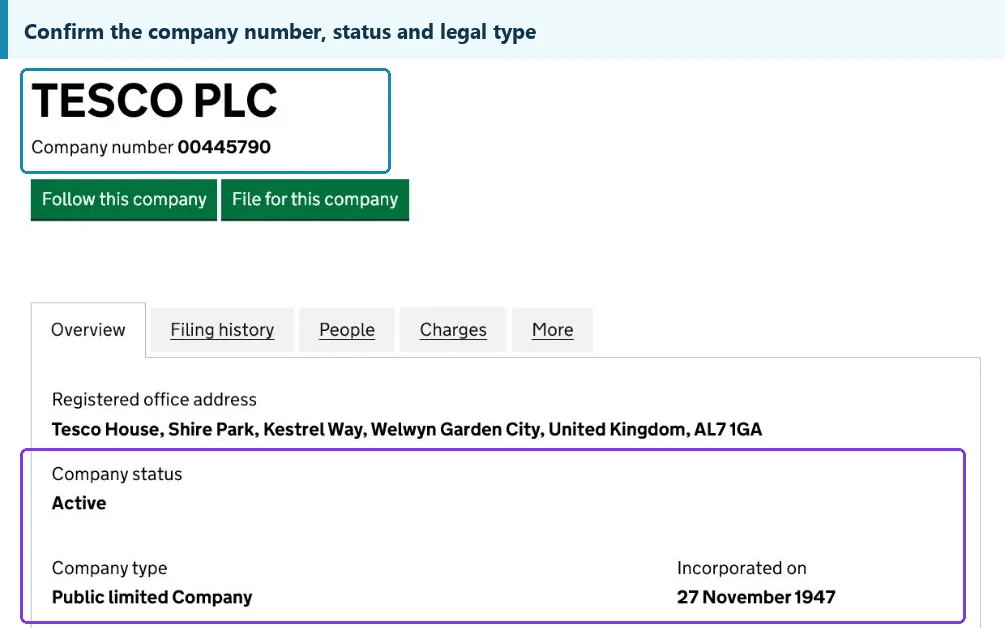
Compare the name shown on the ISO certificate with:
- the company issuing your quotation;
- the company that will sign the contract;
- the company receiving payment;
- the company operating the factory.
Watch for differences such as:
- parent company vs subsidiary;
- factory company vs trading company;
- old company name;
- another company in the same group;
- similar names with different legal entities.
A difference does not automatically mean the certificate is invalid.
But it does require an explanation.
For example, a supplier may say:
“Our factory is ISO 9001 certified.”
If the certificate actually belongs to a separate trading company, it does not prove that the manufacturing site you are evaluating is covered by that certification.
Decision Rule
Clear match: Continue verification.
Different entity with documented relationship: Review supporting evidence.
Different entity with no clear explanation: Treat as a verification issue.
Step 2: Check the Certified Address and Site
ISO management-system certification can apply to specific sites.
Check whether the certificate lists:
- the actual factory address;
- only a head office;
- multiple sites;
- a former production location;
- another facility within the company group.
This matters when the supplier has moved, expanded, or operates more than one plant.
For example, the certificate may be valid but list an old factory address while your order will be produced at a new facility.
Ask:
- Is the current production site included?
- Was the certificate updated after relocation?
- Is there a multi-site certificate?
- Is there an appendix showing additional certified facilities?
For project procurement, you want evidence that covers the location actually involved in production.
Step 3: Check the ISO Standard and Version
Confirm exactly which management-system standard is shown.
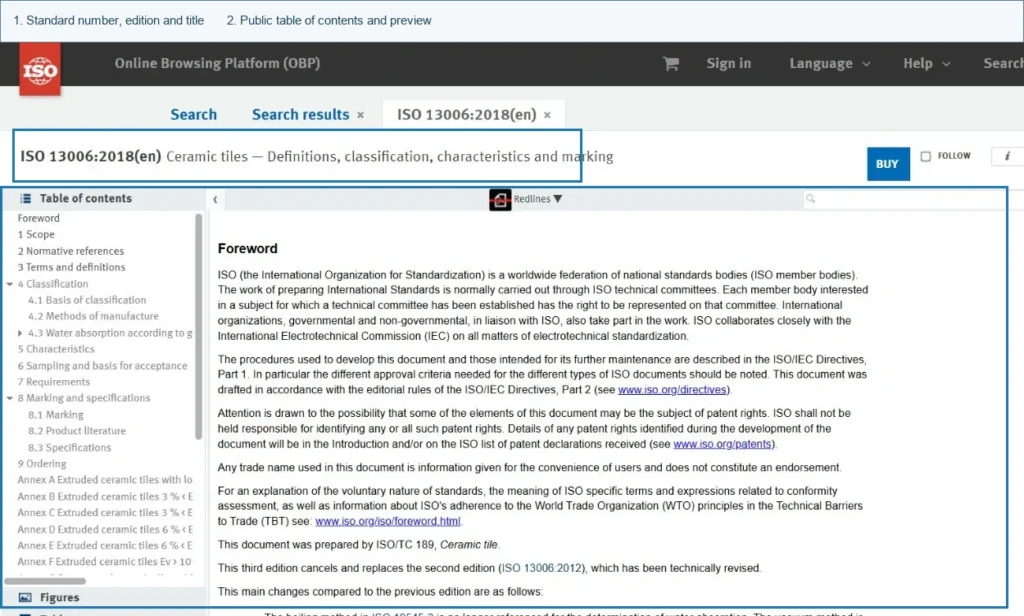
Suppliers may provide certificates for standards such as:
- ISO 9001;
- ISO 14001;
- ISO 45001.
Do not assume one certificate proves another claim.
If the supplier says it has several ISO certifications but provides evidence for only one, verify each claim separately where relevant.
Also check whether the standard version shown on the certificate matches what the supplier claims.
The purpose here is simple:
The certificate should support the exact certification claim being made.
Step 4: Check the Certificate Scope
The certification scope is one of the most important parts of the certificate.
It describes the activities covered by the certified management system.
For example:
“Manufacture and assembly of aluminum building components”
is very different from:
“Sales and distribution of building materials.”
Both may be genuine ISO certificates.
But they support different procurement conclusions.
If you are evaluating a manufacturer, check whether the scope relates to:
- manufacturing;
- processing;
- assembly;
- finishing;
- relevant product categories;
- activities connected to your purchase.
A valid certificate can still be of limited value if the scope does not cover the activity you are evaluating.
Practical Question
Ask:
Does the scope cover what this supplier is actually doing for my order?
If the answer is unclear, request clarification before treating the certificate as useful supplier evidence.
Step 5: Check Issue Date, Expiry Date and Current Status
Buyers often stop after reading the expiry date printed on the PDF.
That is not always enough.
Check:
- issue date;
- latest issue or revision date;
- expiry date;
- current status, where a reliable lookup is available.
A certificate may have been:
- renewed;
- replaced;
- suspended;
- withdrawn;
- transferred;
- updated after a company or site change.
Therefore:
A printed expiry date is evidence, but it should not always be treated as final proof of current status.
For a high-risk or high-value supplier decision, try to confirm the current certificate status through an independent source.
Step 6: Identify the Certification Body
The organization issuing the certificate is the certification body.
This is different from ISO itself.
A common misunderstanding is that suppliers receive ISO 9001 certificates directly from ISO.
In practice, companies are normally audited and certified by certification bodies operating within the relevant certification system.
Check:
- certification body name;
- official website;
- certificate lookup function;
- contact details;
- certificate reference format.
If the issuer cannot be credibly identified, that is a reason to investigate further.
The next question is even more important:
Is this certification body appropriately accredited for the certification activity shown?
Step 7: Verify the Certification Body's Accreditation
The logo printed on the certificate is not enough by itself.
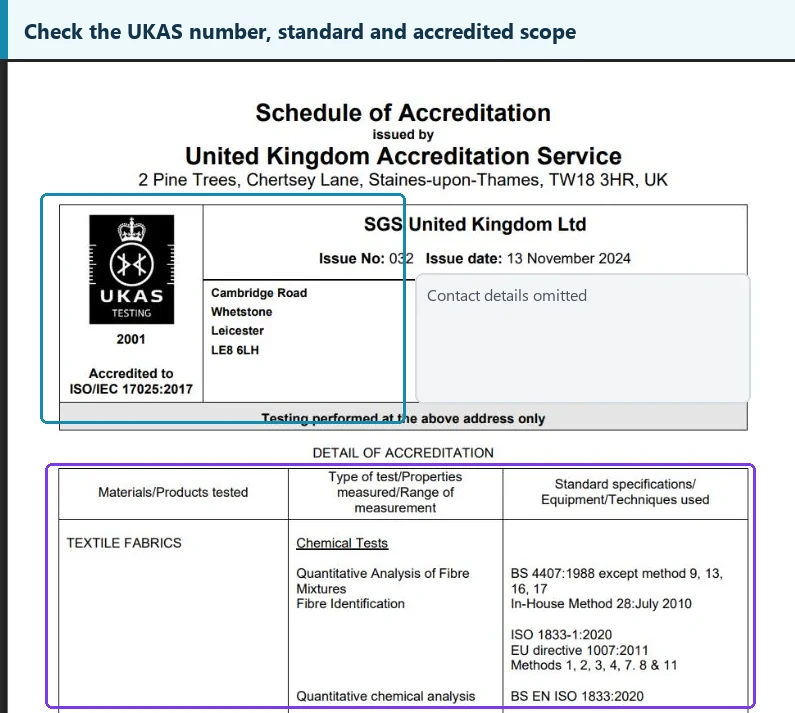
Where practical, confirm the certification body's accreditation through credible external records.
The basic relationship can be understood as:
ISO Standard
↓
Accreditation System
↓
Certification Body
↓
Supplier Certificate
Buyers do not need to become certification specialists.
The practical objective is simply to determine whether the organization issuing the supplier's certificate is operating within a credible accreditation framework for that type of certification.
Possible verification sources may include:
- international certification search systems;
- national accreditation body databases;
- official certification body records.
If the accreditation claim cannot be confirmed, do not automatically label the certificate fake.
Instead, classify the issue as unresolved and request further evidence.
Step 8: Search for the Certificate in a Credible Verification Source
Once you have the certificate number, company name, and certification body, try to verify the certificate independently.
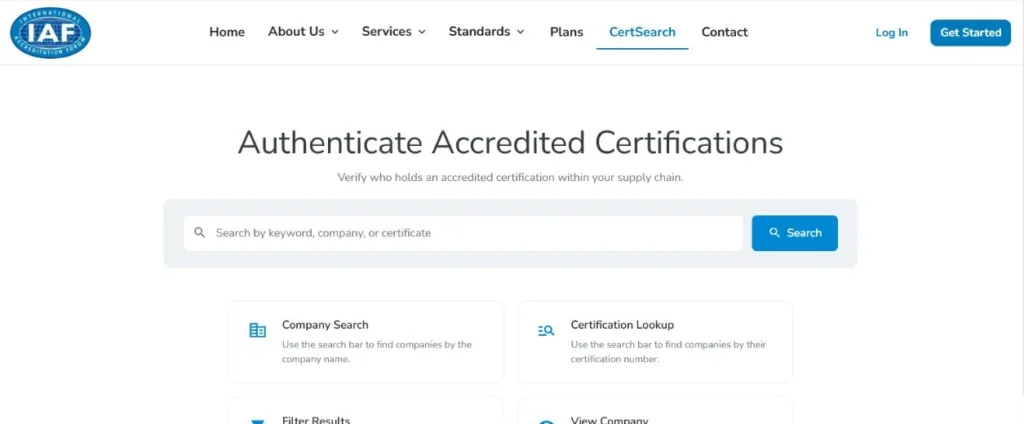
Depending on the certification system, you may be able to search using:
- supplier name;
- certificate number;
- certification body;
- certified site.
Useful verification paths can include:
International Certification Search Systems
These may provide searchable certification information where participating records are available.
Certification Body Databases
Many certification bodies maintain their own certificate verification tools.
Accreditation Body Records
These are useful for confirming whether the certification body itself holds the relevant accreditation.
For important supplier decisions, one of the strongest approaches is to combine:
Supplier Certificate
Certification Body Record
Accreditation Evidence
This is stronger than simply searching the certificate number on Google.
Step 9: Match the Online Record Back to the Certificate
Finding a result online does not complete the verification.
Compare the important fields.
| Verification Field | What to Compare |
|---|---|
| Company name | Does it match the supplier? |
| Address | Does it cover the relevant site? |
| Certificate number | Does it match exactly? |
| ISO standard | Is it the claimed standard? |
| Scope | Does it cover the relevant activity? |
| Status | Is it active/current? |
| Certification body | Does it match the certificate? |
This step catches situations where a certificate number is genuine but the supplier's interpretation of the certificate is misleading.
For example:
- the company name differs;
- the certificate covers another factory;
- the scope covers distribution rather than manufacturing;
- the certification is no longer active.
Certificate verification is therefore not only about authenticity.
It is also about relevance.
ISO Certificate Verification Red Flags
Some inconsistencies deserve immediate attention.
If entity, site, scope or accreditation inconsistencies remain unresolved, move the supplier into the deeper Supplier Due Diligence Checklist before approval progresses.
Major Red Flags
Investigate further if:
- the company name does not match;
- the certificate belongs to another legal entity;
- the actual factory address is not covered;
- the certificate number cannot be confirmed;
- the certification body cannot be credibly identified;
- accreditation claims cannot be supported;
- the certificate appears expired, withdrawn, or suspended;
- the certificate scope does not cover the relevant activity;
- online records materially conflict with the PDF;
- the supplier refuses to explain obvious inconsistencies.
One red flag does not always prove fraud.
But several unexplained inconsistencies should affect the supplier qualification decision.
Not Found Online Does Not Automatically Mean Fake
This distinction is important.
A certificate may fail to appear in a particular database because:
- database coverage is incomplete;
- the certificate was recently renewed;
- records have not yet been updated;
- the supplier changed its legal name;
- a multi-site structure is involved;
- the certification body uses its own verification system.
Therefore:
Not found online = unresolved verification issue, not automatic proof of fraud.
If the certificate matters to supplier approval, try another evidence source.
You may:
- contact the certification body;
- use its certificate lookup system;
- check the relevant accreditation body;
- ask the supplier for updated certification evidence.
Use a Valid / Clarify / Red Flag Decision
A simple decision framework makes certificate verification more useful to procurement teams.
VALID
Use when:
- legal company name matches;
- relevant site is covered;
- certificate number matches;
- standard is correct;
- scope is appropriate;
- status appears current;
- certification body is credible;
- accreditation evidence is consistent.
Next action: Save the verification evidence and continue supplier qualification.
NEEDS CLARIFICATION
Use when:
- a certificate cannot be found in one database;
- the company name has changed;
- the site address differs;
- certification was recently renewed;
- a group structure is unclear;
- scope wording needs explanation.
Next action: Request supporting evidence and verify again.
RED FLAG
Use when:
- material information conflicts;
- the certificate belongs to another unrelated entity;
- certificate status is invalid;
- accreditation claims appear misleading;
- major inconsistencies remain unexplained.
Next action: Hold supplier approval and escalate due diligence.
ISO Certificate Verification Checklist
Use this compact checklist when reviewing supplier ISO documents:
- Legal company name matches the supplier
- Certified factory or site matches
- Certificate number recorded
- ISO standard confirmed
- Standard version checked
- Certification scope reviewed
- Scope matches relevant activity
- Issue and expiry dates checked
- Current certificate status checked where possible
- Certification body identified
- Accreditation status reviewed
- Independent certificate lookup attempted
- Online record matched against the PDF
- Verification evidence saved in the supplier file
For high-risk purchases, do not rely on only the supplier's PDF.
What an ISO Certificate Does Not Prove
Even a fully valid ISO management-system certificate should not be over-interpreted.
For manufacturing capability, use the Supplier Audit Checklist. For product-specific conformity, use the Construction Product Certification Guide rather than treating ISO 9001 as product certification.
It does not automatically prove:
- that a specific product complies with project requirements;
- that every shipment will be defect-free;
- that the supplier has sufficient production capacity;
- that the correct material grade will be used;
- that the product meets destination-market regulations;
- that your order will pass final inspection;
- that the factory can meet your delivery schedule.
For example, ISO 9001 relates to a quality management system within its certified scope.
It is not a substitute for product certification, technical testing, factory audits, or shipment inspection.
A broader procurement verification workflow may look like:
Company Verification
↓
ISO Certificate Verification
↓
Product Compliance Check
↓
Factory Audit Where Needed
↓
Pre-Shipment Inspection
Each check answers a different procurement question.
What Tools Can Buyers Use for ISO Certificate Verification?
Supplier verification often requires several external resources.
Depending on the certificate, buyers may use:
- international certification search tools;
- national accreditation body databases;
- certification body certificate lookup systems;
- company verification databases;
- product certification databases.
The challenge is often not whether these resources exist.
It is knowing which source should be used for which verification task.
Build Procurement Hub organizes supplier verification, certification, compliance, inspection, and procurement resources by actual buyer workflow, helping procurement teams move from a supplier document to the relevant verification source more quickly.
What Comes After ISO Certificate Verification?
ISO certificate verification is one step in supplier qualification.
The verification outcome can also become evidence in a broader Construction Supplier Evaluation Scorecard alongside production capability, delivery, commercial and project-performance criteria.
If the certificate is valid:
Record Evidence → Continue Supplier Qualification
If important details are unresolved:
Request Evidence → Verify Again → Decide
If serious inconsistencies appear:
Hold Supplier → Escalate Due Diligence
The certificate should then be considered alongside:
- company verification;
- product compliance;
- supplier qualification;
- factory audit results;
- technical capability;
- delivery capability.
The goal is not simply to answer:
“Is this certificate real?”
The better procurement question is:
Does this certificate provide credible and relevant evidence for the supplier decision I am making?
Verify the Certificate as Supplier Evidence — Not Just as a PDF
Use Supplier Verification resources to check the legal entity, certificate record, certification body and accreditation evidence. Then separate management-system certification from product-specific compliance and factory capability checks.
FAQ
How can I verify an ISO certificate online?
Start with the supplier's company name, certificate number, certification body, and certified site. Check available certification-body records, accreditation information, and credible certificate search systems. Then compare the online record with the details on the supplier's PDF.
Can I verify ISO 9001 certification by certificate number?
Where an appropriate verification database or certification-body lookup is available, the certificate number can be useful. However, buyers should also confirm the company name, site, scope, certification body, and current status.
Does ISO issue ISO 9001 certificates?
Companies are generally certified by certification bodies rather than receiving supplier certificates directly from ISO. Buyers should therefore identify the organization that actually issued the supplier's certificate.
Does a valid ISO 9001 certificate prove product quality?
No. A valid certificate provides evidence about the certified management system and scope. It does not automatically prove that a specific product, production batch, or shipment meets your technical or regulatory requirements.
