Construction Material Submittal Checklist by Procurement Stage
A construction material submittal should not begin with:
What documents does the supplier already have?
It should begin with:
Approval-control rule: define evidence requirements before RFQ, check supplier document capability during evaluation, issue only a complete and consistent formal package, and release PO / production only after the approved product details are carried into procurement.
What evidence does this project require before the material can be approved and purchased?
That difference matters.
If procurement waits until after supplier selection to discover that the consultant requires:
- a specific test report;
- a project-specific shop drawing;
- a compliance certificate;
- a finish sample;
- a mock-up;
the material approval process may already be behind schedule.
A better approach is to build the submittal checklist by procurement stage:
Before RFQ
↓
Supplier Evaluation
↓
Formal Submittal Preparation
↓
Consultant Review
↓
Final Approval
↓
PO / Production Release
The purpose of the checklist is not simply to collect documents.
It is to make sure the right evidence exists before the material moves to the next procurement stage.
Why Procurement Should Build the Checklist Before RFQ
Many material submittal problems start too late.
Procurement receives several quotations, chooses the strongest commercial offer, and only then asks:
What documents can you provide for approval?
The supplier may reply:
- catalogue available;
- certificate not available;
- test report belongs to another model;
- project-specific drawing will take two weeks;
- required sample cannot be supplied.
The supplier may still offer a good price, but the product may not be ready for the project's approval process.
Before RFQ, review:
- Project Specification
- BOQ
- Drawings
- Material Schedule
- Applicable Standards
- Consultant Requirements
- Client Requirements
Then create a:
Submittal Requirement List
If a document is mandatory for approval, suppliers should know about it before commercial evaluation.
Stage 1: Before RFQ — Define the Submittal Requirements
At this stage, procurement does not need the complete formal package.
Put the mandatory approval evidence into How to Prepare an RFQ for Construction Materials so bidders identify certificate, test-report, sample and drawing gaps before commercial comparison.
The task is to identify what the successful supplier will eventually need to provide.
A basic checklist may ask:
- Product Datasheet Required?
- Product Drawing Required?
- Shop Drawing Required?
- Material Certificate Required?
- Test Report Required?
- Compliance Certificate Required?
- Physical Sample Required?
- Color / Finish Sample Required?
- Mock-up Required?
- Installation Manual Required?
- Warranty Required?
- Country of Origin Required?
- Manufacturer Authorization Required?
The output should be a clear:
Submittal Requirement List
This can be included with the RFQ or supplier clarification package.
That gives suppliers a chance to identify gaps before procurement compares their offers.
Stage 2: During Supplier Evaluation — Check Evidence Availability
Procurement does not need every bidder to prepare a complete consultant-ready submittal.
Use the Technical Bid Evaluation Template to record whether the supplier can support the required technical and compliance evidence before nomination.
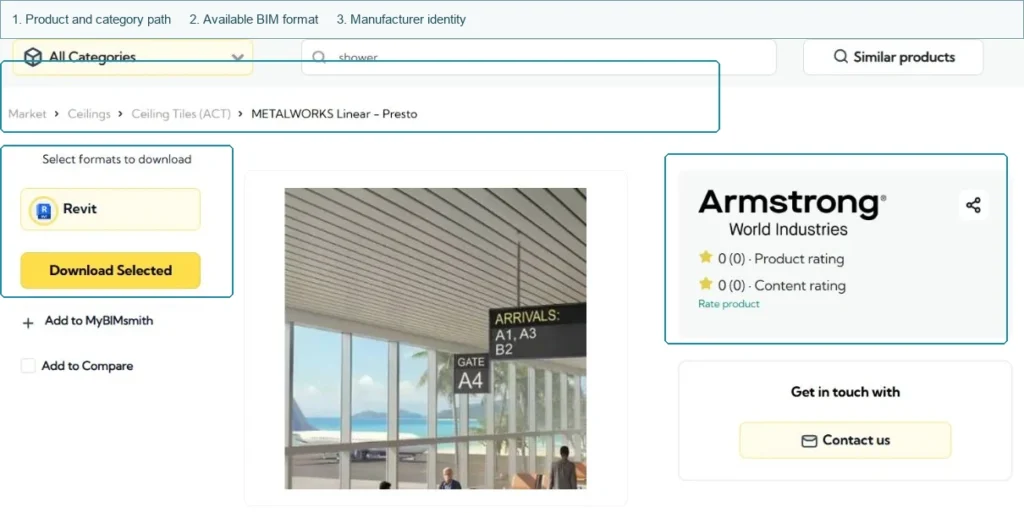
But it should check whether each serious supplier can support the required approval process.
Request preliminary evidence such as:
- Product Catalogue
- Technical Datasheet
- Material Information
- Available Certificates
- Available Test Reports
- Standard Product Drawings
- Manufacturer Details
- Product Model or Reference
- Finish Options
The key question is:
Can this supplier realistically produce the evidence required for approval?
A low quotation is less useful if the supplier cannot provide mandatory technical documentation.
Supplier Submittal Capability Check
A simple capability matrix can help.
| Requirement | Available | Needs Updating | Cannot Provide |
|---|---|---|---|
| Technical Datasheet | ✓ | ||
| Test Report | ✓ | ||
| Compliance Certificate | ✓ | ||
| Shop Drawing | ✓ | ||
| Required Sample | ✓ |
Use a simple decision rule:
Critical Mandatory Document Unavailable
→ Qualification Risk
Document Exists but Needs Project-Specific Revision
→ Acceptable with Action
Required Evidence Available
→ Proceed
This prevents procurement from discovering approval problems only after supplier nomination.
Stage 3: Build the Formal Material Submittal Package
Once the supplier candidate is selected, procurement can build the complete formal package.
The complete consultant-ready package then moves into the broader Construction Material Submittal Process for controlled issue, review, revision and final approval.
The exact documents vary by material type, but most submittals can be organized into several groups.
A. Product Identification
The reviewer should immediately understand what product is being proposed.
Include where applicable:
- Manufacturer
- Brand
- Product Name
- Model Number
- Product Code
- Country of Origin
- Supplier
- Proposed Application
- Project Location or Area
Avoid vague submissions such as:
“See attached catalogue.”
A large catalogue may contain dozens of models.
The proposed product should be clearly identified.
B. Technical Documents
Depending on the material, this may include:
- Technical Datasheet
- Product Specification
- Product Drawing
- Shop Drawing
- Dimensions
- Material Composition
- Performance Data
- Installation Details
Only submit information relevant to the proposed material.
More pages do not automatically create a better submittal.
A focused package is easier to review than a large bundle of unrelated manufacturer literature.
C. Compliance Evidence
Possible evidence includes:
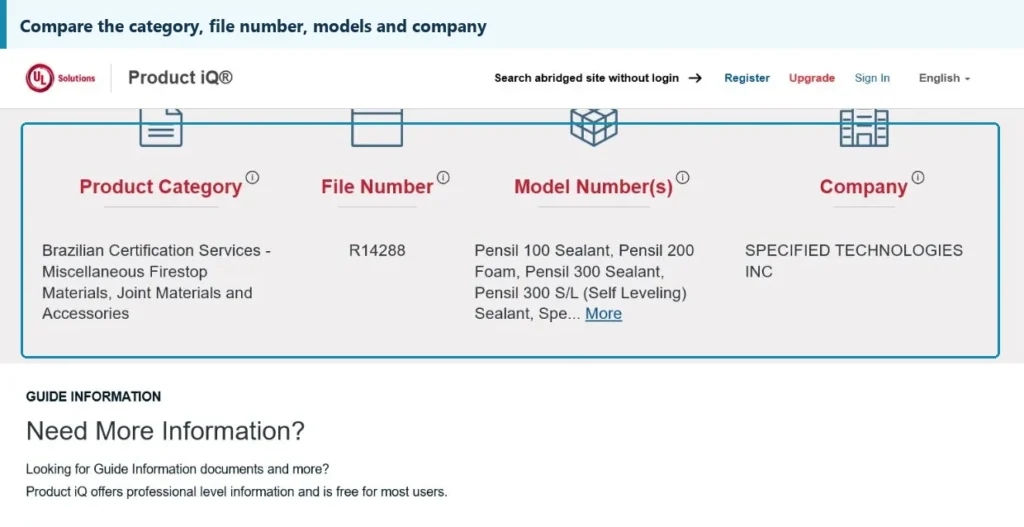
Where certificates or test evidence are critical, use the wider Construction Product Certification Guide to check whether the record actually supports the proposed product.
- Compliance Certificates
- Test Reports
- Product Certifications
- Material Certificates
- Declarations
- Fire Test Evidence
- Acoustic Test Evidence
- Structural Performance Evidence
- Applicable Standard References
For important compliance documents, record:
- Document Number
- Issuing Body
- Product Covered
- Issue / Validity Date where relevant
- Match to Proposed Product?
A certificate may be genuine but still irrelevant if it applies to a different model or product family.
D. Samples and Finish Approval
Physical approval can be important for visually sensitive products.
Examples include:
- Tiles
- Flooring
- Glass
- Sanitary Ware
- Door Hardware
- Decorative Panels
- Bathroom Fixtures
Possible requirements:
- Physical Sample
- Color Sample
- Finish Sample
- Texture Sample
- Hardware Sample
- Mock-up
Record:
- Required?
- Submitted?
- Approved?
- Sample Reference?
This reference becomes important later when procurement releases the PO.
E. Installation and Maintenance Information
Where required, include:
- Installation Manual
- Fixing Details
- Installation Guidance
- Maintenance Instructions
- Cleaning Instructions
Do not add these automatically to every submittal.
Use the project requirement as the guide.
F. Warranty and Supporting Documents
Depending on the specification, the package may also require:
- Manufacturer Warranty
- Supplier Warranty
- Spare Parts Commitment
- Manufacturer Authorization
- Other Supporting Declarations
These documents normally support the main technical approval rather than replace it.
Construction Material Submittal Checklist by Stage
The required package changes during procurement.
| Document / Evidence | Before RFQ | Supplier Evaluation | Formal Submittal | Before PO |
|---|---|---|---|---|
| Technical Datasheet | Define requirement | ✓ | ✓ | Verify approved version |
| Product Catalogue | Optional | ✓ | If needed | Reference |
| Shop Drawing | Define requirement | If available | ✓ | Approved revision |
| Test Report | Define requirement | Preliminary check | ✓ | Verify product match |
| Certificate | Define requirement | Preliminary check | ✓ | Verify approved reference |
| Physical Sample | Define requirement | Optional | If required | Match approved sample |
| Color / Finish | Define requirement | Review options | Approve | Match PO |
| Warranty | Define requirement | Review | If required | Confirm |
| Installation Manual | Define if needed | Availability check | If required | Reference |
The principle is:
Do not request everything from every supplier at the same time.
Use each stage to answer a different question.
Material Type Changes the Checklist
A universal checklist should not be treated as mandatory for every product.
For example:
| Requirement | Door Hardware | Tiles | Glass | Sanitary Ware |
|---|---|---|---|---|
| Datasheet | ✓ | ✓ | ✓ | ✓ |
| Product Drawing | ✓ | Sometimes | ✓ | Sometimes |
| Test Report | Sometimes | Sometimes | Often | Sometimes |
| Color / Finish Sample | ✓ | ✓ | Sometimes | ✓ |
| Physical Sample | Sometimes | Often | Sometimes | Sometimes |
| Installation Details | ✓ | Sometimes | ✓ | ✓ |
The real checklist comes from:
Project Specification + Material Type + Approval Authority Requirements
not from a generic internet template.
Stage 4: Run a Completeness Check Before Submission
Before sending the package to the consultant, run a formal completeness check.
Submittal Completeness Gate
Product Clearly Identified?
YES / NO
Technical Datasheet Included?
YES / NO / N/A
Drawings Complete?
YES / NO / N/A
Compliance Evidence Included?
YES / NO / N/A
Certificates Match the Proposed Product?
YES / NO / N/A
Samples Included Where Required?
YES / NO / N/A
Manufacturer and Model Consistent Across Documents?
YES / NO
Specification Deviations Declared?
YES / NO / N/A
Revision Numbers Controlled?
YES / NO
Required Coversheets / Signatures Complete?
YES / NO / N/A
If a critical answer is:
NO
then:
HOLD SUBMITTAL
Collect the missing evidence first.
Sending a clearly incomplete package simply to start the review clock often creates another review cycle rather than saving time.
Check Consistency Across the Package
A package can contain every required document and still fail because the documents do not describe the same product.
For example:
- Datasheet: Model A
- Drawing: Model B
- Certificate: Product Family C
- Sample: Finish D
Before submission, compare:
- Manufacturer
- Model
- Product Code
- Size
- Material
- Finish
- Drawing Reference
- Certificate Scope
- Sample Reference
Document completeness is not enough. The documents must all point to the same proposed product.
Declare Deviations Before Submission
If the supplier proposal differs from the specification, make the difference visible.
Possible deviations include:
- Material Grade
- Dimension
- Finish
- Performance
- Standard
- Brand
- Installation Detail
Use a simple structure:
| Item | Specified | Proposed | Deviation / Comment |
|---|---|---|---|
| Material | Grade X | Grade Y | Supplier proposes alternative |
| Finish | Brushed | Satin | Consultant confirmation required |
Do not hide the difference inside product literature.
A declared deviation is easier to review than a difference discovered later.
Stage 5: Respond to Consultant Comments
If the consultant returns:
Track review status and resubmission progress in the Construction Submittal Log rather than relying on email history alone.
Revise and Resubmit
procurement should not simply tell the supplier:
Please send again.
Create a comment-response list.
| Consultant Comment | Required Action | Supplier Response | Revised Document |
|---|---|---|---|
| Test report missing | Provide report | Submitted | TR-02 |
| Dimension unclear | Revise drawing | Updated | DRG Rev B |
Check:
- Every comment answered
- Revised document identified
- Revision updated
- Superseded version removed from active package
- Outstanding comments clearly shown
The goal is to make the next review easier, not just larger.
Do Not Mix Old and New Revisions
Once documents are revised:
- Mark the current revision
- Record the revision date
- Replace superseded documents in the active package
- Retain historical copies only where required
The detailed document-control process belongs elsewhere.
For the checklist, the rule is simple:
The active approval package should contain one clearly controlled current version.
Stage 6: After Approval, Verify the Approved Product Before PO
This is where procurement must convert approval into purchasing information.
After final approval, record the exact approved manufacturer, model, finish and revision in the Material Approval Register before PO or production release.
Do not stop at:
APPROVED
Before releasing PO or production, compare:
Approved Manufacturer
vs
PO Manufacturer
Approved Model
vs
PO Model
Approved Size
vs
PO Size
Approved Material
vs
PO Material
Approved Finish
vs
PO Finish
Approved Drawing Revision
vs
Production Drawing
Approved Sample Reference
vs
Production Finish / Color
A project can approve one product and accidentally purchase another if this handover is not controlled.
Approval must be translated into the PO specification.
Approved Submittal to PO Release Gate
Before PO or production:
Final Approval Received?
YES / NO
Approved Manufacturer Confirmed?
YES / NO
Approved Model Confirmed?
YES / NO
Approved Finish Confirmed?
YES / NO
Approved Revision Confirmed?
YES / NO
Approved Sample Reference Confirmed?
YES / NO / N/A
Outstanding Comments Closed?
YES / NO
PO Specification Matches Approval?
YES / NO
If a critical answer is:
NO
then:
HOLD PO / PRODUCTION
until the discrepancy is resolved.
This is the point where the submittal process becomes a procurement control rather than a document exercise.
Submittal Requirements by Procurement Stage
A simple stage summary is:
Before RFQ
Define what will eventually be required.
Output:
Submittal Requirement List
Supplier Evaluation
Check whether the supplier can provide the required evidence.
Output:
Submittal Capability Assessment
Before Formal Submission
Build and verify the complete package.
Output:
Complete Material Submittal
During Review
Respond to comments and control revisions.
Output:
Revised / Approved Submission
Before PO
Convert approval into purchasing requirements.
Output:
Approved Procurement Specification
This is the full procurement logic behind the checklist.
Common Material Submittal Checklist Mistakes
Asking for Documents Too Late
Define approval requirements before supplier selection.
Sending Every Catalogue Page Available
Submit relevant evidence, not document volume.
Sending an Incomplete Package
Use a completeness gate before formal submission.
Assuming a Certificate Automatically Covers the Proposed Product
Check the product scope.
Mixing Models Across Documents
Datasheet, drawing, certificate and sample should all relate to the same proposal.
Failing to Declare Deviations
Make differences visible before approval.
Using an Old Revision After Comments
Control the active version.
Releasing PO Without Checking the Approval
The purchase specification must match the approved material.
Construction Material Submittal Checklist
Requirement Definition
- Project specification reviewed
- Material schedule reviewed
- Drawing requirements reviewed
- Mandatory standards identified
- Certificates identified
- Test reports identified
- Samples identified
- Approval requirements communicated to suppliers
Supplier Evaluation
- Product datasheet reviewed
- Catalogue reviewed
- Required certificates available
- Required test reports available
- Drawing capability confirmed
- Sample capability confirmed
Formal Package
- Manufacturer identified
- Product model identified
- Datasheet included
- Drawings included
- Compliance evidence included
- Samples included where required
- Installation information included where required
- Warranty included where required
- Deviations declared
- Revisions controlled
Pre-Submission
- Package complete
- Product references consistent
- Current revisions used
- Missing items resolved
Post-Approval
- Final approval recorded
- Approved manufacturer confirmed
- Approved model confirmed
- Approved finish confirmed
- Approved revision confirmed
- Approved sample reference confirmed
- PO matches approved submission
Tools and Resources for Material Submittals
Construction procurement teams may need several different resource types during this workflow:
- Material Submittal Templates
- Technical Datasheet Resources
- Product Certification Databases
- Test Report and Compliance Resources
- Document Control Tools
- PDF Tools
- Drawing Review Tools
- Material Approval Registers
- Submittal Tracking Templates
These resources solve different parts of the same task.
A certification database helps verify evidence.
A PDF or document tool helps organize the package.
A submittal log tracks review progress.
An approval register records final material status.
Build Procurement Hub organizes these resources around the actual material approval workflow so buyers can move from supplier evaluation to formal approval and PO release without searching for each tool separately.
Where This Checklist Fits in the Approval Workflow
The full workflow can be organized as:
Define Material Requirement
↓
Build Submittal Checklist
↓
Collect Supplier Documents
↓
Formal Material Submittal
↓
Issue Documents
↓
Track Review Status
↓
Record Final Material Approval
↓
Link Approval to PO / Delivery Dates
↓
Release Procurement
The most important principle is:
A good material submittal checklist is not just a list of documents. It defines what evidence is needed before supplier selection, what must be complete before formal submission, and what must match the final approval before the PO is released.
Build the Submittal Checklist Before Supplier Selection
Define the evidence required for approval before RFQ, screen supplier document capability during evaluation, issue only a complete and consistent formal package, and release the PO only after the approved product details are carried into procurement.
FAQ
What should be included in a construction material submittal?
A material submittal normally includes enough product identification, technical information, drawings, compliance evidence and samples to demonstrate that the proposed material meets the project requirements. The exact contents depend on the specification and material type.
When should procurement request submittal documents from suppliers?
Define document requirements before RFQ, check evidence availability during supplier evaluation, and collect the complete formal package before consultant submission.
Should every material submittal use the same checklist?
No. The checklist should be adapted to the material type, project specification, required standards and consultant or client approval requirements.
What should procurement check after a material is approved?
Before PO or production, confirm that the manufacturer, model, dimensions, material, finish, revision and approved sample reference match the final approved submission.
