CE Marking Verification for Construction Products: Buyer Checklist
A CE logo on a construction product is not, by itself, enough for a procurement team to approve that product.
The real question is:
Does the CE-related evidence actually apply to the exact product being proposed, and does the declared performance meet the project requirement?
CE review rule: do not verify the logo. Verify that the evidence applies to the exact proposed product, follows the relevant technical basis, is internally consistent, includes notified-body involvement where required, and demonstrates performance that meets the project specification.
For construction procurement, CE verification should therefore follow a controlled workflow:
Identify Exact Product
↓
Identify Applicable Technical Basis
↓
Check the Declaration
↓
Cross-Check Product Information
↓
Check Notified-Body Involvement Where Applicable
↓
Compare Declared Performance With Project Specification
↓
PASS
Proceed to material approval.
CLARIFY
Request corrected or missing evidence.
FAIL
Do not approve the proposed product.
The core principle is:
Do not verify the CE logo. Verify the evidence behind the CE claim.
CE Marking Does Not Automatically Mean “Approved for My Project”
A construction product may have legitimate CE documentation and still be unsuitable for a particular project.
Suppose the project specification requires:
Performance Class 3
but the supplier's declared product performance is:
Performance Class 2
The product may have a valid CE marking process behind it, but it still does not meet the project requirement.
Procurement therefore needs to answer two different questions.
Question 1
Does the CE claim appear applicable and consistent with the proposed product?
Question 2
Does the product's declared performance meet the project specification?
Passing the first check does not automatically mean passing the second.
CE documentation and project suitability are separate procurement controls.
Step 1: Identify the Exact Product Being Proposed
Start with the product, not the CE logo.
This product-matching logic should sit inside the wider Construction Product Certification for Procurement workflow so certification evidence is always tied to the exact manufacturer, model and proposed scope.
Record:
- Manufacturer
- Brand
- Product Name
- Model
- Product Code
- Product Type
- Intended Use
- Size or Variant where relevant
- Manufacturing Location where material to the evidence
Then compare this information against:
- Supplier Quotation
- Product Datasheet
- Material Submittal
- Declaration
- CE Information
For example:
Supplier Quotation
Model:
X100
Datasheet
Model:
X100
Declaration
Product:
X Series
CE Information
Model:
X200
This should not be treated as complete evidence.
Status:
HOLD — Product identity inconsistent
The supplier should explain whether the documents genuinely cover the proposed X100 product.
If procurement cannot establish exactly which product the compliance evidence applies to, verification should stop until the identity is clarified.
Step 2: Identify the Applicable Technical Basis
The next question is:
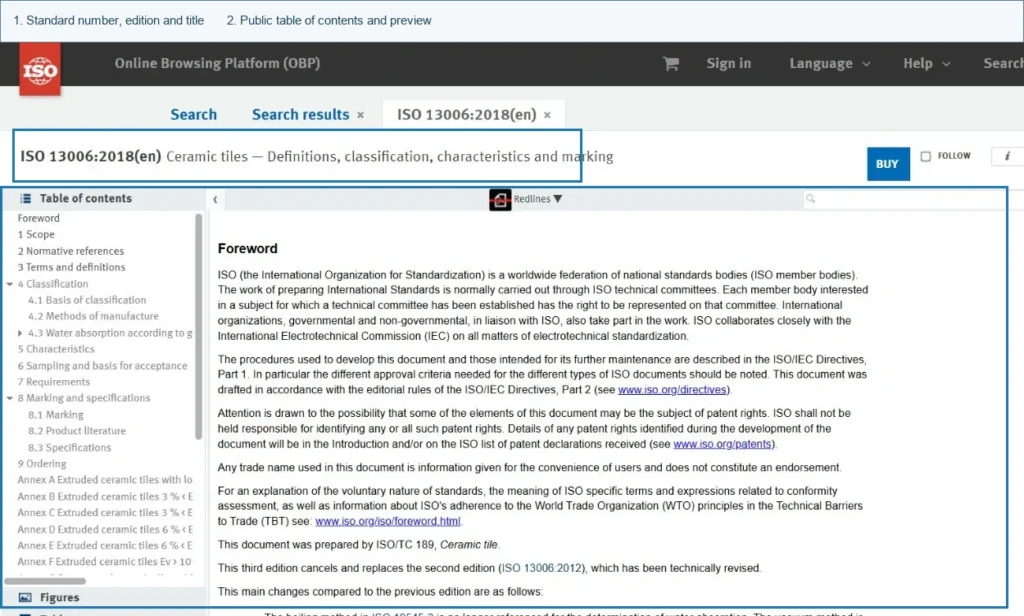
What technical basis supports this product's CE marking?
For construction products, the relevant route may depend on:
- product type;
- intended use;
- applicable harmonised technical specification;
- European Technical Assessment route where relevant;
- current construction-product regulatory requirements.
Procurement does not need to become the technical standard writer.
But it should record:
- Technical Specification Reference
- Product Family
- Intended Use
- Assessment / Standard Reference
- Relevant Version or Date where material
The important point is that the technical basis must make sense for the exact product and intended application.
Do Not Guess the Standard From the Product Name
A common mistake is:
“This is glass, so this must be the correct EN standard.”
or:
“This is a door, so this standard must apply.”
A product category can involve:
- different intended uses;
- different technical specifications;
- different assessment routes.
The supplier's formal documentation and current official technical references should therefore be used rather than assumptions based on the product name.
Product type + intended use + technical basis should align.
If the supplier cannot identify the basis used for the CE claim, procurement should request clarification before proceeding.
Step 3: Check That the Relevant Declaration Is Available
At this stage, procurement does not need to perform a complete line-by-line Declaration of Performance review.
That can be handled separately where required.
For the CE verification workflow, first confirm:
- Declaration supplied?
- Manufacturer matches?
- Product reference matches?
- Intended use appears consistent?
- Technical reference matches?
- Declared performance is present?
Possible outcome:
Declaration Present and Consistent
Continue.
Declaration Missing
HOLD
Request it where required.
Declaration Refers to Another Product
HOLD
Clarify the relationship before approving the material.
Step 4: Cross-Check the Product Across All Documents
One of the most effective procurement checks is also one of the simplest:
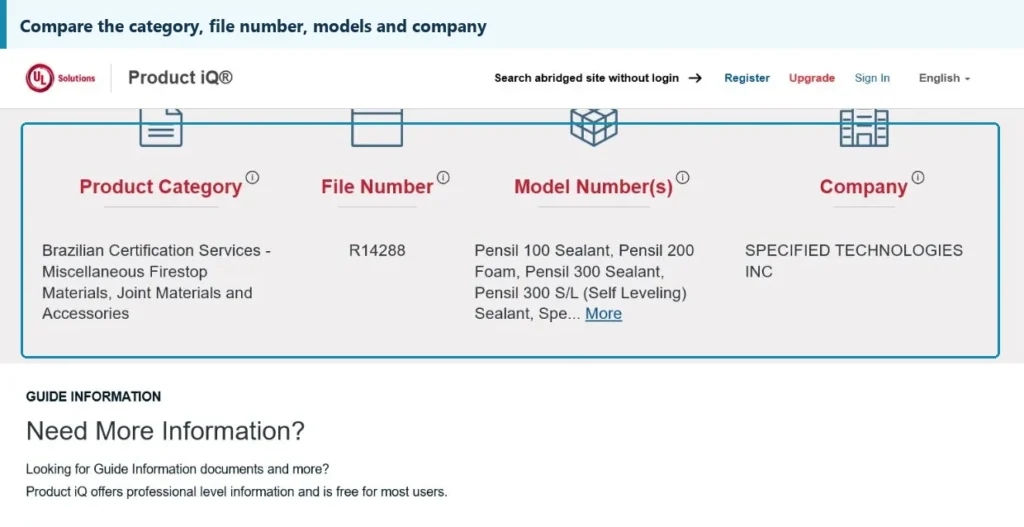
Compare the same product information across every document.
Use a consistency matrix.
| Field | Datasheet | Declaration | CE Information | Material Submittal |
|---|---|---|---|---|
| Manufacturer | ABC | ABC | ABC | ABC |
| Product / Model | X100 | X100 | X100 | X100 |
| Product Type | Door Set | Door Set | Door Set | Door Set |
| Technical Reference | EN xxx | EN xxx | EN xxx | EN xxx |
| Intended Use | Reference | Defined | Reference | Match |
| Declared Performance | Reference | Listed | Reference | Compared |
This is more useful than reviewing each PDF in isolation.
Common inconsistencies include:
- different manufacturer;
- different product model;
- different product code;
- different product family;
- different technical reference;
- different intended use;
- different factory where relevant;
- different revision.
If a material field does not match:
Do not force the documents to fit. Clarify the discrepancy.
Step 5: Check the CE Information Itself
The information accompanying CE marking should be consistent with the underlying product evidence.
Depending on the product and applicable requirements, useful first-level checks may include:
- Manufacturer identified
- Product identification consistent
- Declaration reference consistent
- Technical specification reference consistent
- Intended use consistent
- Declared performance references consistent
- Notified-body number where applicable
The goal is not to memorize one universal label format.
Construction products can follow different technical routes.
The buyer's job is to confirm:
Does the CE information describe the same product and same compliance basis shown in the supporting documentation?
Step 6: Determine Whether Notified-Body Involvement Applies
A frequent procurement mistake is:
“There is no notified-body number, so the CE marking must be fake.”
That is not a safe universal rule.
Instead ask:
Does the applicable assessment system for this product require notified-body involvement?
There are two possible outcomes.
Notified Body Not Required for the Relevant Task
Record:
N/A
Do not manufacture a problem simply because no third-party body appears.
Notified Body Required
Then procurement should verify:
- Notified Body Number
- Body Name
- Relevant Notification
- Applicable Product / Technical Scope
Where a notified body is claimed, the important question is not simply:
Does this organization exist?
It is:
Is this body appropriately notified for the activity and product scope relevant to the evidence being reviewed?
A deeper NANDO verification can be handled as a separate task.
First-Level Notified-Body Check
A simple procurement record may contain:
| Field | Result |
|---|---|
| Notified Body Required? | Yes |
| Body Number | — |
| Body Name | — |
| Official Record Found? | Yes / No |
| Relevant Scope Appears Consistent? | Yes / No / Clarify |
| Status | Verified / Hold / N/A |
Possible outcomes:
VERIFIED
The official information appears consistent with the supplier evidence.
HOLD
The body exists, but the relevant scope is unclear.
FAIL
The evidence does not support the claimed organization or activity.
Do not turn this step into a complete notified-body audit.
Its purpose is to decide whether the supplier evidence can move forward.
Step 7: Compare Declared Performance With the Project Specification
This is the most important procurement decision in the workflow.
Record the project-requirement comparison in the Technical Bid Evaluation Template when CE evidence forms part of the supplier's technical compliance assessment.
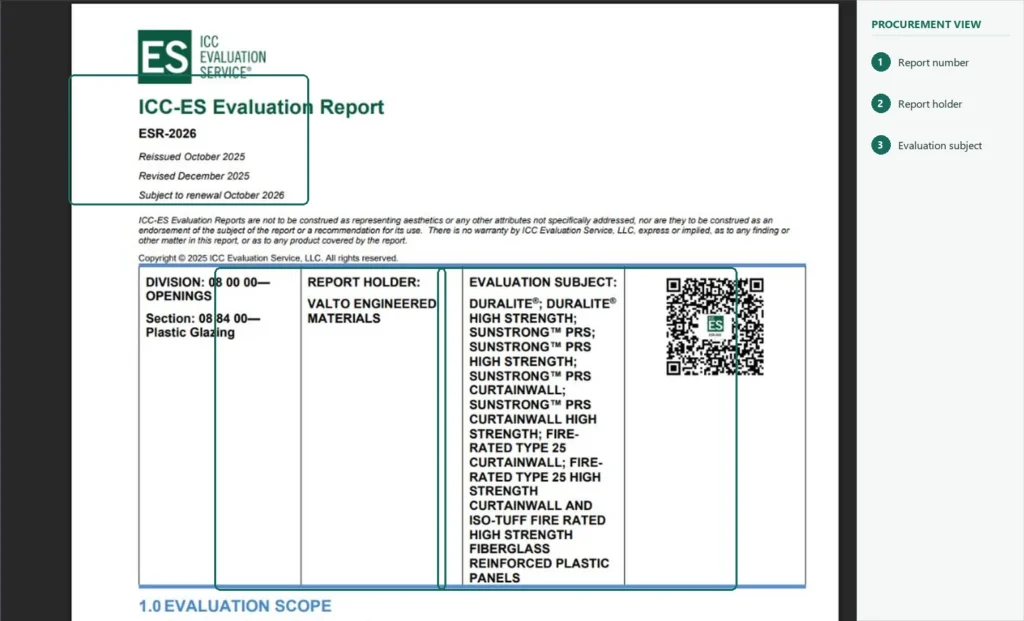
After the CE documentation appears internally consistent, compare the product's declared performance against the project requirement.
Use a table.
| Performance Characteristic | Project Requirement | Declared Product Performance | Result |
|---|---|---|---|
| Characteristic A | ≥ X | Y | Pass |
| Characteristic B | Class 3 | Class 2 | Fail |
| Characteristic C | Required | Not Declared | Clarify |
Use three statuses.
PASS
Declared performance satisfies the project requirement.
FAIL
Declared performance is below the specified requirement.
CLARIFY
The project requires a characteristic, but the supplier evidence does not provide enough information.
The procurement rule is simple:
A valid CE claim does not override the project specification.
What If a Required Performance Is Not Declared?
A required project characteristic may appear as:
- not declared;
- unavailable;
- unclear;
- not obviously applicable.
Do not automatically approve it.
Also do not automatically reject it without checking the actual requirement.
Ask:
Does this project require a declared value, classification or other evidence for this characteristic?
If yes and the evidence is missing:
HOLD
Request clarification or additional technical evidence.
The purpose of the checklist is to make uncertainty visible rather than let it disappear inside a large document package.
CE Marking Verification Checklist
Use this as the main working checklist.
The CE evidence requirements can also be built into the Construction Material Submittal Checklist so missing declarations, certificates or product references are identified before formal submission.
| Verification Check | Result |
|---|---|
| Exact manufacturer identified | Pass / Hold |
| Exact product / model identified | Pass / Hold |
| Intended use confirmed | Pass / Hold |
| Applicable technical basis identified | Pass / Hold |
| Declaration available | Pass / Hold |
| Declaration matches proposed product | Pass / Hold |
| CE information consistent | Pass / Hold |
| Datasheet consistent with declaration | Pass / Hold |
| Notified-body involvement required? | Yes / No |
| Notified body verified where applicable | Pass / Hold / N/A |
| Required project performance identified | Pass / Hold |
| Declared performance meets specification | Pass / Fail / Clarify |
| Final Procurement Status | Accept / Clarify / Reject |
This transforms CE review from:
“CE document received”
into:
“CE evidence reviewed against the actual proposed product and project requirement.”
Step 8: Use a Three-Status Procurement Decision
Avoid reducing the entire decision to:
CE Valid / CE Invalid
Procurement needs a more useful status.
ACCEPT
Use when:
- product identity matches;
- technical basis is clear;
- supporting declaration is consistent;
- notified-body involvement is appropriately addressed where applicable;
- relevant declared performance meets the project specification.
This means:
CE document review passed
It does not automatically mean every other material-approval requirement has been completed.
CLARIFY / HOLD
Use when:
- a document is missing;
- model numbers differ;
- technical references are unclear;
- declaration does not clearly match;
- notified-body scope is uncertain;
- required performance is absent;
- documents contradict each other.
Do not release final material approval while a critical item remains unresolved.
REJECT / DO NOT APPROVE
Use when:
- evidence clearly belongs to another product;
- required compliance evidence cannot be provided;
- declared performance fails a mandatory project requirement;
- a required compliance route cannot be demonstrated.
The reason should be recorded.
CE Verification Decision Gate
A practical workflow is:
Supplier Claims CE Marking
↓
Exact Product Identified?
NO
→ HOLD
YES
↓
Applicable Technical Basis Identified?
NO
→ HOLD
YES
↓
Declaration Available and Product Match Confirmed?
NO
→ CLARIFY
YES
↓
Documents Consistent?
NO
→ HOLD
YES
↓
Notified Body Required?
YES
→ Verify Body / Scope
NO
→ Continue
↓
Declared Performance Meets Project Requirement?
NO
→ DO NOT APPROVE
UNCLEAR
→ HOLD
YES
↓
CE DOCUMENT REVIEW PASSED
↓
Proceed to material approval.
Common CE Marking Verification Mistakes
Checking Only for the CE Logo
A logo does not prove that the documentation applies to the proposed product.
Check the evidence.
Asking for a “CE Certificate” as if One Universal Document Exists
The relevant construction-product evidence depends on the applicable compliance route.
Ask for the documents required for the actual product rather than assuming one standard certificate format.
Accepting Evidence for a Similar Model
“Similar” is not enough.
Match the proposed manufacturer, model and product scope.
Assuming Any EN Reference Is Automatically Correct
Confirm that the technical basis is relevant to the actual product and intended use.
Assuming a Notified Body Is Always Required
Determine whether notified-body involvement applies first.
Assuming a Notified-Body Number Proves Everything
Where applicable, check the official body record and relevant scope.
Ignoring the Project Specification
CE evidence does not automatically mean the product satisfies the project's required performance.
Relying on an Old Static Checklist
Construction-product regulatory and technical references can change.
Use current official information for the actual product.
CE Document Consistency Checklist
Before approval, cross-check:
- Manufacturer
- Brand
- Product Model
- Product Code
- Product Family
- Intended Use
- Technical Specification
- Declaration Reference
- Notified Body Reference where applicable
- Declared Performance
- Revision / Date where relevant
If one important field differs:
Clarify before approval.
Where CE Verification Fits in Material Approval
CE verification should connect directly to the wider procurement workflow.
After final approval, record the exact approved product and evidence reference in the Material Approval Register before PO / production release.
Verified CE evidence should then move into the Construction Material Submittal Process and, where required, the Material Approval Request (MAR) rather than remaining as an isolated compliance file.
Supplier Proposed Product
↓
Verify CE Claim
↓
Review Declaration in More Detail Where Required
↓
Verify Notified Body Where Applicable
↓
Compare Declared Performance With Project Specification
↓
Complete Material Submittal Package
↓
Formal Consultant / Client Review
↓
Record Final Material Approval
↓
Release PO / Production
This makes CE review a procurement control rather than an isolated compliance exercise.
Tools and Resources for CE Marking Verification
Construction procurement teams may need several types of resources:
- EU Construction Products Regulation Resources
- Harmonised Technical Specification Resources
- NANDO
- Product Certification Databases
- Declaration and Technical Document Resources
- Material Submittal Templates
- Compliance Checklists
- Document Comparison Tools
These resources support different parts of the verification process.
Official technical resources help identify the applicable basis.
NANDO helps where notified-body verification is required.
Technical documents allow procurement to compare product identity and performance.
Material-submittal tools move the verified evidence into the project approval process.
Build Procurement Hub organizes these resources around the actual construction-material verification workflow so buyers can move from a supplier's CE claim to an evidence-based material decision instead of searching for each official resource separately.
Verify the Evidence Behind the CE Claim
Match the CE evidence to the exact proposed product, confirm the technical basis, check the declaration and notified-body involvement where applicable, compare declared performance with the project specification, and only then move the product into formal material approval.
FAQ
How can a buyer verify CE marking on a construction product?
Confirm the exact product identity, identify the applicable technical basis, review the declaration and CE information for consistency, verify notified-body involvement where applicable, and compare the declared performance with the project specification.
Is a CE logo enough to prove a construction product is compliant?
No. Procurement should review the technical evidence behind the CE claim and confirm that it applies to the exact proposed product.
Does every CE-marked construction product need a notified body?
Not necessarily. The applicable assessment requirements determine whether notified-body involvement is required.
Can a CE-marked product still fail project approval?
Yes. The product may have valid CE documentation but still fail if its declared performance does not meet the project's technical requirements.
The core principle is:
Do not verify CE marking by looking for the CE logo. Verify that the evidence applies to the exact product, follows the appropriate technical basis, is internally consistent, includes valid notified-body involvement where required, and demonstrates performance that actually meets the project specification.
