How to Verify a Supplier's Legal Company Registration Before Buying: A Company Registry Check for Procurement
Before issuing a purchase order or making a significant payment to a new overseas supplier, procurement should first answer a basic question:
Does the supplier's claimed legal company actually exist, and does the official registration record match the information they provided?
This is where a company registry search becomes useful.
Registry-check rule: confirm the supplier's claimed legal entity against the appropriate official company registry, record any identity mismatch, and treat a successful match as one verification layer — not as supplier approval.
A registry check can help confirm basic legal-entity information such as:
- Legal Company Name
- Registration Number
- Registered Address
- Company Status
- Registration or Incorporation Date
- Other available company details
But it is important to keep the purpose of this check narrow.
Registered Company ≠ Qualified Supplier
A company may be legally registered and still have weak production capability, poor financial health, invalid certification or other commercial risks.
A registry search is one verification layer — not the entire supplier due diligence process.
What a Company Registry Check Can Actually Confirm
Official company registries are designed to record legal entities.
Depending on the country or jurisdiction, the registry may show some combination of:
- Official Legal Name
- Company / Registration Number
- Current Registration Status
- Registered Office
- Registration Date
- Legal Form
- Directors or Officers
- Filing History
- Business Activity
Not every registry provides the same fields.
Some offer extensive corporate records. Others provide only basic registration information.
For procurement, the goal is not to collect every available field.
The goal is to answer:
Does the supplier's claimed identity correspond to an official legal entity?
What a Registry Check Cannot Prove
A company registry can confirm legal existence.
Treat legal registration as one input into the wider Supplier Due Diligence process rather than a substitute for capability, certification or commercial-risk checks.
It usually cannot prove:
- Factory Ownership
- Manufacturing Capability
- Product Quality
- Certification Validity
- Financial Strength
- Sanctions Clearance
- Bank Account Ownership
- Order Performance
For example, a company may be:
Active in the registry
but operate only as:
- Trading Company
- Distributor
- Sales Office
- Holding Company
That is why:
Active Registration ≠ Low-Risk Supplier
and:
Legal Entity Verification ≠ Manufacturer Verification
These questions require separate checks.
Step 1: Collect the Supplier's Legal Information
Before opening a registry, first record what the supplier is claiming.
Useful information includes:
- Full Legal Company Name
- Company / Registration Number
- Country or Jurisdiction
- Registered Address
- Business License or Company Extract
- Website
- Entity Name Used on the Quotation
- Entity Name Used on the Invoice
This creates a supplier-provided baseline.
Do not start with only:
the brand name shown on the website.
A commercial brand and the registered company name may be different.
For example:
Website:
ABC Building Solutions
Legal entity:
ABC International Trading Co., Ltd.
That may be completely legitimate.
The important question is whether procurement understands which legal entity is actually doing business with the project.
Step 2: Find the Relevant Official Company Registry
Use the official company or business registry for the jurisdiction where the supplier claims to be registered.
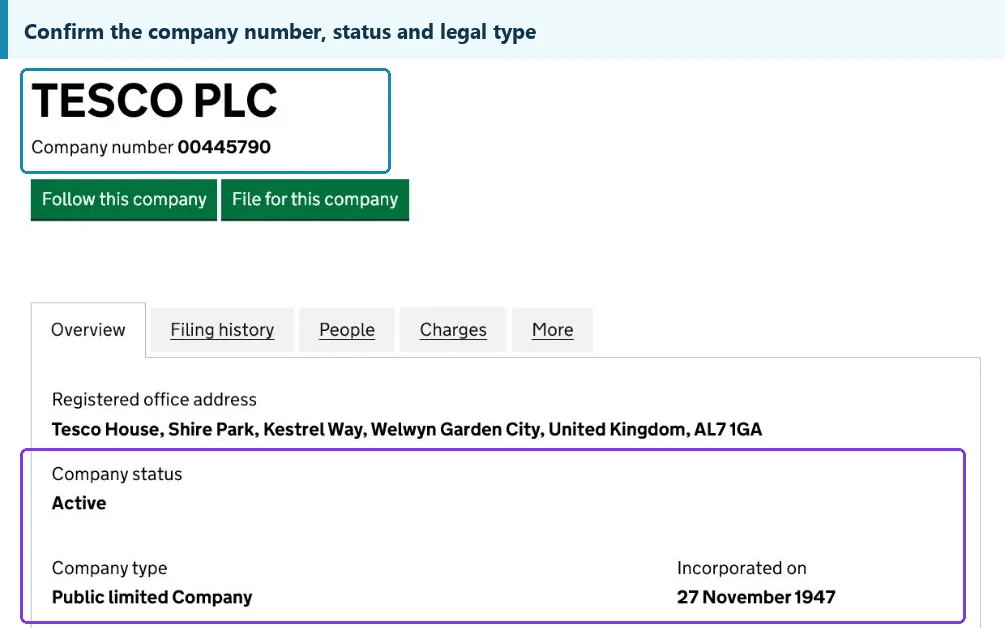
The preferred source is generally:
First Choice
Official government company or business registry
Where Registration Is Regional
Relevant state, province or regional registry
Where Applicable
Government-authorized corporate information portal
Avoid treating the following as the primary legal-entity source when an official registry is available:
- Supplier screenshots
- Marketplace profiles
- Generic company-information websites
- Commercial lead databases
These may be useful supporting sources, but they are not the same as checking the underlying official record.
Use the official registry as the primary legal-entity source whenever available.
Step 3: Search the Exact Legal Entity
Where possible, start with:
Registration Number
A registration number is often more reliable than searching only by company name.
Company names can be:
- similar;
- abbreviated;
- translated;
- changed;
- used under different trading names.
If no registration number is available, search the full legal name.
Then use other identifiers such as:
- Registered Address
- Location
- Director / Officer Information
- Incorporation Date
to confirm that the correct company has been found.
Do not assume two companies with similar names are the same entity.
Step 4: Compare the Supplier Information With the Registry Record
Once the official record is found, compare the main identifiers.
The objective is simple:
Are the supplier's claimed legal details consistent with the official registration record?
A practical record can look like this:
Legal Entity Match Record
| Field | Supplier Provided | Official Registry | Result |
|---|---|---|---|
| Legal Company Name | ABC Building Ltd | ABC Building Ltd | Match |
| Registration Number | 12345678 | 12345678 | Match |
| Registered Address | Address A | Address A | Match |
| Company Status | Claimed Active | Active | Match |
| Registration Date | Not Provided | 2018 | Reference Only |
| Main Difference | — | — | None |
The correct conclusion is:
Registry Match Confirmed — Continue Supplier Verification
Not:
Supplier Approved.
That distinction matters.
How to Handle Common Mismatches
A mismatch does not automatically mean fraud.
It means procurement has something to clarify.
Legal Company Name Is Different
Supplier quotation:
ABC International Ltd
Official registry:
ABC Trading Ltd
Possible explanations include:
- Brand name vs legal entity
- Related company
- Previous company name
- Incorrect quotation entity
- Different entity responsible for export or invoicing
Procurement should clarify:
Which legal entity will sign the contract, issue the invoice and receive payment?
Registration Number Does Not Match
This is more significant.
Possible actions:
- Ask the supplier to reconfirm the number
- Request an official company extract
- Request the current business license
- Repeat the registry search
Until the discrepancy is resolved, do not treat the legal entity as verified.
Registered Address Is Different
An address difference may result from:
- Registered Office vs Factory
- Office Relocation
- Old Registry Information
- Multiple Operating Locations
So:
Address Difference ≠ Automatic Fraud
Record the discrepancy and ask the supplier to explain it.
Company Status Is Not Active
Registry terminology differs by jurisdiction.
Possible labels may include:
- inactive;
- dissolved;
- suspended;
- struck off;
- in liquidation;
- other local status categories.
Do not apply one universal interpretation across countries.
Instead, understand what the status means in that jurisdiction before proceeding with qualification, contracting or payment.
Exact Match, Explainable Difference or Unresolved Mismatch
A simple way to record the outcome is to use three categories.
Exact Match
Key identifiers align.
Action:
Continue supplier verification.
Explainable Difference
Example:
The website brand differs from the legal entity name, but the relationship is documented.
Action:
Record the explanation and supporting evidence.
Unresolved Mismatch
Example:
The registration number cannot be matched to the entity on the quotation.
Action:
Pause the relevant verification or commercial step until clarified.
This is more useful than an overly simple:
PASS / FAIL
because company structures are often more complex than they first appear.
Why Company Name Alone Is Not Enough
International suppliers may use several names.
Before contract and payment, connect the verified entity to the wider International Supplier Contract & Payment Risk Workflow so different names do not disappear at the handoff between qualification and transaction.
For example:
Website
ABC Building Group
Quotation
ABC Export Co., Ltd.
Contract
ABC Manufacturing Co., Ltd.
Bank Beneficiary
ABC Holdings Ltd.
These may all belong to the same corporate group.
But procurement should not assume that automatically.
The buyer needs to know:
Which exact legal entity is responsible for the transaction?
That is why legal name should be checked together with:
- Registration Number
- Jurisdiction
- Address
- Supporting Company Documents
whenever possible.
Registry Match Does Not Verify the Factory
Suppose the legal company is successfully matched.
If the sourcing objective is to identify actual producers, keep the discovery and factory questions separate using Manufacturer Databases for Construction Materials and then verify the production role independently.
That still does not answer:
Does this company actually manufacture the product?
The registered entity may be:
- a trading company;
- an export company;
- a distributor;
- a brand owner;
- a manufacturer.
Some registries may show a business activity description, but this alone may not prove actual production capability.
Additional checks may still be required, including:
- Factory Address
- Production Evidence
- Product Scope
- Certification Records
- Factory Audit
- Site Verification
Therefore:
Legal Entity Verification ≠ Manufacturer Verification
The registry check should normally happen before deeper supplier verification, not replace it.
When Should Procurement Perform the Registry Check?
A registry search is useful at several points.
Where company policy requires sanctions or transaction screening, complete Restricted Party Screening separately; an active company registration does not provide sanctions clearance.
Carry the confirmed legal entity into the Supplier Qualification Workflow so the entity being approved is the same one that will later quote, contract and invoice.
During Early Supplier Screening
If the supplier identity is unclear, verify the legal entity before spending significant time on qualification.
Before Final Supplier Qualification
Confirm that the entity being evaluated actually matches the official record.
Before Contracting
Make sure the correct legal name appears on the agreement.
Before First Significant Payment
Confirm that unresolved identity differences have not been ignored.
But remember:
Company Name Match ≠ Bank Account Verification
Bank details should be controlled separately.
Example: A Supplier With Two Different Company Names
Suppose a supplier presents itself online as:
Before money is released, move from entity verification to the Pre-Payment Verification Checklist for invoice, beneficiary, bank-detail and milestone confirmation.
XYZ Architectural Hardware
The quotation is issued by:
XYZ International Trading Co., Ltd.
The official registry shows:
XYZ International Trading Co., Ltd. — Active
The registration number also matches the supplier document.
Meanwhile, marketing material refers to:
XYZ Hardware Factory.
What has procurement actually confirmed?
It has confirmed that:
the legal trading entity on the quotation exists and matches the registration record.
It has not confirmed that:
XYZ International Trading Co., Ltd. owns or operates XYZ Hardware Factory.
So the correct next step is:
Legal entity matched → continue manufacturer verification.
This is exactly why a registry search should remain a narrow verification task.
Where Build Procurement Hub Fits
Supplier legal-entity verification usually requires access to the correct official registry for the supplier's jurisdiction.
The Supplier Verification section can help procurement teams locate resources for:
- Official Company Registries
- Certification Verification
- Manufacturer Verification
- Factory Audit
- Inspection
The Contracts & Trade Risk section can then support later controls such as:
- Restricted Party Screening
- Pre-Payment Verification
- Payment Risk Checks
Build Procurement Hub helps buyers move from:
Who is this supplier legally?
to:
What should we verify next?
without treating legal registration as complete supplier approval.
Common Mistakes
Searching Only the Brand Name
Use the legal entity name and registration number where possible.
Accepting a Supplier-Provided License Without Independent Lookup
Check the official registry separately when available.
Treating Active Registration as Supplier Qualification
Legal existence does not prove capability or reliability.
Assuming Every Address Difference Is Fraud
Registered office and operating location may legitimately differ.
Ignoring Different Entities on the Quotation, Contract and Payment Documents
Clarify which entity is responsible for the transaction.
Stopping Due Diligence After the Registry Match
Continue with the verification controls appropriate to the order.
Verify the Legal Entity Before You Treat the Supplier as the Same Company
Collect the supplier's legal name and registration number, search the appropriate official registry, compare the key identifiers and record any mismatch. A confirmed registry match should move the supplier into the next verification stage — not directly into approval, contracting or payment.
FAQ
How can I check whether an overseas supplier is legally registered?
Use the official company or business registry for the jurisdiction where the supplier claims to be registered. Compare the official record with the supplier's legal name, registration number and other available identifiers.
Does an active company registration mean the supplier is trustworthy?
No. Active registration confirms only part of the supplier's legal identity. Capability, certification, sanctions exposure, financial risk and payment details may require separate checks.
What should I do if the supplier name does not exactly match the registry?
Determine whether the difference is caused by a brand name, translated name, related company, previous company name or another legal entity. Record and clarify the difference before proceeding.
Does a company registry prove that the supplier is really a manufacturer?
Not necessarily. Legal registration and manufacturing capability are separate verification questions.
The core principle is:
Use an official company registry to confirm that the supplier's claimed legal entity exists and that the key identifiers match. Record inconsistencies and clarify them before proceeding, but do not treat a registry match as proof that the supplier is qualified, low risk, sanctions-free, financially safe or capable of manufacturing the required product.
