Technical Bid Evaluation Template for Construction Materials
Once supplier quotations arrive, procurement teams should not jump straight to price comparison.
A cheaper bid may use a different material, exclude a required standard, offer an alternative specification, or fail to provide critical technical evidence. If those differences are ignored, the lowest quotation can become the highest project risk.
A technical bid evaluation helps buyers compare each supplier against the same approved project requirements before commercial factors become the deciding issue.
Procurement rule: determine technical acceptability before commercial comparison. A cheaper offer should not remain competitive if it fails a mandatory technical requirement.
The purpose is simple:
Determine whether each supplier's technical offer is acceptable enough to proceed to commercial evaluation.
A practical technical evaluation should normally produce one of four outcomes:
Technically Acceptable
Conditionally Acceptable
Clarification Required
Technically Rejected
What Is a Technical Bid Evaluation Used For?
Technical bid evaluation is the structured review of a supplier's proposed product, specification, documentation, and technical capability against the project's defined requirements.
Depending on the material, the evaluation may cover:
- material grade;
- dimensions;
- finish;
- performance requirements;
- product standards;
- certifications;
- test reports;
- drawings;
- technical data sheets;
- accessories;
- warranty;
- project-specific requirements.
The key principle is:
The cheapest bid should not automatically proceed if it fails the technical requirement.
Technical evaluation answers:
Does this offer meet the project requirement?
Commercial evaluation answers:
Among technically acceptable offers, which provides the best commercial result?
Those are different decisions and should be treated separately.
Gather the Technical Evaluation Inputs
Before building the evaluation matrix, confirm the documents that define the requirement.
The common quantity and scope baseline should already be controlled through the BOQ Template for Construction Procurement, while supplier response status, revisions and open clarifications can remain in the RFQ Tracking Log.
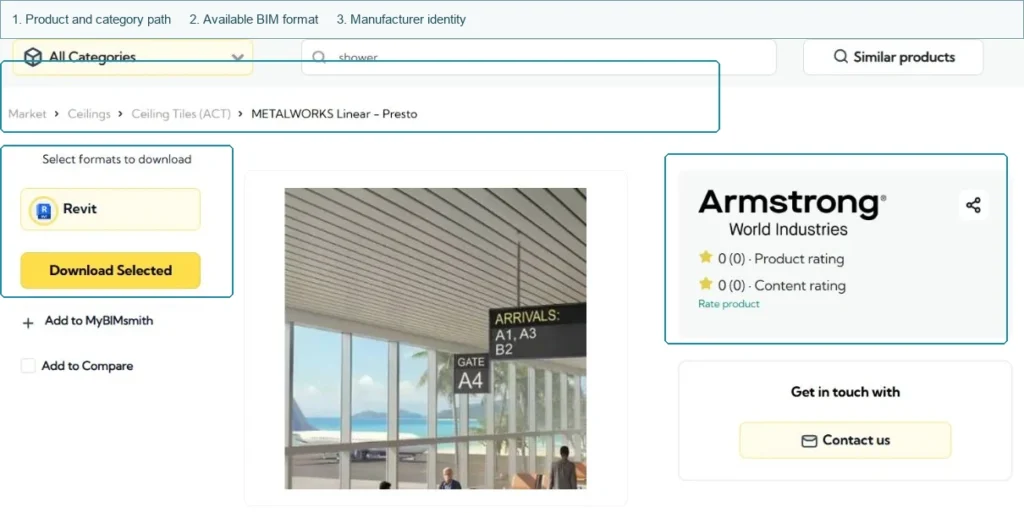
These may include:
- approved technical specification;
- latest drawings;
- BOQ;
- material schedule;
- project standards;
- required certifications;
- test requirements;
- approved samples;
- technical data sheets;
- supplier technical submissions;
- supplier deviation lists.
Check the revision status of those documents before evaluation begins.
If Supplier A is assessed against one specification revision and Supplier B against another, the comparison may already be inconsistent.
A good rule is:
Evaluate every supplier against the approved project requirement, not against another supplier's proposal.
Supplier A should never become the technical benchmark simply because its submission looks the most complete.
Step 1: Convert the Specification Into Evaluation Criteria
Project specifications can contain hundreds of pages.
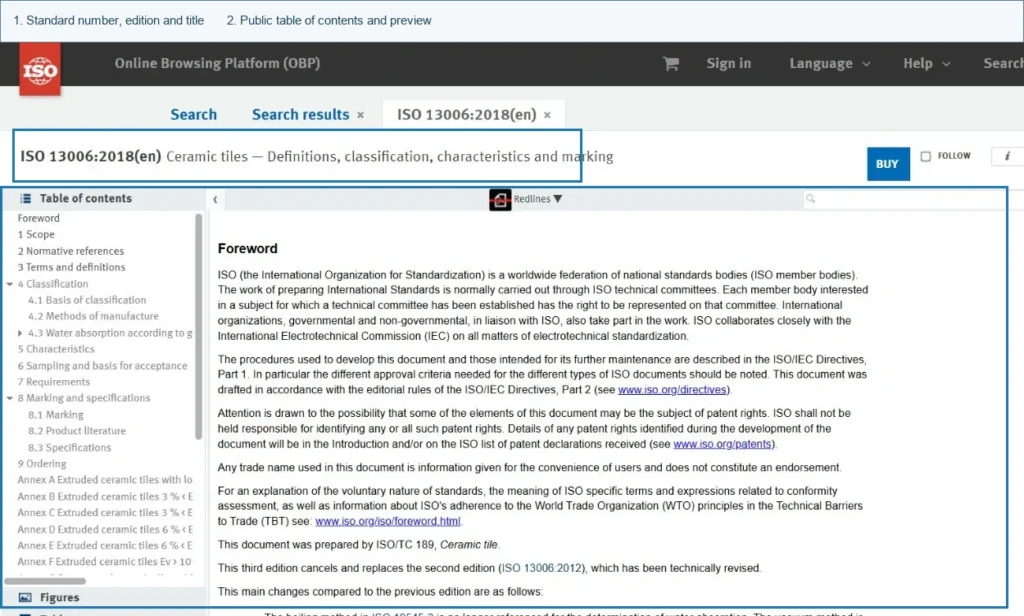
The technical evaluation matrix does not need to reproduce all of them.
Extract the requirements that materially affect supplier acceptance.
A useful structure is to group them by category.
Product and Material
Examples:
- material grade;
- thickness;
- dimensions;
- construction;
- finish;
- model;
- component type.
Performance Requirements
Depending on the product:
- fire performance;
- load capacity;
- corrosion resistance;
- water resistance;
- thermal performance;
- acoustic performance;
- impact resistance.
Standards and Compliance
Check requirements such as:
- product standards;
- test methods;
- certifications;
- regulatory approvals;
- market-specific requirements.
Required Documentation
Examples:
- technical data sheet;
- test report;
- product certificate;
- material certificate;
- drawing;
- installation instructions;
- warranty document.
Project-Specific Requirements
These may include:
- customization;
- labeling;
- spare parts;
- approved accessories;
- compatibility with other systems;
- sample requirements.
The objective is to turn a long technical specification into a manageable evaluation structure.
Step 2: Separate Mandatory Requirements From Preferred Criteria
This is one of the most important parts of technical bid evaluation.
Not every requirement should have equal weight.
Mandatory Requirements
These are requirements the supplier must meet.
Examples may include:
- required material grade;
- mandatory certification;
- fire rating;
- minimum structural performance;
- maximum dimensions;
- critical safety requirements;
- regulatory approval.
If a supplier clearly fails one of these, the result may be:
Technically Rejected
Preferred Criteria
Other criteria may help differentiate acceptable suppliers but do not automatically determine pass or fail.
Examples:
- longer warranty;
- better optional finish;
- additional spare parts;
- stronger technical support;
- better documentation;
- shorter sample lead time.
These may be scored or compared after mandatory compliance is established.
The important rule is:
A supplier should not compensate for failure of a mandatory requirement by scoring well on several minor criteria.
For example, a better warranty does not compensate for failure to meet a mandatory fire rating.
Step 3: Build the Technical Bid Evaluation Matrix
A technical bid evaluation matrix places all suppliers against the same requirements.
A basic structure may look like this:
| Requirement | Type | Supplier A | Supplier B | Supplier C |
|---|---|---|---|---|
| 304 stainless steel | Mandatory | Comply | Comply | Deviation |
| 8 mm tempered glass | Mandatory | Comply | Clarify | Comply |
| Required test report | Mandatory | Available | Missing | Available |
| 5-year warranty | Preferred | 5 years | 3 years | 7 years |
For more detailed procurement, add columns such as:
- Requirement ID
- Specification reference
- Technical requirement
- Mandatory / Preferred
- Supplier response
- Compliance status
- Evidence reference
- Evaluator comments
The matrix should help the team answer three questions quickly:
- What was required?
- What did the supplier actually offer?
- Is the difference acceptable?
Step 4: Use Standard Evaluation Statuses
Avoid vague entries such as:
- OK
- Fine
- Maybe
- Check later
- Seems acceptable
Use standardized evaluation statuses.
Comply
The supplier clearly meets the requirement.
Partially Comply
The supplier meets part of the requirement but not all of it.
Deviation
The supplier has proposed something different from the specified requirement.
Clarification Required
The information provided is insufficient to decide.
Not Comply
The offer clearly fails the requirement.
Not Applicable
The requirement does not apply to that supplier or item.
Standardized statuses make it much easier to compare suppliers and filter unresolved items.
Step 5: Record the Evidence Behind Each Decision
A supplier saying:
“Yes, we can comply.”
is not always enough.
Where technical evidence is required, record what supports the compliance decision.
Possible evidence includes:
- technical data sheet;
- test report;
- drawing;
- product certificate;
- material certificate;
- catalogue;
- sample;
- supplier declaration;
- approved technical submission.
For example:
Instead of entering:
Comply
enter:
Comply — TDS page 3 confirms SUS304
or:
Comply — Test report TR-2026-014
This makes the evaluation traceable.
If the decision is questioned later, the team can see what evidence supported it.
Step 6: Handle Supplier Deviations Properly
Supplier deviations are common.
A supplier may propose:
- a different material;
- another finish;
- alternative dimensions;
- a different brand;
- substitute accessories;
- another testing standard;
- a different technical solution.
The issue is not simply whether a deviation exists.
The issue is whether the deviation is acceptable.
Acceptable Deviation
The alternative provides equivalent technical performance with no negative project impact.
Conditionally Acceptable Deviation
The alternative may be acceptable but requires approval from the consultant, engineer, designer, or project authority.
Unacceptable Deviation
The proposed alternative falls below a mandatory requirement or creates unacceptable technical risk.
Do not hide these issues in long evaluator comments.
Record them clearly as deviations.
A bid should never appear fully compliant if it actually depends on an alternative specification.
Step 7: Manage Technical Clarifications
A missing document does not always justify immediate rejection.
Sometimes the supplier's offer may be technically acceptable, but the submission is incomplete.
Use:
Clarification Required
Typical clarification questions include:
- Which material grade is being offered?
- Which test standard does the report cover?
- Does this model meet the required dimensions?
- Is the specified finish included?
- Does the certificate apply to this exact product?
- Are the required accessories included?
- Is the quoted system compatible with the project drawing?
Track technical clarifications separately.
Useful fields include:
- clarification number;
- question;
- issue date;
- supplier response;
- response date;
- final evaluation status.
For equivalent gaps, suppliers should receive equivalent opportunities to clarify.
This helps maintain a fair and consistent evaluation process.
Step 8: Evaluate the Technical Documentation
A construction material supplier may submit many documents.
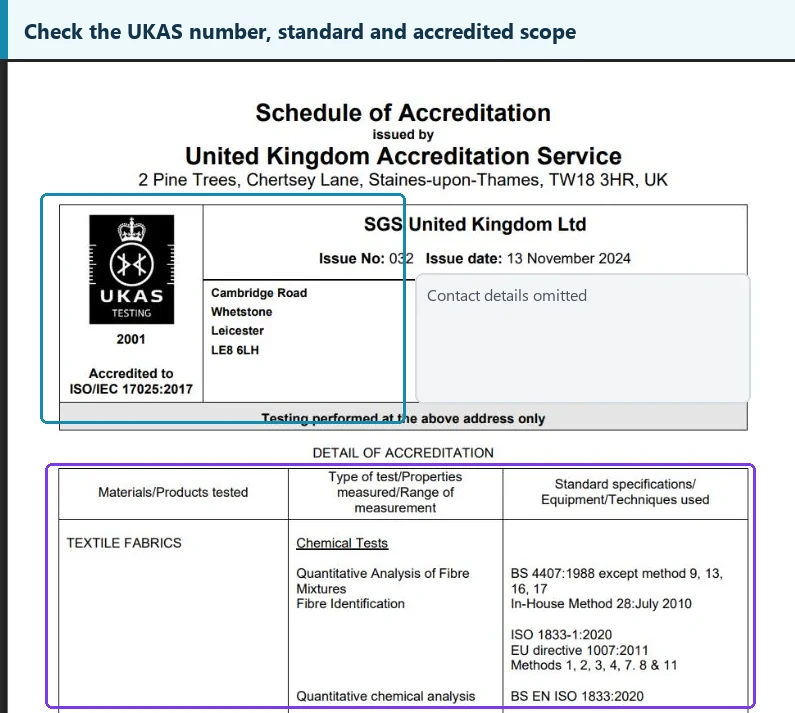
Where a supplier relies on certificates or regulatory evidence, use the Construction Product Certification Guide to verify that the document actually applies to the quoted product, manufacturer and relevant scope.
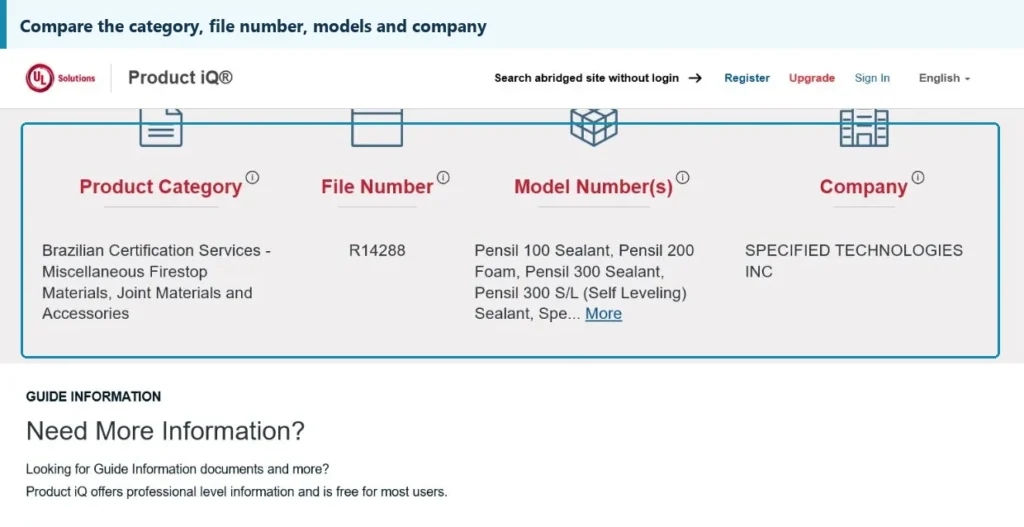
The presence of a document does not automatically mean the requirement has been met.
For example, a test report may:
- cover another model;
- use another material;
- apply to another factory;
- be outdated;
- test a different product configuration.
Similarly, a certificate may exist but not apply to the actual product being quoted.
Review documents for:
- relevance;
- validity;
- product match;
- factory or company match;
- standard match;
- specification match.
Common technical documents may include:
- technical data sheets;
- shop drawings;
- laboratory test reports;
- product certificates;
- material certificates;
- installation instructions;
- method statements;
- warranty information.
The correct question is not:
“Did the supplier submit a document?”
It is:
Does the document support the supplier's compliance claim?
Step 9: Avoid Scoring Everything Too Early
Many procurement teams create a 100-point scoring model immediately.
That can be useful in some situations, but it is not always the best first step.
A simpler process is often more reliable.
Stage 1 — Mandatory Compliance
Check all mandatory requirements.
Result:
Pass / Fail / Clarify
Stage 2 — Resolve Technical Clarifications
Close the important unanswered questions.
Stage 3 — Compare Preferred Criteria
Only compare preferred features among suppliers that have passed the mandatory technical requirements.
This prevents a supplier from staying competitive simply because it scored points on minor criteria while failing an essential technical requirement.
Example Technical Bid Evaluation Template
Consider a shower enclosure procurement package.
| Requirement | Reference | Type | Supplier A | Supplier B | Supplier C |
|---|---|---|---|---|---|
| Material: SS304 | Spec 4.2 | Mandatory | Comply | Comply | Not Comply |
| Glass: 8 mm tempered | Drawing SD-01 | Mandatory | Comply | Clarify | Comply |
| Required test report | Spec 7.1 | Mandatory | Available | Missing | Available |
| Finish: Matte Black | Finish Schedule | Mandatory | Comply | Comply | Deviation |
| Warranty ≥ 5 years | RFQ | Preferred | 5 years | 3 years | 7 years |
| Technical support | RFQ | Preferred | Available | Available | Available |
| Supplier | Mandatory Status | Clarifications | Final Technical Decision |
|---|---|---|---|
| Supplier A | Pass | None | Technically Acceptable |
| Supplier B | Pending | 2 | Clarification Required |
| Supplier C | Fail | — | Technically Rejected |
The summary could then look like this:
| SupplierMandatory StatusClarificationsFinal Technical Decision | |||
|---|---|---|---|
| Supplier A | Pass | None | Technically Acceptable |
| Supplier B | Pending | 2 | Clarification Required |
| Supplier C | Fail | — | Technically Rejected |
This is more useful than simply ranking:
Supplier A = 88 points Supplier B = 82 points Supplier C = 79 points
Supplier C should not remain competitive if it fails a mandatory material requirement.
How to Make the Final Technical Decision
The technical evaluation should end with a clear procurement decision.
Technically Acceptable
Use this when:
- mandatory requirements are met;
- no critical clarifications remain;
- deviations are acceptable;
- required evidence is sufficient.
Next action: Move to commercial evaluation.
Conditionally Acceptable
Use when:
- the supplier can meet the mandatory requirement;
- certain commitments still need confirmation;
- a revised document or sample is required;
- approval depends on a stated condition.
For example:
Technically acceptable subject to approval of revised finish sample.
Record the condition clearly before award.
Clarification Required
Use this when:
- evidence is missing;
- the response is ambiguous;
- a technical claim cannot yet be confirmed.
Next action: Issue clarification and update the matrix after the response.
Technically Rejected
Use when:
- mandatory requirement is not met;
- critical performance is insufficient;
- mandatory certification cannot be provided;
- unacceptable technical deviation remains.
Next action: Remove the bid from normal commercial comparison unless an authorized project exception is approved.
Technical Evaluation vs Commercial Evaluation
The two stages should remain separate.
After technical acceptance, move only acceptable bids into Construction Bid Leveling and Construction Material Quotation Comparison so price and commercial terms do not influence the technical pass/fail decision.
Technical Evaluation
Focuses on:
- specification;
- performance;
- materials;
- standards;
- documentation;
- compliance;
- deviations.
It answers:
Can we technically accept this offer?
Commercial Evaluation
Focuses on:
- price;
- freight;
- payment terms;
- Incoterm;
- lead time;
- exclusions;
- commercial deviations;
- evaluated total cost.
It answers:
Among acceptable bids, which commercial offer is better?
A useful sequence is:
Technical Acceptance
↓
Commercial Bid Leveling
↓
Final Supplier Comparison
This reduces the risk of a low price influencing the technical decision.
Common Technical Bid Evaluation Mistakes
Comparing Suppliers Directly Against Each Other
Supplier A and Supplier B should both be compared against the project requirement.
Do not use the strongest supplier as the technical baseline.
Treating Supplier Statements as Proof
“Can comply” may require supporting evidence.
Ask for the appropriate technical document where the requirement is important.
Giving Every Criterion Equal Weight
Mandatory requirements should remain mandatory.
Do not average critical failures into an overall score.
Ignoring Deviations
Small technical differences can affect:
- installation;
- compliance;
- durability;
- maintenance;
- compatibility.
Record deviations clearly.
Rejecting Incomplete Bids Too Quickly
If an issue is simply missing information, use clarification before rejection where appropriate.
Letting Price Influence the Technical Decision
A cheaper supplier may look more attractive, but price should not change whether a technical requirement has actually been met.
Technical Bid Evaluation Checklist
Before completing a technical bid evaluation, confirm:
- Latest specification is being used
- Latest drawings are confirmed
- BOQ revision is confirmed
- Mandatory criteria are identified
- Preferred criteria are separated
- Supplier submissions are collected
- Technical evaluation matrix is created
- Standard compliance statuses are used
- Evidence references are recorded
- Deviations are clearly identified
- Clarifications are issued
- Clarification responses are reviewed
- Mandatory failures are highlighted
- Final technical decision is recorded
- Only technically acceptable bids move to final commercial evaluation
Tools and Resources for Technical Bid Evaluation
Procurement teams can use several types of resources to structure technical evaluation, including:
- technical bid evaluation templates;
- compliance matrix templates;
- bid evaluation spreadsheets;
- RFQ templates;
- BOQ templates;
- vendor evaluation tools;
- document comparison tools.
The most useful tool depends on the stage of the procurement process.
For example:
- the BOQ defines the common quantity and scope baseline;
- the RFQ collects supplier offers;
- the technical evaluation matrix checks compliance;
- the bid leveling tool normalizes commercial differences.
Build Procurement Hub organizes these resources around procurement tasks so buyers can move from RFQ to technical evaluation and commercial comparison without rebuilding the process from scratch each time.
What Comes After Technical Bid Evaluation?
Once technical evaluation is complete, each bid should move to a defined next step.
The final technical result can then feed into a broader Construction Supplier Evaluation Scorecard alongside commercial, capability and supplier-performance evidence.
Technically Acceptable
Technical Pass → Commercial Bid Leveling → Final Comparison
Clarification Required
Issue Clarification → Receive Supplier Response → Update Technical Matrix
Conditionally Acceptable
Record Condition → Obtain Required Approval / Evidence → Continue
Technically Rejected
Remove Bid or Escalate Approved Exception
The broader procurement workflow becomes:
BOQ / RFQ
↓
RFQ Tracking
↓
Technical Bid Evaluation
↓
Commercial Bid Leveling
↓
Final Supplier Comparison
↓
Award Recommendation
The goal of technical bid evaluation is not to create the most complicated scoring sheet.
It is to make one decision clearly:
Which supplier offers genuinely meet the project's technical requirements before commercial comparison begins?
Separate Technical Acceptance From Commercial Comparison
Use RFQ, BOQ & Evaluation resources to build the technical matrix, manage clarifications and move only acceptable bids into commercial leveling. Use Product Certification and Standards resources when a technical decision depends on external evidence.
FAQ
What is a technical bid evaluation?
A technical bid evaluation is a structured review of supplier offers against project specifications, drawings, standards, performance requirements, and technical documentation before final commercial comparison.
What should a technical bid evaluation template include?
It should include the technical requirement, reference document, mandatory or preferred status, supplier response, compliance status, supporting evidence, deviations, clarifications, evaluator comments, and final technical decision.
What is the difference between technical and commercial bid evaluation?
Technical evaluation determines whether the supplier's offer meets the project requirement. Commercial evaluation compares price and other commercial conditions among technically acceptable offers.
Should technical bids be scored?
Scoring can be useful for preferred criteria, but mandatory technical requirements are usually better handled as pass/fail gates. A supplier should not compensate for failure of a critical requirement by scoring well on minor criteria.
