Construction Product Certification for Procurement: How to Check CE Marking, DoP and CPR Documents Before Buying
A construction material supplier sends you a CE mark, a Declaration of Performance, a certificate, a test report, and a technical datasheet.
You now have five documents.
But you may still not know whether the product is ready for project approval or purchase.
For construction procurement teams, the important question is not:
Procurement rule: do not ask only whether a supplier “has a certificate.” Check whether the available evidence actually applies to the manufacturer, exact product/model, intended use and project requirement being purchased.
Does the supplier have a certificate?
It is:
Does the available compliance evidence actually apply to the manufacturer, product, model, intended use, and project requirement we are buying?
This matters because different documents serve different purposes. A genuine test report may cover another model. A certificate may apply to a factory rather than the product being quoted. A Declaration of Performance may describe characteristics that still need to be compared with the project specification.
The EU Construction Products Regulation provides a common technical framework for assessing and communicating construction-product performance. As of 2026, the revised Regulation (EU) 2024/3110 applies, while parts of the previous CPR framework continue during a product-by-product transition. Procurement teams therefore need to check the route and technical specification actually applicable to the product rather than assume every product follows exactly the same document set.
This guide provides a practical procurement framework for reviewing that evidence before material approval or purchasing.
Why Construction Product Certification Is a Procurement Issue
Certification and compliance documents are not only the responsibility of technical or QA teams.
They can directly affect:
- supplier shortlisting;
- technical bid evaluation;
- Material Approval Requests;
- material submittals;
- consultant approval;
- product acceptance;
- purchase-order release.
A supplier may have an attractive price, sufficient manufacturing capacity, and excellent communication while still being unsuitable if it cannot provide the evidence required to support the proposed product.
That problem is much easier to discover before a deposit, production release, or purchase order than after manufacturing has begun.
Compliance evidence should be checked early enough to influence the procurement decision.
First Identify the Exact Product Being Purchased
Before reviewing certificates, identify the product.
Record where relevant:
- manufacturer;
- brand;
- model;
- product code;
- product family;
- intended use;
- technical specification;
- project market or destination.
Then establish the traceability chain:
Supplier quotation → Manufacturer → Product / Model → Technical Datasheet → DoP / DoPC → Certificate / Test Report
A genuine document for Product A does not automatically support Product B.
For procurement, the first question should therefore be:
Can the important compliance documents be connected to the exact product the supplier has quoted?
If the model, manufacturer, or product family cannot be identified, further document review may have limited value.
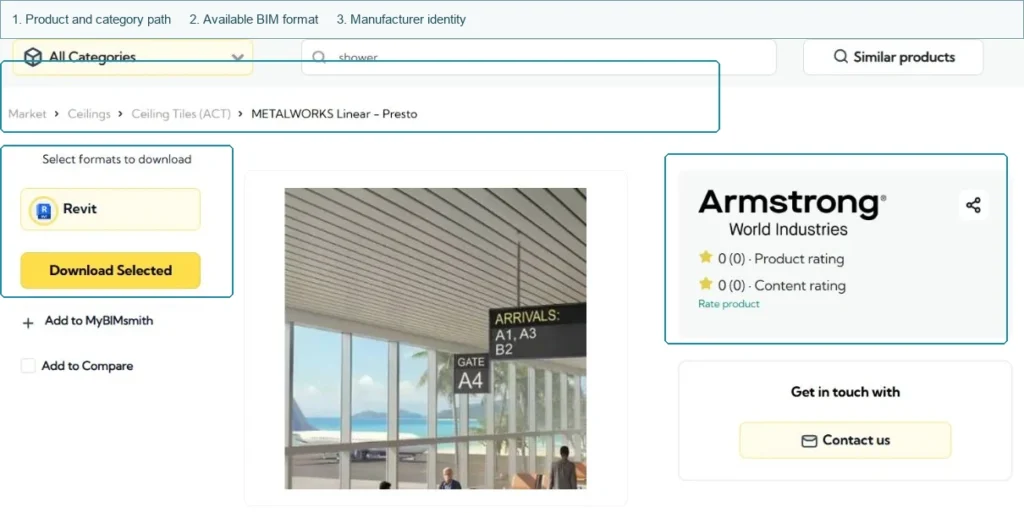
Do Not Treat Every Compliance Document as the Same Thing
One of the most common procurement mistakes is putting CE marking, declarations, certificates, and test reports into one category called “certification.”
They are different forms of evidence.
| Document / Evidence | Main Procurement Question |
|---|---|
| CE Marking | Under which applicable EU construction-product framework is the product being placed on the market? |
| Declaration of Performance / DoPC | What performance has the manufacturer declared for the identified product? |
| Certificate | What exactly has been certified, by which body, and for what scope? |
| Test Report | What product was tested, to which method or standard, and with what result? |
| Technical Datasheet | What specification is the supplier actually offering? |
| Project Specification | What does the project actually require? |
The European Commission describes the Declaration of Performance as a key instrument for communicating construction-product performance, while CE marking indicates conformity with declared performance under the applicable harmonised framework.
The procurement task is to understand what each document proves — and what it does not prove.
Is CE Marking the Same as a “CE Certificate”?
Not necessarily.
Construction buyers frequently send suppliers a request such as:
“Please send your CE certificate.”
That wording can be misleading because there is no single universal document called a CE certificate that applies in the same way to every construction product.
Under the CPR system, the applicable assessment and verification route depends on the product and its technical specification. Different assessment systems involve different levels of manufacturer and notified-body activity; some require substantial third-party involvement, while others place assessment responsibilities primarily on the manufacturer.
A better procurement request is:
Please provide the applicable CE/CPR documentation for the exact product and model quoted, including the relevant declaration and any required supporting certificate or assessment evidence.
Then determine:
- which product is covered;
- which harmonised technical specification or assessment route applies;
- which declaration is relevant;
- whether third-party involvement is required;
- what additional project evidence is needed.
The CE mark itself should therefore not be treated as a substitute for reviewing the underlying product information.
DoP, DoPC and the Current CPR Transition
This is one area where procurement teams should be especially careful in 2026.
Under the outgoing CPR framework, the Declaration of Performance (DoP) is central to construction products covered by a harmonised European standard or for which a European Technical Assessment has been issued.
The revised CPR introduces the Declaration of Performance and Conformity (DoPC) as the new framework is implemented. However, the transition is gradual, and some products and assessment routes continue under the outgoing CPR during the transition. The European Commission specifically notes that both old and new CPR routes coexist during this period.
For buyers, the practical lesson is simple:
Do not reject a document merely because it says DoP rather than DoPC, and do not assume a DoPC is automatically the correct document for every product in 2026. Check which CPR route applies to that product.
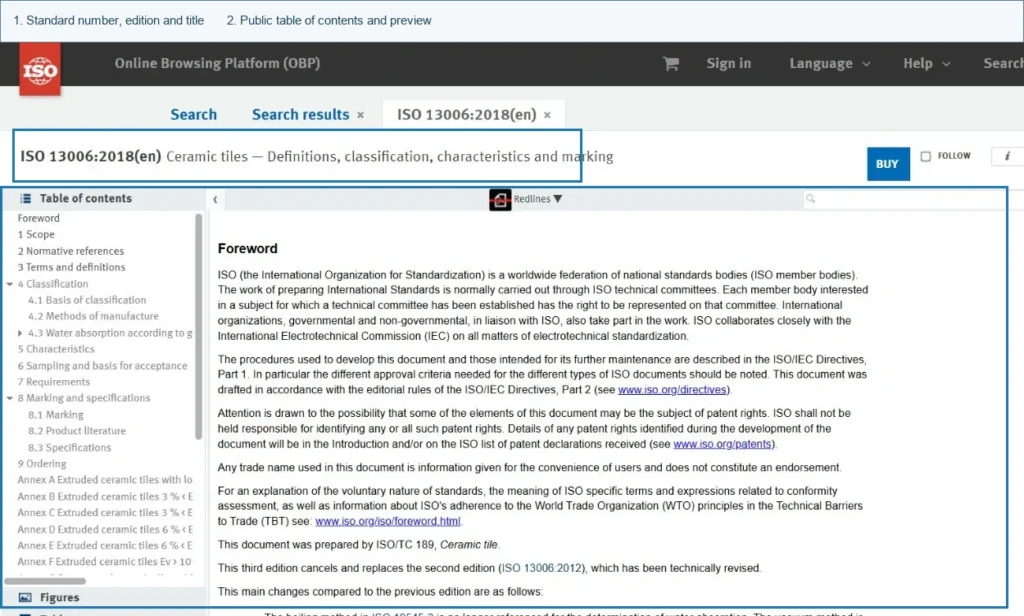
What Should Procurement Check in a Declaration of Performance?
From a buyer's perspective, a performance declaration should help connect the product to measurable project requirements.
Review information such as:
- manufacturer;
- product or product type;
- intended use;
- applicable technical specification;
- declared characteristics;
- declared performance.
Then compare:
Project Requirement vs Declared Product Performance
For example, if the project requires a particular fire, structural, thermal, acoustic, or other performance characteristic, the important question is not merely whether a DoP exists.
It is:
Does the declaration address the relevant characteristic, and does the declared value or class meet what this project requires?
The CPR creates a harmonised technical language for product performance, but national or project requirements still determine what performance is needed for a particular use.
What Does a Certificate Actually Prove?
When a supplier provides a certificate, read the scope rather than only the title.
Check four things.
Who Issued It?
Identify the certification or notified body where relevant.
For CPR-related notified-body activities, the European Commission maintains information on designated notified bodies and their recognised tasks.
Who Holds It?
The holder may be:
- the manufacturer;
- a specific factory;
- another legal entity within a group.
Do not assume the trading supplier must always be the certificate holder.
What Product Does It Cover?
Check:
- product family;
- model;
- technical specification;
- factory or manufacturing site where relevant;
- certificate scope.
What Does It Not Prove?
A certificate issued for one product line should not automatically be interpreted as evidence for:
- every model the supplier sells;
- every factory in the group;
- every product performance characteristic;
- unrelated products carrying the same brand.
Read the certificate scope, not just the certificate heading.
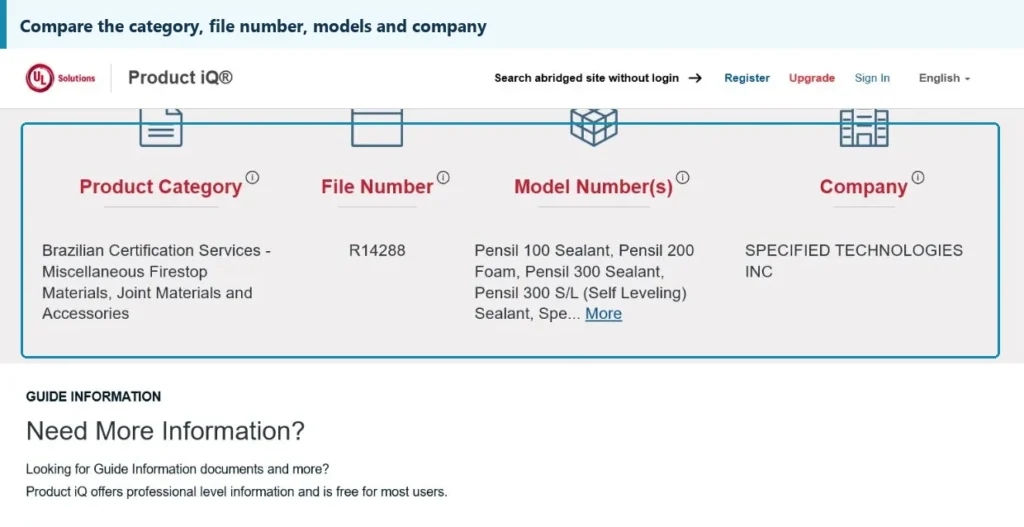
How Procurement Should Review Test Reports
A test report answers another type of question:
What was actually tested?
Check:
- applicant;
- manufacturer;
- tested product;
- model or code;
- sample description;
- test method or standard;
- laboratory;
- report date;
- test result;
- limitations or scope.
Then compare it with the quotation and product datasheet.
For example:
Quoted product: Model X2 Tested product: Model X1
That does not automatically mean the evidence is invalid.
There may be a technically justified relationship between the products.
But procurement should not create that relationship by assumption.
Request clarification or supporting evidence where needed.
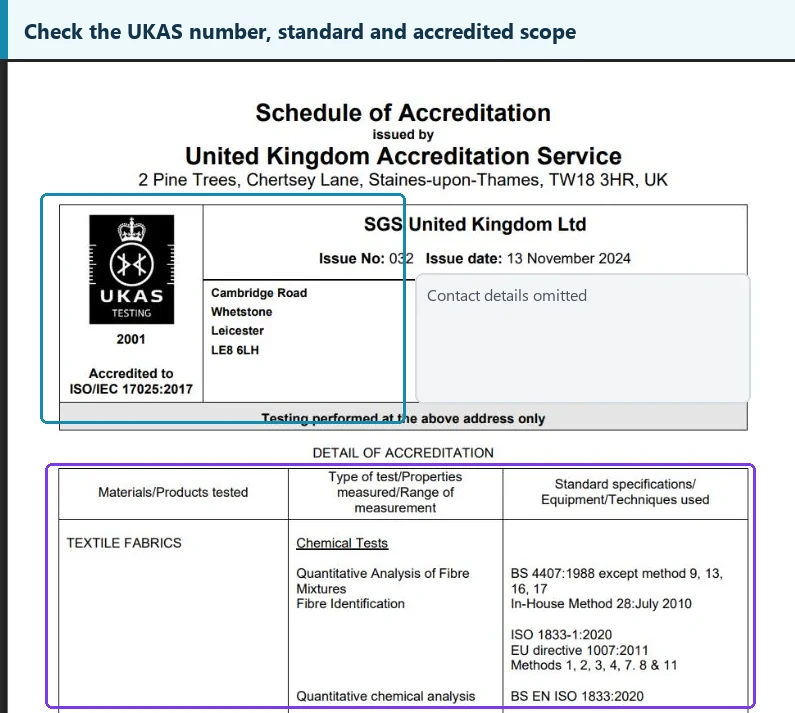
Check the Supplier, Manufacturer and Certificate-Holder Relationship
International construction procurement often involves several companies.
For example:
- Supplier A handles export and sales.
- Factory B manufactures the product.
- Brand C is the commercial brand.
- The certificate is issued to Factory B.
This structure can be legitimate.
Procurement's job is to understand it.
Create the chain:
Supplier → Manufacturer → Manufacturing Site → Brand → Certificate Holder → Product
Then ask:
Can the supplier explain how these entities relate to the exact product being purchased?
Different company names are not automatically a red flag.
Unexplained relationships are.
This is why product-document verification should connect with supplier due diligence rather than operate as an isolated certificate check.
Match Compliance Evidence to the Project Requirement
Supplier documents should never be reviewed in isolation.
Start with:
- project specification;
- required performance;
- applicable standard;
- intended use;
- relevant jurisdiction;
- consultant/client approval requirements.
Then map supplier evidence against those requirements.
| Project Requirement | Supplier Evidence | Procurement Status |
|---|---|---|
| Required product standard | Declaration / certificate / report | Match / Clarify |
| Required performance | Declaration / test report | Pass / Gap |
| Approved manufacturer | Datasheet / certificate | Consistent / Different |
| Exact model | Datasheet / report | Match / Unclear |
| Required approval evidence | Supplier package | Available / Missing |
This prevents a common problem:
The supplier sends many documents, so procurement assumes compliance is complete.
Ten irrelevant PDFs are less useful than one document that directly demonstrates the required performance.
Do Not Confuse Company Certification With Product Compliance
A supplier may provide an ISO management-system certificate.
That can be useful evidence about the company's management system.
But it does not automatically prove that the specific construction product satisfies the required product standard or performance requirement.
For procurement:
Company certification asks something about the organization.
Product compliance evidence asks something about the actual product.
Both can matter.
They are not interchangeable.
A Practical Construction Product Document Check
A simple procurement workflow can prevent most basic document mistakes.
Step 1 — Identify the Requirement
Determine the relevant:
- specification;
- performance;
- standard;
- approval requirement.
Step 2 — Identify the Exact Product
Confirm:
- manufacturer;
- model;
- intended use.
Step 3 — Collect the Relevant Evidence
Depending on the applicable route and project:
- declaration;
- datasheet;
- certificate;
- test report;
- technical assessment;
- drawings.
Step 4 — Check Identity Consistency
Do the manufacturer and product references match across documents?
Step 5 — Check Scope
Does each document actually apply to the proposed product?
Step 6 — Check Performance
Does the declared or tested performance satisfy the project requirement?
Step 7 — Check the Issuer
Where third-party evidence is relevant, is the body identifiable and appropriate for the claimed activity?
Step 8 — Verify Critical Evidence
Use the relevant authoritative source rather than a generic “certificate checker.”
Step 9 — Record the Gap
Use simple statuses:
- Match
- Clarification Required
- Missing Evidence
- Not Acceptable
Step 10 — Connect the Result to Approval and Procurement
Critical unresolved compliance issues should remain visible until material approval and PO release.
When Should Procurement Verify Documents Online?
Not every supplier document requires the same level of investigation.
Verification becomes more important when:
- certification is mandatory;
- the product is safety-critical;
- the purchase value is high;
- the supplier is new;
- the document contains inconsistencies;
- product scope is unclear;
- the issuing body is unfamiliar;
- the consultant requires verification.
For CPR-related verification, buyers may need different official resources depending on the question. The Commission publishes harmonised-standard information, notified-body information and national Product Contact Point resources; legally binding harmonised-standard references are published in the Official Journal of the EU.
The right question is therefore:
What exactly am I trying to verify?
Then choose the corresponding authoritative resource.
Where to Verify Construction Product Information
Product Certification
Use this resource category for:
- product-certification schemes;
- CE/CPR resources;
- declarations;
- conformity information;
- certification databases.
Standards & Codes
Use it to identify:
- harmonised standards;
- ASTM;
- ISO;
- EN;
- ICC;
- other product requirements.
Supplier Verification
Use it for:
- company identity;
- certification-body checks;
- notified or accredited bodies;
- laboratory information;
- manufacturing relationships.
Project Documents & Submittals
Use it to connect verified evidence to:
- MAR;
- material submittal;
- document register;
- approval records.
The goal is not to search the entire internet again.
It is to use the correct resource for the specific verification question.
Common Construction Product Certification Mistakes
Asking Only for “the CE Certificate”
The applicable product evidence may be more complex than one certificate.
Accepting a Professional-Looking PDF
Appearance does not establish document scope or relevance.
Ignoring the Product Model
A document may cover another product.
Confusing Supplier and Manufacturer
The seller may not manufacture the product.
Treating ISO Certification as Product Certification
These answer different questions.
Not Comparing Performance With the Specification
The document may be valid while the declared performance still fails the project requirement.
Ignoring the Test Standard
A test report may cover a characteristic unrelated to the requirement being reviewed.
Checking Compliance Only After the PO
Missing evidence becomes much harder to solve after commercial commitment.
A Simple Procurement Compliance Matrix
Instead of storing documents without reviewing them, create a small evidence matrix.
| Check | Evidence | Status | Action |
|---|---|---|---|
| Exact Product Identified | Quotation / Datasheet | Match | — |
| Manufacturer Identified | Declaration / Certificate | Match | — |
| Applicable Standard | Specification / Declaration | Match | — |
| Required Performance | Declaration / Report | Clarify | Request detail |
| Certificate Scope | Certificate | Match | — |
| Tested Product | Test Report | Different model | Clarify relationship |
| Verification Source | Official resource | Verified | — |
A folder containing twenty PDFs can still leave procurement uncertain.
A matrix makes the gaps visible.
The objective is evidence traceability, not document quantity.
Connect Compliance Review to Material Approval and PO Release
Compliance review should ultimately connect to the purchasing decision.
The chain should be:
Specification → Supplier Product → Compliance Evidence → Verification → MAR / Material Submittal → Approval → Purchase Order
Before releasing the order, confirm where relevant:
- approved manufacturer;
- approved model;
- approved performance;
- approved document revision;
- approved deviations.
This prevents a critical control failure:
The project approves one construction product, but procurement orders another.
What Procurement Should Not Try to Do
Procurement teams are not expected to replace:
- testing laboratories;
- notified bodies;
- certification bodies;
- standards organizations;
- regulatory authorities.
Their job is to:
- identify what the project requires;
- obtain the relevant supplier evidence;
- check product and document consistency;
- identify obvious gaps;
- use authoritative verification resources;
- escalate specialist questions when necessary.
The buyer's job is not to certify the product. It is to avoid accepting weak, mismatched, or unverifiable evidence without question.
Construction Product Certification Checklist for Procurement
Before approving or ordering a construction product where compliance evidence is required, confirm:
- The exact manufacturer is identified.
- The exact product or model is identified.
- The intended use is understood.
- The project requirement is clear.
- The applicable technical requirement or standard has been identified.
- The appropriate declaration is available where required.
- Certificate scope matches the proposed product where relevant.
- Test reports identify the relevant product or justified product family.
- Issuing or testing organizations are identifiable.
- Supplier, manufacturer, and certificate-holder relationships are understood.
- Declared or tested performance can be compared with the project requirement.
- Important inconsistencies have been clarified.
- Critical evidence has been checked through appropriate authoritative resources where necessary.
- Relevant compliance evidence is included in the project submittal record.
- The final PO matches the approved product.
Verify the Evidence Before Material Approval and PO Release
Use the Product Certification collection as the primary next step for certification databases, CE/CPR resources, declarations and conformity information. Use Standards & Codes, Supplier Verification and Project Documents & Submittals when the open question is the applicable standard, company/body relationship or approval record.
FAQ
Is CE marking the same as a CE certificate?
No single universal “CE certificate” applies to every construction product. The applicable documentation and third-party involvement depend on the product and its assessment route. Procurement should identify the technical framework and supporting evidence relevant to the exact product.
What is a Declaration of Performance for construction products?
Under the outgoing CPR framework, the DoP communicates information about the performance of an identified construction product under the applicable harmonised route. The revised CPR introduces declarations of performance and conformity as its new framework is progressively implemented.
How can I check whether a supplier certificate applies to my product?
Compare the manufacturer, product/model, certificate scope, applicable technical specification, issuing body, and project requirement. Where the evidence is critical, use an appropriate official or authoritative verification source.
Is an ISO certificate enough to prove product compliance?
No. A company or management-system certificate does not automatically prove that a specific construction product satisfies the required product standard or declared performance.
Should test reports be verified before buying?
Where a test report is important to mandatory compliance, safety, technical approval, or a high-risk procurement decision, check that the report applies to the proposed product and verify the relevant laboratory or evidence through an appropriate authoritative source where necessary.
