Construction Material Quotation Comparison: How to Compare Supplier Quotes on an Apples-to-Apples Basis
Comparing construction material quotations is not as simple as placing three prices side by side and selecting the lowest one.
Two suppliers may appear to be quoting the same material while actually offering different specifications, brands, quantities, packaging, delivery terms, documentation, lead times, or commercial conditions.
For construction procurement teams, the real task is to determine whether the quotations are based on the same requirement and the same commercial scope .
That means the correct sequence is:
Procurement rule: quotation comparison starts by proving that suppliers are quoting the same requirement and commercial scope. Price ranking comes after normalization, not before.
RFQ requirement → Supplier quotations → Check completeness → Normalize scope → Identify deviations → Compare evaluated offers → Clarify → Select
The key question throughout the process is:
Are these suppliers really quoting the same thing?
Only after that question is answered should headline price influence the final decision.
What Is Construction Material Quotation Comparison?
Construction material quotation comparison is the process of evaluating multiple supplier offers against the same technical and commercial requirement.
A useful comparison may consider:
- product specification;
- manufacturer and model;
- quantity;
- unit basis;
- price;
- currency;
- Incoterms;
- packaging;
- freight;
- certification;
- documentation;
- lead time;
- payment terms;
- warranty;
- exclusions;
- technical deviations.
The objective is not simply to identify the cheapest quotation.
It is to identify the best compliant commercial offer.
Quotation comparison is not price sorting. It is offer normalization followed by evaluation.
Start With the Original RFQ
Before comparing quotations, return to the original requirement.
Review:
- RFQ;
- BOQ;
- specifications;
- drawings;
- requested quantities;
- applicable standards;
- required Incoterm;
- delivery schedule;
- documentation requirements.
Procurement should first establish a common reference:
What exactly did we ask suppliers to quote?
Every supplier offer should then be checked against that same baseline.
If Supplier A received the latest drawing while Supplier B received an older revision, the resulting quotations may already be difficult to compare accurately.
This is why quotation comparison begins with a well-prepared RFQ.
Step 1: Check Whether Every Quotation Is Complete
Before comparing prices, identify missing information.
A simple completeness review might look like this:
| Item | Supplier A | Supplier B | Supplier C |
|---|---|---|---|
| Exact model identified | Yes | Yes | No |
| Quantity confirmed | Yes | Yes | Yes |
| Technical datasheet | Yes | Yes | Yes |
| Required certificates | Yes | Missing | Yes |
| Lead time | 40 days | 35 days | 60 days |
| Incoterm | FOB | EXW | CIF |
| Payment terms | Yes | Yes | Yes |
| Exclusions declared | No | Yes | Yes |
If important information is missing, do not automatically assume compliance.
Record it as a clarification item.
A quotation that looks complete but contains hidden assumptions can create more risk than an obviously incomplete one.
Step 2: Normalize the Technical Scope
Technical scope should be checked before commercial ranking.
Compare the proposed:
- manufacturer;
- brand;
- model;
- material grade;
- dimensions;
- thickness;
- finish;
- performance;
- standard;
- configuration.
For example:
| Requirement | Supplier A | Supplier B | Supplier C |
|---|---|---|---|
| Material | 304 stainless steel | 304 SS | 304 SS |
| Thickness | 1.5 mm | 1.5 mm | 1.5 mm |
| Finish | Satin | Satin | Satin |
| Compliance | Required | Comply | Comply |
Supplier C may have the lowest price, but it is not actually offering the same product.
Technical non-compliance should not be hidden inside a price comparison.
It should be clearly flagged for technical review.
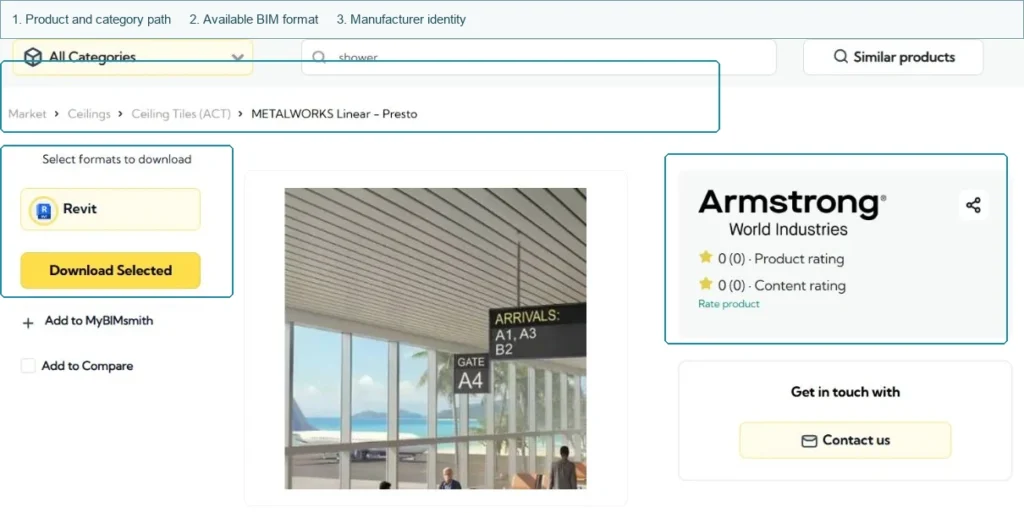
Step 3: Confirm Quantity and Unit Basis
A price comparison is unreliable if quantities or units are different.
Common problems include:
- pieces vs sets;
- kilograms vs tons;
- square meters vs sheets;
- complete systems vs individual components;
- project quantity vs MOQ;
- net quantity vs quantity including wastage.
For example, the project may require 800 units, but one supplier may quote an MOQ of 1,000 units.
The relevant commercial impact is not simply the supplier's unit price.
It is:
Actual purchase quantity × unit price
Procurement should therefore confirm that all suppliers are being compared on the same quantity and unit basis.
Step 4: Normalize Currency
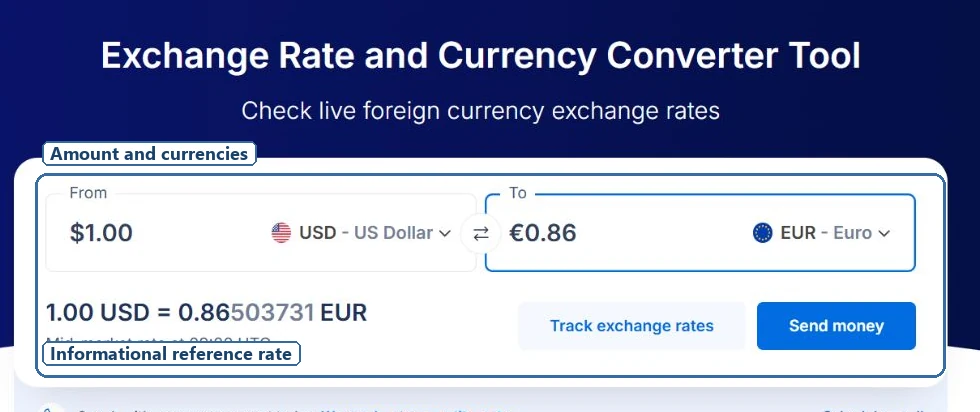
When quotations are issued in different currencies, convert them to one comparison currency.
Record:
- original currency;
- exchange rate;
- conversion date;
- converted amount.
The purpose is to create a consistent comparison basis.
Currency conversion does not eliminate foreign-exchange risk, especially if quotations remain open for several weeks.
Before final award, procurement may still need to reconfirm pricing where exchange-rate changes could materially affect the decision.
Step 5: Normalize Incoterms and Freight Scope
Different Incoterms represent different cost responsibilities.
You should not directly compare:
- EXW;
- FOB;
- CIF;
- DAP;
- DDP;
as though they include the same scope.
For example:
- Supplier A: USD 80,000 EXW
- Supplier B: USD 84,000 FOB
- Supplier C: USD 89,000 CIF
Supplier A has the lowest headline price, but the buyer still needs to account for additional transport and export costs.
A normalized comparison may consider:
Product price
- local transport
- export handling
- freight
- insurance
- import-related costs where relevant
The correct basis depends on what procurement is trying to evaluate.
The important rule is:
Compare suppliers on the same delivery basis before deciding which offer is cheaper.
Use only the cost elements relevant to the comparison basis you are evaluating. The goal is not to force every quote into the same Incoterm label, but to compare equivalent commercial scope.
Step 6: Compare Packaging and Supply Scope
Packaging often creates hidden differences.
Check whether the quoted price includes:
- standard packaging;
- export packaging;
- pallets;
- crates;
- protective film;
- moisture protection;
- project labels;
- special handling requirements.
The supply scope must also be clear.
For example:
Supplier A quotes:
Complete door set
Supplier B quotes:
Frame and hardware only
Supplier C quotes:
Complete door set + spare parts + accessories
Their unit prices cannot be compared directly.
The correct question is:
What exactly is included in each quoted price?
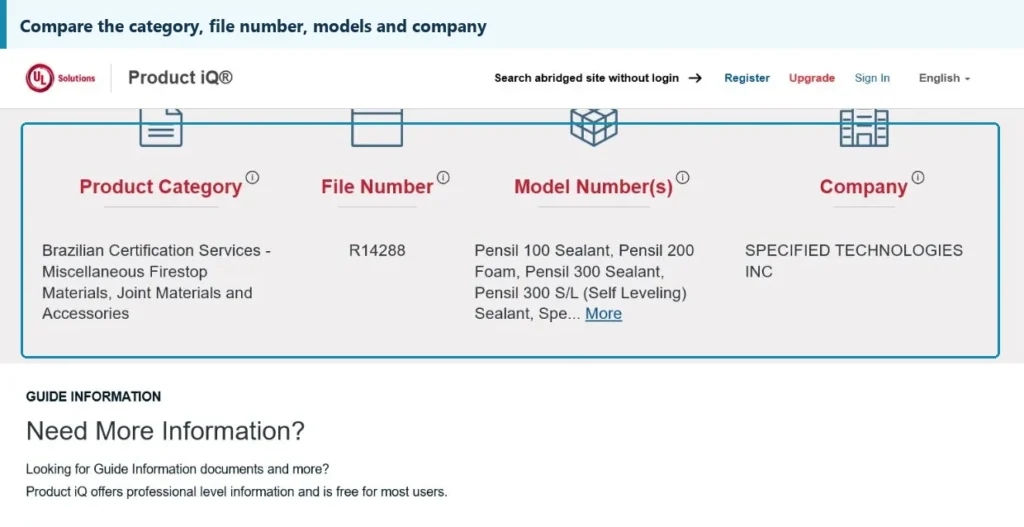
Step 7: Compare Certification and Documentation
Construction procurement may require more than the physical product.
Depending on the project, suppliers may need to provide:
- technical datasheets;
- certificates;
- declarations;
- test reports;
- shop drawings;
- samples;
- submittal documents;
- warranties.
Classify documentation status clearly.
Included and Compliant
No major issue identified.
Available at Additional Cost
Include the additional cost where relevant.
Missing but Potentially Available
Clarification is required.
Required but Unavailable
This may create a technical approval or procurement risk.
Do not automatically give every missing document an invented monetary value.
Some issues are better treated as compliance or supplier-risk factors.
Step 8: Compare Lead Time Against the Project Schedule
A lower price is not useful if the supplier cannot meet the required date.
Compare where relevant:
- sample preparation;
- document preparation;
- approval support;
- production lead time;
- shipping time;
- total estimated delivery time.
Then compare the supplier's realistic delivery date with the required-on-site date.
A useful classification is:
- Meets schedule
- Tight schedule
- Does not meet schedule
The procurement question is not:
Which supplier has the shortest lead time?
It is:
Which suppliers can meet the project schedule with acceptable risk?
Step 9: Compare Payment Terms
Two suppliers with similar prices may have very different payment requirements.
For example:
- Supplier A: 50% deposit / 50% before shipment
- Supplier B: 30% deposit / 70% before shipment
- Supplier C: 30% deposit / balance against shipping documents
Compare:
- deposit;
- payment milestones;
- LC requirements;
- credit terms;
- balance timing.
Price and payment conditions are separate commercial variables.
A slightly higher quotation may still provide better cash-flow or lower payment risk.
Step 10: Compare Warranty and After-Sales Scope
Where relevant, compare:
- warranty period;
- warranty coverage;
- spare parts;
- replacement process;
- technical support;
- defect handling.
For project materials, future replacement availability can also matter.
A lower purchase price may simply transfer more cost and risk to the buyer later.
Step 11: Identify Exclusions and Assumptions
This is one of the most important parts of quotation comparison.
Typical exclusions may include:
- freight;
- installation;
- testing;
- certification;
- special packaging;
- samples;
- spare parts;
- taxes;
- unloading;
- supervision.
Typical assumptions may include:
- final drawings unchanged;
- standard color;
- single shipment;
- minimum quantity achieved;
- production begins only after approval.
Every important exclusion should be:
- accepted;
- priced separately;
- or clarified.
Do not silently assume that an unmentioned item is included.
A low quotation may simply contain less scope.
Step 12: Separate Technical Deviations From Commercial Differences
A comparison sheet becomes confusing when technical and commercial differences are mixed together.
Separate them.
Technical Deviations
Examples:
- material grade;
- dimensions;
- standard;
- performance;
- finish;
- manufacturer;
- product configuration.
These normally require technical review.
Commercial Differences
Examples:
- price;
- MOQ;
- payment terms;
- lead time;
- Incoterm;
- warranty;
- packaging.
These belong mainly to procurement and commercial evaluation.
This separation makes the final decision easier to understand and defend.
Build an Apples-to-Apples Quotation Comparison Sheet
A practical comparison sheet may look like this:
| Comparison Item | Requirement | Supplier A | Supplier B | Supplier C |
|---|---|---|---|---|
| Manufacturer | Approved / equivalent | A | B | C |
| Technical Compliance | Required | Comply | Comply | Deviation |
| Quantity | 1,000 sets | 1,000 | 1,000 | MOQ 1,200 |
| Incoterm | FOB | FOB | EXW | CIF |
| Packaging | Export | Included | Extra | Included |
| Certificates | Required | Included | Missing | Included |
| Lead Time | ≤45 days | 40 days | 35 days | 60 days |
| Payment | — | 30/70 | 50/50 | 30/70 |
| Warranty | — | 2 years | 1 year | 2 years |
| Deviations | None preferred | None | None | Technical |
| Evaluated Cost | — | — | — | — |
The goal is not to create one universal spreadsheet.
It is to make the differences that matter to this specific procurement decision visible.
Quoted Price vs Evaluated Price
It is useful to distinguish between two figures.
Quoted Price
The price shown on the supplier's quotation.
Evaluated Price
The price after adjusting for known, quantifiable scope differences.
Possible adjustments may include:
- packaging;
- freight;
- tooling;
- accessories;
- testing;
- missing supply scope;
- MOQ-related additional quantity.
However:
Do not invent monetary adjustments for risks that cannot be reliably priced.
Issues such as weak documentation, uncertain quality, approval risk, or poor responsiveness may be important but should remain separate evaluation factors.
They are better handled through supplier evaluation rather than fake cost calculations.
When the Lowest Price Should Not Win
The lowest quotation may not be the best offer.
Technical Non-Compliance
The cheapest product does not meet the project specification.
Delivery Failure
The supplier cannot meet the required-on-site date.
Missing Required Documents
Mandatory certificates or test reports cannot be provided.
Scope Exclusion
Important accessories, packaging, or services are missing from the price.
MOQ Distortion
The unit price is low, but the project must buy significantly more material than required.
In each case, headline price hides a larger procurement issue.
The best quotation is usually the best compliant commercial package — not automatically the lowest price.
When to Ask for Clarification or a Revised Quote
Do not force a final comparison when important information is still unclear.
Ask for clarification when:
- the scope is incomplete;
- product model is missing;
- technical deviation is unclear;
- Incoterm differs from the RFQ;
- freight is missing;
- certificates are uncertain;
- assumptions are inconsistent;
- the price breakdown is incomplete.
Once key differences are clarified, procurement may request a revised quotation on the same commercial basis.
This is often better than filling the comparison sheet with assumptions.
Quotation Comparison vs Bid Leveling vs Supplier Evaluation
These tasks are related but different.
Quotation Comparison
Evaluates the actual supplier offers.
Bid Leveling
Goes deeper into normalizing differences in scope, quantities, exclusions, and assumptions.
Supplier Evaluation
Assesses the supplier as a company, including:
- capability;
- reliability;
- quality;
- risk;
- performance;
- service.
A simple distinction is:
Quotation comparison asks whether the offer is good. Supplier evaluation asks whether the supplier is good.
Tools and Resources for Comparing Supplier Quotations
Different parts of the comparison process may require different procurement resources.
RFQ, BOQ & Evaluation
Useful for:
- quotation comparison templates;
- bid comparison matrices;
- technical comparison sheets;
- supplier evaluation tools.
Freight & Import Duties
Useful for:
- freight calculations;
- landed-cost inputs;
- customs and duty checks;
- normalizing different delivery terms.
Product Certification
Useful when checking product documentation requirements.
Standards & Codes
Useful when confirming technical compliance requirements.
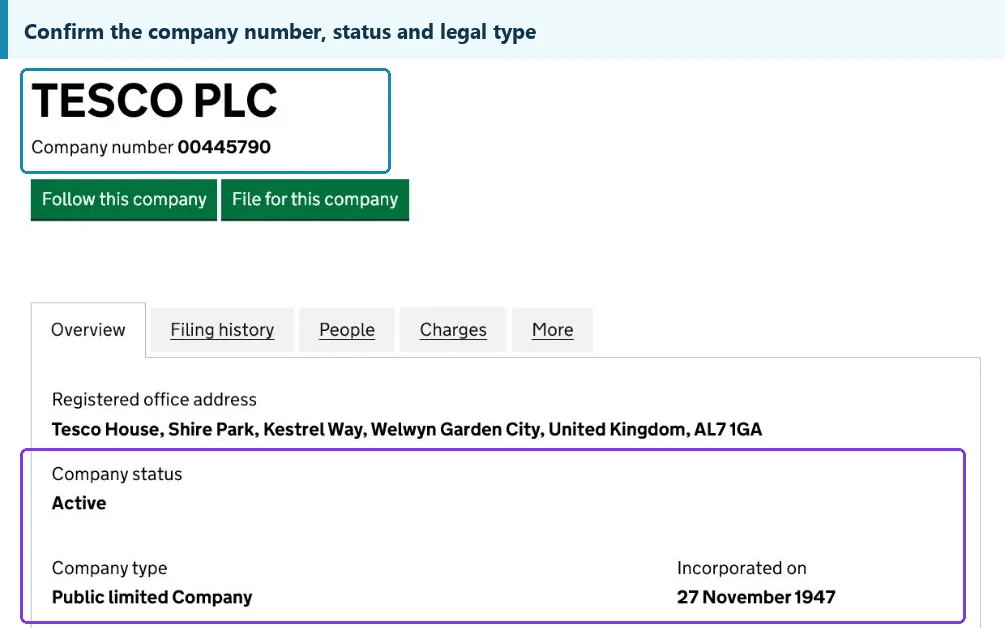
Supplier Verification
Useful when questions move beyond the quotation itself and into supplier legitimacy, capability, or documentation.
Using the right resource at the right stage reduces the need to repeatedly search for individual tools during evaluation.
Construction Material Quotation Comparison Checklist
Before recommending a supplier, confirm:
- All suppliers were compared against the same requirement.
- Technical scope has been checked.
- Quantities and units are consistent.
- Currency has been normalized.
- Incoterms and delivery scope are understood.
- Packaging differences are visible.
- Required documentation is available.
- Lead time meets project requirements.
- Payment terms have been compared.
- Warranty differences are visible.
- Exclusions and assumptions are identified.
- Technical deviations are separated from commercial differences.
- Missing information has been clarified.
- Evaluated cost is distinguished from headline price.
- The recommended offer is technically and commercially viable.
Compare Supplier Offers on the Same Procurement Basis
Use the RFQ, BOQ & Evaluation collection for quotation comparison templates, bid comparison matrices, technical comparison sheets and supplier evaluation tools. Use Freight & Import Duties when delivery terms or landed-cost inputs must be normalized before ranking offers.
FAQ
What should be included in a supplier quotation comparison?
A useful comparison normally includes technical scope, quantity, price, currency, Incoterm, packaging, documentation, lead time, payment terms, warranty, exclusions, and deviations.
How do you compare quotations with different Incoterms?
Convert them to a common delivery or cost basis before comparing final prices. An EXW quotation should not be compared directly with a CIF or DDP quotation without accounting for the different transport and logistics scope.
Should procurement always choose the lowest quotation?
No. The lowest quotation may be technically non-compliant, incomplete, late, or based on a smaller supply scope. Procurement should identify the best compliant commercial offer rather than selecting only by headline price.
What is the difference between quotation comparison and supplier evaluation?
Quotation comparison evaluates the supplier's offer. Supplier evaluation examines the supplier's overall capability, reliability, quality, risk, and suitability for the project.
