How to Compare Freight Quotes on an Apples-to-Apples Basis
Three freight forwarders quote the same shipment:
At first glance, Forwarder A looks cheapest.
But then you notice:
Freight procurement rule: normalize every quotation to the same shipment, route, service scope, mode, cost categories and delivery requirement before ranking the price.
- Forwarder A: $1,850
- Forwarder B: $2,450
- Forwarder C: $2,150
- A is port-to-port;
- B is door-to-door;
- C is port-to-door.
The three totals are not actually comparable.
This is one of the most common problems in freight procurement.
Different forwarders may quote different:
- routes;
- service scopes;
- container or chargeable-weight assumptions;
- origin charges;
- destination charges;
- surcharges;
- transit times.
The correct approach is:
Normalize first. Compare second.
A useful freight quote comparison should follow this workflow:
Collect Quotes
↓
Confirm Same Shipment Inputs
↓
Normalize Route
↓
Normalize Service Scope
↓
Normalize Transport Mode
↓
Break Costs Into Standard Categories
↓
Calculate Comparable Total
↓
Compare Transit and Schedule Fit
↓
Review Validity and Assumptions
↓
Select the Best-Fit Option
The cheapest headline rate is not necessarily the cheapest freight solution.
Why Freight Quote Totals Are Often Not Directly Comparable
Consider three quotations.
Forwarder A
$1,850
Service:
Port-to-Port
Forwarder B
$2,450
Service:
Door-to-Door
Forwarder C
$2,150
Service:
Port-to-Door
If procurement ranks them immediately:
- A
- C
- B
the comparison is misleading.
Forwarder A may still require procurement to pay separately for:
- factory pickup;
- origin trucking;
- destination handling;
- final delivery.
Once those missing service sections are added, A may no longer be the cheapest.
Different freight totals often represent different service scopes, not simply different prices.
Step 1: Confirm Every Forwarder Received the Same Shipment Inputs
Before comparing any quotation, confirm the forwarders priced the same cargo.
Before freight comparison begins, the import package should already have a verified classification from How to Verify an HS / HTS Code for Building Materials and a current tariff treatment from Where to Check Current Import Duty and Tariff Rates.
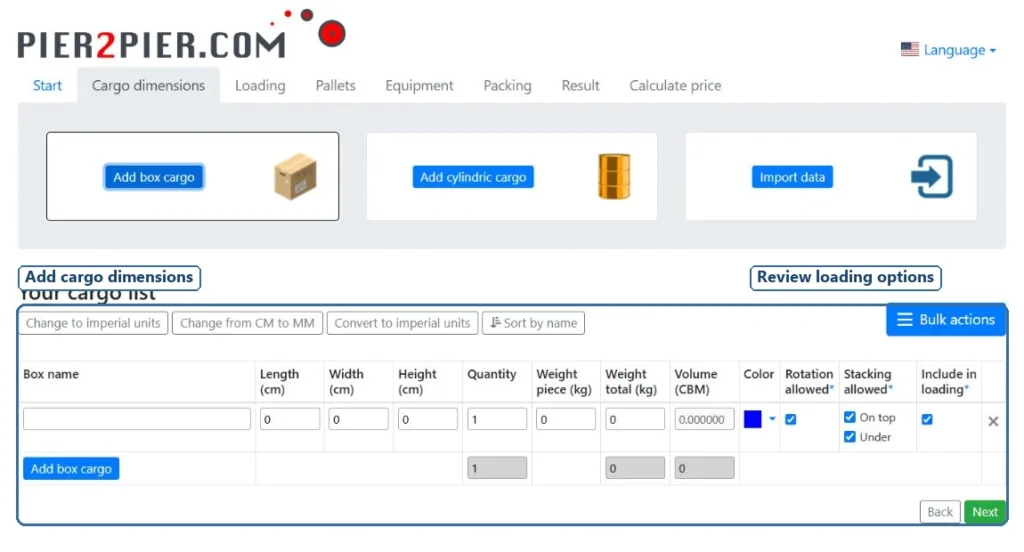
Create one standard freight RFQ containing:
- Origin
- Pickup Address
- Destination
- Delivery Address
- Cargo Description
- Number of Packages
- Gross Weight
- CBM
- Dimensions
- Container Type
- Cargo Ready Date
- Incoterm
- Special Handling Requirements
For example:
| Input | Requirement |
|---|---|
| Origin | Foshan, China |
| Destination | Project Warehouse |
| Packages | 20 pallets |
| Gross Weight | 8,500 kg |
| Volume | 32 CBM |
| Ready Date | 10 September |
| Mode Requested | Ocean Freight |
If one forwarder quotes:
32 CBM
and another prices:
38 CBM
you may be comparing different shipment assumptions.
The price difference may have nothing to do with the forwarder's competitiveness.
The first freight comparison question is not “What is the rate?” It is “Did everyone quote the same shipment?”
Step 2: Normalize the Route
Two quotes can have the same origin country and destination country but still follow different routes.
For example:
Quote A
Factory
→ Shenzhen Port
→ Los Angeles Port
Quote B
Factory
→ Yantian
→ Long Beach
→ Project Warehouse
Those are not the same transport services.
Record:
- Pickup Included?
- Origin City
- Origin Port / Airport
- Destination Port / Airport
- Final Delivery Point
- Final Delivery Included?
For construction projects, the final delivery location matters.
A port-to-port quotation may look inexpensive but leave procurement responsible for significant destination logistics.
Step 3: Normalize the Service Scope
One of the most important fields in a freight comparison sheet is:
Service Scope
Common scopes include:
Port-to-Port
International freight between ports only.
Local pickup and destination delivery may be excluded.
Door-to-Port
Includes pickup from the supplier or warehouse and international transport to the destination port.
Final destination handling and delivery may remain outside scope.
Port-to-Door
International freight begins from the origin port and includes delivery to the final destination.
Origin pickup may be excluded.
Door-to-Door
Generally covers pickup through final delivery, subject to the forwarder's stated exclusions.
Do not assume “door-to-door” means every possible import charge is included.
That needs to be checked separately.
A basic scope comparison might look like this:
| Scope Item | Forwarder A | Forwarder B | Forwarder C |
|---|---|---|---|
| Factory Pickup | No | Yes | No |
| Origin Handling | Included | Included | Included |
| Main Freight | Included | Included | Included |
| Destination Handling | No | Included | Included |
| Final Delivery | No | Included | Included |
If the scope is different, the totals should not yet be ranked.
Convert all quotations to the same service boundary before comparing price.
Step 4: Confirm the Same Transport Mode and Freight Basis
Do not compare different logistics solutions as if they are the same service.
Check whether each quote uses:
- FCL;
- LCL;
- Air Freight;
- Rail;
- Truck;
- Multimodal.
For FCL, confirm equipment:
- 20GP
- 40GP
- 40HQ
- Special Container
For LCL, check:
- chargeable CBM;
- minimum charge;
- weight / measurement rules.
For air freight, check:
- actual weight;
- volumetric weight;
- chargeable weight.
Example:
Forwarder A:
Air Freight — 1,500 kg chargeable weight
Forwarder B:
Air Freight — 1,820 kg chargeable weight
Before deciding that B is expensive, determine why the chargeable weight differs.
The pricing basis must be normalized first.
Step 5: Break Every Freight Quote Into Standard Cost Categories
Freight forwarders often present quotations in different formats.
One quote may show 15 separate lines.
Another may simply say:
Ocean Freight: $2,200
The easiest way to compare them is to move every charge into the same categories.
A. Origin Charges
Possible items include:
- Factory Pickup
- Inland Trucking
- Export Handling
- Documentation
- Terminal Handling
- CFS Charges
- Export Clearance Service
B. Main Freight
Examples:
- Ocean Freight
- Air Freight
- Rail Freight
- Line-Haul Transport
C. Surcharges
Keep surcharges visible as a separate category.
Do not hide them inside an unexplained “freight” number.
Detailed hidden-charge analysis belongs in a separate review, but the known surcharges should still be recorded during comparison.
D. Destination Charges
Possible items include:
- Destination Handling
- Terminal Charges
- CFS Charges
- Documentation
- Delivery Order Charges
E. Customs / Clearance Service
Record whether customs-clearance service is:
- Included
- Excluded
- Quoted separately
Do not add customs duty itself to the freight quotation comparison.
Duty belongs in landed-cost analysis.
F. Final Delivery
Record:
- port-to-warehouse trucking;
- port-to-project delivery;
- unloading if quoted;
- other final-mile services.
The basic normalization formula becomes:
Comparable Freight Total = Origin Charges + Main Freight + Quoted Surcharges + Destination Charges + Clearance Service + Final Delivery
Step 6: Convert Every Quote to the Same Cost Basis
This is where the comparison becomes useful.
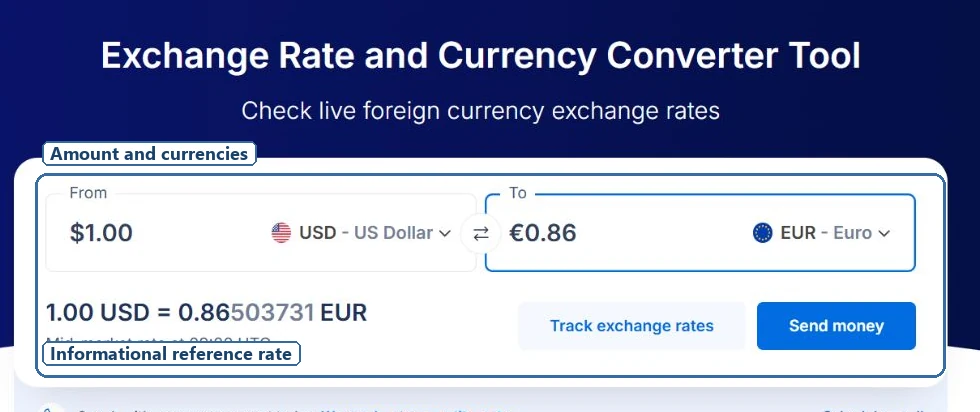
Consider three forwarders.
Forwarder A
Original quote:
$1,800 Port-to-Port
But to make it comparable with door-to-door service, add:
- Origin Pickup: $200
- Destination Handling: $300
- Final Delivery: $400
Comparable Total:
$2,700
Forwarder B
Original quote:
$2,650 Door-to-Door
Comparable Total:
$2,650
Forwarder C
Original quote:
$2,100 Port-to-Door
Origin pickup and handling:
$420
Comparable Total:
$2,520
The original ranking was:
A → C → B
After normalization:
C → B → A
Forwarder A looked cheapest because more of the logistics scope was outside the headline price.
That is exactly why procurement should normalize freight quotations before ranking them.
Freight Quote Normalization Table
A working comparison sheet may look like this:
| Cost / Scope | Forwarder A | Forwarder B | Forwarder C |
|---|---|---|---|
| Service Scope | Port-Port | Door-Door | Port-Door |
| Origin Pickup | $200 added | Included | $220 added |
| Origin Charges | $250 | Included | $200 |
| Main Freight | $1,800 | $2,100 | $1,950 |
| Destination Charges | $300 added | Included | Included |
| Final Delivery | $400 added | Included | Included |
| Comparable Total | $2,950 | $2,650 | $2,370 |
| Transit Time | 28 days | 32 days | 27 days |
The values are only examples.
The method is what matters.
Compare the normalized total, not the quotation headline.
Step 7: Compare Transit Time
The lowest normalized cost is still not automatically the best option.
Construction procurement also needs to consider time.
Record:
- Estimated Transit Time
- Direct / Transshipment
- Sailing Frequency
- Estimated Departure
- Estimated Arrival
For example:
| Quote | Comparable Total | Transit |
|---|---|---|
| A | $2,400 | 36 days |
| B | $2,650 | 24 days |
| C | $2,800 | 20 days |
If the material is for general inventory, A may be acceptable.
If installation begins in three weeks, A may not be a practical option at all.
Freight should be compared against the project requirement, not only against another freight rate.
Step 8: Compare Schedule Fit
Add project dates to the freight comparison.
For project-critical materials, carry the selected freight forecast into the Construction Procurement Log so current ETA and final delivery remain visible against the Required-on-Site date.
Useful fields include:
- Cargo Ready Date
- ETD
- ETA
- Forecast Final Delivery
- Required-on-Site Date
Then calculate:
Delivery Buffer = Required-on-Site Date − Forecast Delivery Date
For example:
Required on Site:
20 November
Forwarder A Forecast Delivery:
10 November
Buffer:
10 days
Forwarder B Forecast Delivery:
18 November
Buffer:
2 days
Forwarder C Forecast Delivery:
25 November
Buffer:
−5 days
Forwarder C might still have the lowest freight cost, but it does not meet the project requirement.
This changes the procurement decision.
Step 9: Check Quote Validity
Freight rates are often valid only for a limited period.
Record:
- Quote Date
- Valid From
- Valid Until
- Applicable Sailing / Flight
- Rate Subject to Change?
Do not compare:
Forwarder A — last month's $2,000 rate
against:
Forwarder B — today's $2,250 rate
without checking whether A's rate is still available.
A quotation that cannot be booked is not a real procurement option.
A cheaper expired freight quote is not a lower-cost logistics solution.
Step 10: Standardize Assumptions and Exclusions
At this stage, keep the process simple.
If a quotation leaves origin, destination, clearance, delivery or other service boundaries unclear, use the same clarification discipline described in Supplier Quote Exclusions & Clarifications before forcing the quote into a ranking.
Create standard fields such as:
- Customs Clearance Included?
- Destination Delivery Included?
- Inspection Charge Included?
- Storage Included?
- Special Handling Included?
- Demurrage / Detention Included?
- Customs Duty Included?
- Import Taxes Included?
The objective here is not yet to identify every possible hidden cost.
It is to make the assumptions visible.
If Forwarder A assumes:
customs clearance excluded
while B includes brokerage service, that difference needs to appear in the comparison.
A more detailed hidden-charge review should happen before award.
Apples-to-Apples Freight Quote Gate
Before comparing final price, check the following.
Same Shipment?
YES / NO
Same Route?
YES / NO
Same Service Scope?
YES / NO
Same Transport Mode?
YES / NO
Same Equipment or Chargeable Basis?
YES / NO
Same Cost Coverage?
YES / NO
Same Delivery Requirement?
YES / NO
Quotes Still Valid?
YES / NO
If a critical answer is:
NO
then:
Do not compare total price yet.
Normalize the difference first.
This simple gate can prevent many misleading freight comparisons.
Compare Freight Cost per Unit Where Useful
For construction materials, procurement may also want to convert the normalized freight total into a product-level metric.
Useful calculations include:
Freight per CBM
Comparable Freight Total ÷ Total CBM
Freight per Ton
Comparable Freight Total ÷ Shipment Weight
Freight per Unit
Comparable Freight Total ÷ Product Quantity
For example:
Normalized Freight:
$2,500
Shipment:
500 shower enclosure sets
Freight per Set:
$5
This metric can be useful when comparing:
- different shipment sizes;
- packaging improvements;
- different suppliers;
- different consolidation options.
But keep the total freight figure as well.
A low unit cost does not solve a total budget or delivery problem.
Freight Quote Decision Matrix
The final decision should consider more than price.
A simple framework may include:
| Factor | Importance |
|---|---|
| Normalized Total Cost | High |
| Transit Time | High |
| Required-Date Fit | High |
| Service Scope Completeness | High |
| Quote Validity | Medium |
| Free Time | Medium |
| Routing Simplicity | Medium |
| Forwarder Reliability | Medium |
You can score each option:
1 = Poor
2 = Acceptable
3 = Strong
The purpose is not to create a mathematically perfect forwarder ranking.
It is to stop procurement from selecting an option based on one attractive headline number.
Lowest Quote vs Best Procurement Option
Consider two freight forwarders.
Once freight scope and costs are normalized, the resulting logistics assumptions can feed into Construction Material Quotation Comparison and Construction Bid Leveling when comparing total supplier and import-route economics.
Forwarder A
Lowest total cost.
But:
- longer transit;
- transshipment required;
- several services excluded;
- little schedule buffer.
Forwarder B
5% more expensive.
But:
- direct routing;
- broader service scope;
- earlier arrival;
- more schedule buffer.
For a project-critical shipment, Forwarder B may be the stronger procurement option.
For a non-urgent replenishment shipment, Forwarder A may still make sense.
The correct comparison is:
Cost + Scope + Transit + Schedule Risk
not:
Lowest Price Wins
What If One Forwarder Will Not Break Down the Quote?
Sometimes a freight forwarder provides only:
All-In Rate: $2,500
Do not assume this means everything is covered.
Ask:
- What is the exact service scope?
- Does this include origin charges?
- Does it include destination charges?
- Is final delivery included?
- Is customs clearance service included?
- Where does the quoted responsibility end?
If the forwarder cannot provide a usable breakdown or clearly define the scope, mark the quotation:
Not Fully Comparable
It is better to show uncertainty than force an unclear quote into the ranking.
Common Freight Quote Comparison Mistakes
Comparing Only the Headline Total
Different service scopes can make the cheapest quote look artificially attractive.
Normalize first.
Giving Different Shipment Data to Different Forwarders
Use one standard freight RFQ.
Otherwise, you may be comparing assumptions instead of rates.
Comparing Different Transport Modes Without Recognizing the Difference
FCL, LCL, air and multimodal transport are different logistics solutions.
Compare them as alternatives, not identical services.
Ignoring Destination Charges
A low ocean freight rate can still result in an expensive total logistics cost.
Ignoring Transit Time
Freight must support the project's required delivery date.
Comparing Expired and Current Quotes
Confirm quote validity before ranking.
Assuming “All-In” Means Everything
Always define the service boundary.
Mixing Customs Duty Into Freight Cost
Keep freight and import duty separate.
They can be combined later during landed-cost calculation.
Freight Quote Comparison Checklist
Before selecting a freight option, confirm:
- Same cargo description
- Same package count
- Same gross weight
- Same CBM
- Same cargo-ready date
- Same origin
- Same destination
- Same Incoterm
- Same transport mode
- Same equipment / chargeable basis
- Service scope identified
- Origin charges normalized
- Main freight recorded
- Known surcharges recorded
- Destination charges normalized
- Clearance service identified
- Final delivery normalized
- Comparable total calculated
- Transit time recorded
- Required delivery date checked
- Quote validity confirmed
- Assumptions recorded
- Exclusions recorded
- Best-fit option identified
Tools and Resources for Freight Quote Comparison
International building-material procurement teams may use:
- freight quotation platforms;
- freight calculators;
- CBM calculators;
- container-loading tools;
- freight forwarder directories;
- shipping schedule tools;
- vessel tracking resources;
- landed-cost calculators.
Different tools solve different parts of the logistics task.
A CBM calculator helps define shipment inputs.
A freight platform helps collect rates.
A comparison sheet normalizes the quotations.
Shipping schedule and tracking tools help evaluate delivery timing.
A landed-cost calculator combines freight with duties and other import costs.
Build Procurement Hub organizes these resources around the import procurement workflow so buyers can move from requesting freight rates to comparing normalized logistics options and calculating final import cost.
What Comes After Freight Quotes Are Normalized?
Once quotations are comparable, procurement can identify the strongest freight option based on:
- normalized cost;
- service scope;
- transit time;
- required-date fit.
But one more step should happen before award:
Check for freight charges that may be missing or excluded.
The workflow becomes:
Verify HS Code
↓
Check Import Duty
↓
Request Freight Quotes
↓
Normalize Freight Quotes
↓
Check Hidden / Excluded Freight Charges
↓
Select Freight Option
↓
Calculate Landed Cost
↓
Make Import Decision
The most important principle is simple:
Never choose a freight forwarder by comparing headline quote totals. Normalize every quotation to the same shipment, route, service scope and cost basis first — then compare price, transit time and project schedule fit.
Normalize Every Freight Quote Before Ranking the Price
Use Freight & Import Duty resources to standardize shipment inputs, route, service scope, mode, chargeable basis, cost categories, transit time and quote validity. Only then compare the normalized freight total and project schedule fit.
